- Date
Navigating The Impact Of Privacy Laws On Marketing Data
 Andrii Romasiun
Marketing managers observe a sudden drop in website traffic. Revenue remains steady. Marketers fail to connect sales to campaigns using traditional attribution models. New privacy laws fracture traditional data collection methods. State regulators enforce strict penalties on standard tracking practices. Transition to cookieless analytics to maintain visibility and compliance. Swetrix provides a privacy-first infrastructure to capture accurate metrics without exposing your organization to legal risk.
The Rising Financial Cost of Ignoring Consumer Privacy
Enforcement Replaces Basic Awareness
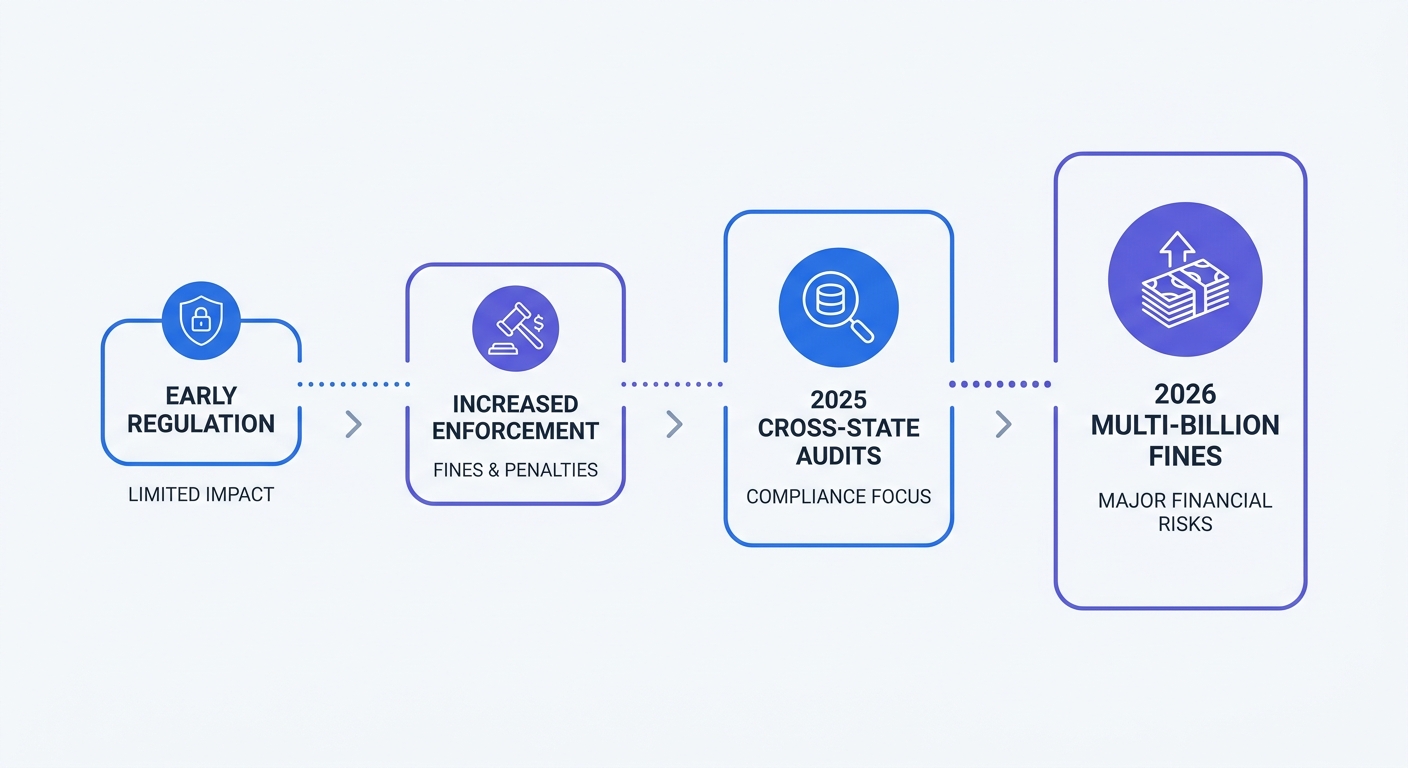
State Attorneys General in certain jurisdictions partner across borders to audit corporate privacy measures. Many regulators increasingly prioritize compliance enforcement. In jurisdictions with strict privacy laws, non-compliant web analytics and marketing trackers can face significant fines depending on the specific violations and regulatory framework. U.S. states assessed an estimated $3.425 billion in consumer privacy-related fines in 2025. This single-year total exceeds the previous five years combined.
Some regulators deploy automated scanning tools to inspect public web pages. Where these tools are in use, auditors may detect non-compliant cookies, hidden tracking pixels, and unauthorized third-party scripts. In certain cases, investigations can be triggered by consent protocol issues. Healthcare marketers may face harsher sector-specific penalties depending on applicable regulations. HIPAA violation fines exceeded $8.3 million in 2025 alone. In specific setups, client-side tracking pixels can transmit protected health information to external ad networks if not properly configured, potentially causing violations.
Audit your tag manager configuration today. Remove unvetted third-party scripts from patient-facing or sensitive landing pages. Replace these scripts with privacy-focused alternatives that process data within your specific geographic region.
The Consumer Trust Dealbreaker
Consumers treat data protection as a core requirement for doing business. Across retail and B2B sectors, 75% of consumers refuse to purchase from organizations they distrust with personal information. Modern buyers inspect URLs for tracking parameters. They use browser extensions to block analytics payloads.
Organizations drive revenue through privacy compliance. The average organization realizes a 1.6x return on its privacy investments, though this metric can vary by industry. Frame data protection as a competitive advantage. Replace intrusive trackers with platforms like Swetrix. Build trust by proving your company respects user boundaries. Display a public dashboard showing exact traffic metrics to prove your commitment. Transparent analytics practices win customer loyalty and increase long-term retention.
How the Consent Gap is Destroying Analytics Accuracy
The Cookie Banner Dilemma
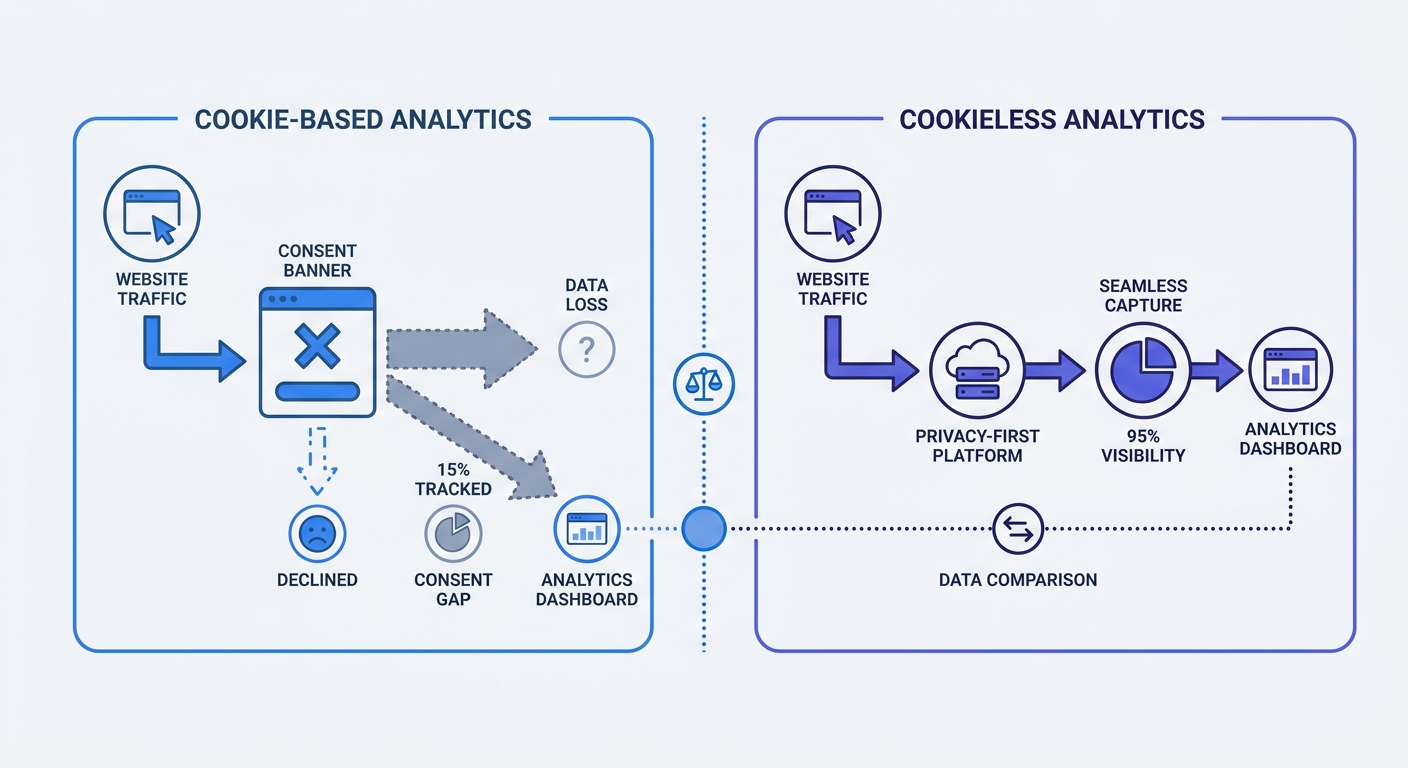
Legislators wrote the General Data Protection Regulation (GDPR) and the California Consumer Privacy Act (CCPA) to mandate explicit opt-in for cookie-based tracking. Web administrators must deploy consent banners before activating traditional analytics platforms. Privacy-conscious visitors reject these cookies. Marketing teams lose visibility into 30% to 50% of actual B2C website traffic, though this data loss can vary significantly based on industry and content type.
This consent gap prevents accurate conversion tracking. Marketers generate 100 sales from a campaign. Media buyers see only 60 conversions in legacy analytics because 40 buyers opted out of tracking. Cost-per-acquisition metrics inflate. Marketing directors shift budgets away from profitable channels due to flawed reporting. Calculate your current data loss by comparing the total sessions in your legacy analytics platform to the raw request logs on your web server for a 30-day period.
| Metric | Legacy Analytics (Cookie-Based) | Server Logs (Raw Truth) | The Consent Gap |
|---|---|---|---|
| Total Monthly Sessions | 45,000 | 75,000 | 40% Data Loss |
| Campaign A Conversions | 120 | 185 | 35% Unattributed |
| Average Bounce Rate | 65% | 42% | Distorted Engagement |
Restoring Complete Data Visibility
Data minimization practices replace the outdated habit of hoarding endless user profiles. Gather the specific metrics required to evaluate campaign performance. Discard the rest.
Cookieless web analytics software can help address the consent conflict. Engineers build platforms utilizing aggregated data collection methods that, in many configurations and jurisdictions, can reduce or eliminate the need for GDPR and CCPA cookie banners. Swetrix captures accurate traffic, engagement, and conversion metrics without harvesting personally identifiable information (PII). In appropriate setups, marketers may maintain complete visibility into traffic while reducing regulatory considerations, though specific legal requirements depend on your jurisdiction and implementation.
Review technical guides on how to track users without cookies to understand the mechanics behind aggregated data collection. This approach protects consumer privacy while ensuring accurate reporting.
AI and Analytics Trackers Under Regulatory Fire
The Threat of Pixel Wiretapping Litigation
Plaintiff law firms target digital marketers using third-party tracking pixels. Lawyers argue that unconsented third-party analytics constitute wiretapping under evolving state privacy acts like the California Invasion of Privacy Act (CIPA). A visitor typing into a search field triggers a network request. The website owner faces a class-action lawsuit if a tracking pixel sends that keystroke data to a social media network without consent.
Review every script running on your website.
- Open your browser developer tools.
- Navigate to the Network tab.
- Filter by third-party domains.
- Identify scripts transmitting user interactions to external servers.
- Terminate vendor contracts requiring pervasive cross-site profiling.
Website owners bear full responsibility for the data external vendors collect. Ignorance of a third-party pixel's function offers no legal defense during a privacy audit.
AI Governance Colliding with Marketing Data
Generative AI usage introduces new compliance hazards. Marketers input non-public consumer data into large language models to generate personalized copy or analyze feedback. Regulatory agencies scrutinize organizations feeding unprotected customer data into external AI systems.
Implement a mandatory Data Protection Impact Assessment (DPIA) before onboarding new marketing software. A DPIA forces your procurement team to evaluate data flow.
Conduct a DPIA using these steps:
- Document the exact data the software collects.
- Identify the storage location and retention period.
- Assess the legal basis for processing this information.
- Implement technical safeguards to mitigate exposure.
- Assign a specific team member to monitor vendor compliance updates.
Deny procurement requests for tools lacking transparent data processing agreements. Set clear internal policies regarding acceptable software vendors to prevent accidental privacy violations.
Actionable Strategies for Privacy-First Marketing
Adopting Zero-Party Data Collection
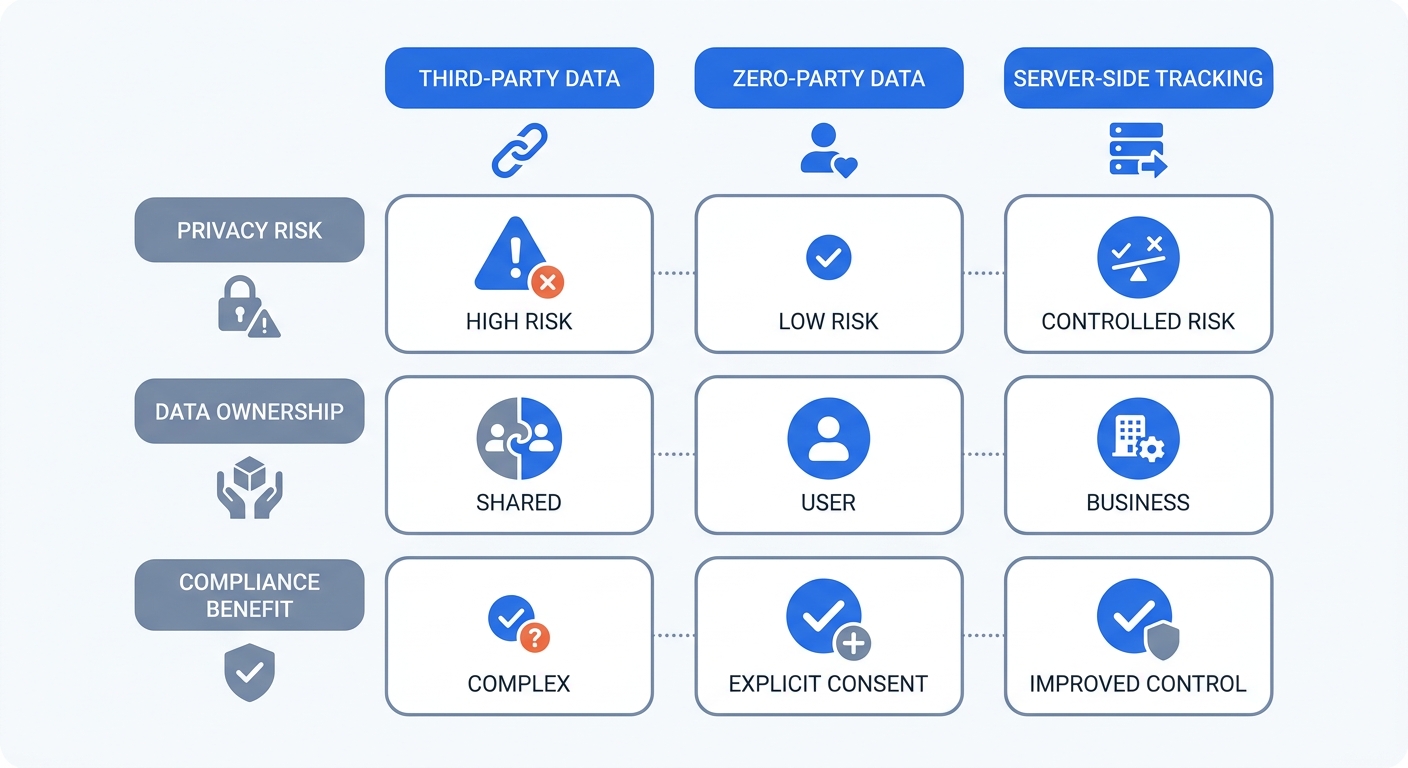
Third-party data brokers sell outdated profiles that invasive web scrapers compile. Shift your marketing budget toward zero-party data. Customers share this information by choice in exchange for direct value. Your brand owns the relationship.
Build a preference center. Offer users a dashboard to select specific topics and communication frequencies. Use interactive quizzes to gather product preferences. Ask a visitor about specific challenges during the onboarding flow. Store this zero-party data in your customer relationship management (CRM) platform. Deploy this information to segment email campaigns without hidden behavioral trackers.
Launch a zero-party data strategy this quarter:
- Identify the three most valuable data points for your segmentation strategy.
- Create a post-purchase survey offering a 10% discount for answering three questions.
- Map the survey responses to custom fields in your CRM.
- Build automated email sequences triggered by those specific field values.
Shifting to Contextual Advertising
Contextual advertising methods replace behavioral targeting. Behavioral advertising follows a user across the internet based on historical tracking cookies. Contextual targeting serves ads based on the content the user consumes at that exact moment. A visitor reading a blog post about mountain biking sees an ad for trail helmets.
Update your ad buying strategy. Target placements by keyword, category, and page content. Stop purchasing audience lookalike profiles built on third-party cookies.
Measure performance using UTM parameters appended to your ad links. Generate clean, standardized tags using a UTM campaign link generator tool. Swetrix parses these tags on page load and attributes the visit to the correct contextual campaign. Advertisers achieve high conversion rates without violating user privacy.
Building a Future-Proof and Compliant Analytics Stack
Moving to Cookieless Web Analytics
Legacy client-side analytics rely on persistent device fingerprinting and cross-site tracking. Organizations face constant compliance audits and degraded data quality. Transition to open-source, cookie-free web analytics to regain control over your marketing data.
Swetrix provides an alternative to invasive platforms. Webmasters capture unique pageviews, session duration, and custom events without deploying a single cookie. Swetrix hashes IP addresses and discards them to prevent user identification. Public pricing for Swetrix Cloud starts at $19 per month for 100,000 events, scaling based on raw traffic volume. Companies secure enterprise reporting at a fraction of the compliance cost of traditional tools.
Host the platform internally if internal compliance requirements mandate absolute data sovereignty. Swetrix offers open-source self-hosting. This deployment method gives your engineering team total physical control over the database and application layer.
Implementing Server-Side Tracking
Combine privacy-first analytics with server-side tracking. Browsers execute client-side tracking tags. Ad blockers intercept these scripts and prevent data collection. Server-side tracking strategies move tag execution to your own infrastructure. The user's browser communicates with your server. The server processes the event and forwards the required metrics to the analytics platform.
Server-side architectures hide user data from third-party vendor scraping. Engineering teams decide what information leaves the internal infrastructure.
Configure a server-side proxy for web analytics:
- Deploy a proxy server in the same region as your primary application.
- Create a custom subdomain (e.g.,
metrics.yourdomain.com). - Point a CNAME DNS record to your proxy server IP.
- Provision an SSL certificate for the custom subdomain.
- Route all analytics events through this proxy.
- Filter out PII and sensitive query parameters at the proxy level.
- Forward the clean, aggregated payload to Swetrix.
This configuration significantly improves traffic reporting coverage and reduces the impact of ad blockers. Many ad blockers treat first-party network requests sent to a verified internal subdomain as legitimate traffic, though complete accuracy cannot be guaranteed as blocking behavior varies. Marketers can more reliably measure campaign ROI, track micro-conversions, and monitor website performance while honoring privacy regulations. The impact of privacy laws on marketing ceases to function as a liability and becomes the foundation for a transparent data strategy.
Stop losing traffic data to cookie banners and ad blockers. Swetrix provides privacy-first, cookieless web analytics that keep domains compliant while restoring complete visibility into marketing campaigns. Start your 14-day free trial today at swetrix.com/signup.