- Date
Best GA4 Alternative For Agencies: A 2026 Buyer's Guide
 Andrii Romasiun
Google Analytics 4 dominates market share, but agency account managers spend hours apologizing to clients for broken reports. The event-based data model requires SQL knowledge to pull basic traffic behavior metrics. Client reporting workflows that took ten minutes in Universal Analytics now demand custom Looker Studio dashboards, BigQuery integrations, and constant maintenance, which means finding a reliable ga4 alternative for agencies is an operational requirement. When a core tool slows down your team and frustrates clients, you replace it.
The analytics market fragmented because standard client-side tracking fails to capture modern web activity. Ad-blockers, strict privacy legislation, and a surge in automated AI traffic block legacy tools from recording real website behavior. Agencies need a way to restore that lost data without exposing clients to compliance fines. Swetrix provides a direct path out of the Google ecosystem by delivering privacy-first, cookieless tracking that recovers missing conversion data and gives your clients an intuitive platform.

Why Agencies Are Abandoning GA4
The Friction of Event-Based Architectures
A W3Techs report shows Google Analytics commands an 83.4% market share among known analytics platforms. Google forced domains to migrate, but agencies never fully adopted the architecture. Because the average implementation uses 12 out of more than 40 available event types, most marketing teams treat the platform as a glorified pageview counter. Configuring deeper tracking breaks easily due to the underlying data model. Universal Analytics tracked sessions to group pageviews and interactions into time-bound visits, whereas GA4 tracks isolated events without context. Rebuilding a standard conversion funnel requires mapping custom events, defining specific parameters for each step, and constantly monitoring the setup. If a client changes a button class or a URL structure, the event stops firing and the funnel fails silently.
Auditing Broken Client Implementations
This complexity explains why a Search Engine Roundtable poll indicates 75% of SEO professionals express open dissatisfaction with the platform. The interface buries standard metrics under layers of custom reporting tabs, creating widespread backlash. Audit your client accounts this week by opening their GA4 property, navigating to the Traffic Acquisition report, and checking the default channel grouping. If you see high volumes of "unassigned" traffic or conversion goals flatlining despite steady sales, the implementation failed. You are billing clients for analytics management while delivering incomplete insights based on broken configurations. Agencies that replace Google Analytics eliminate endless configuration audits and restore immediate visibility to client reporting.
The Data Loss From Cookie Consent Banners
Quantifying Rejected Tracking Scripts
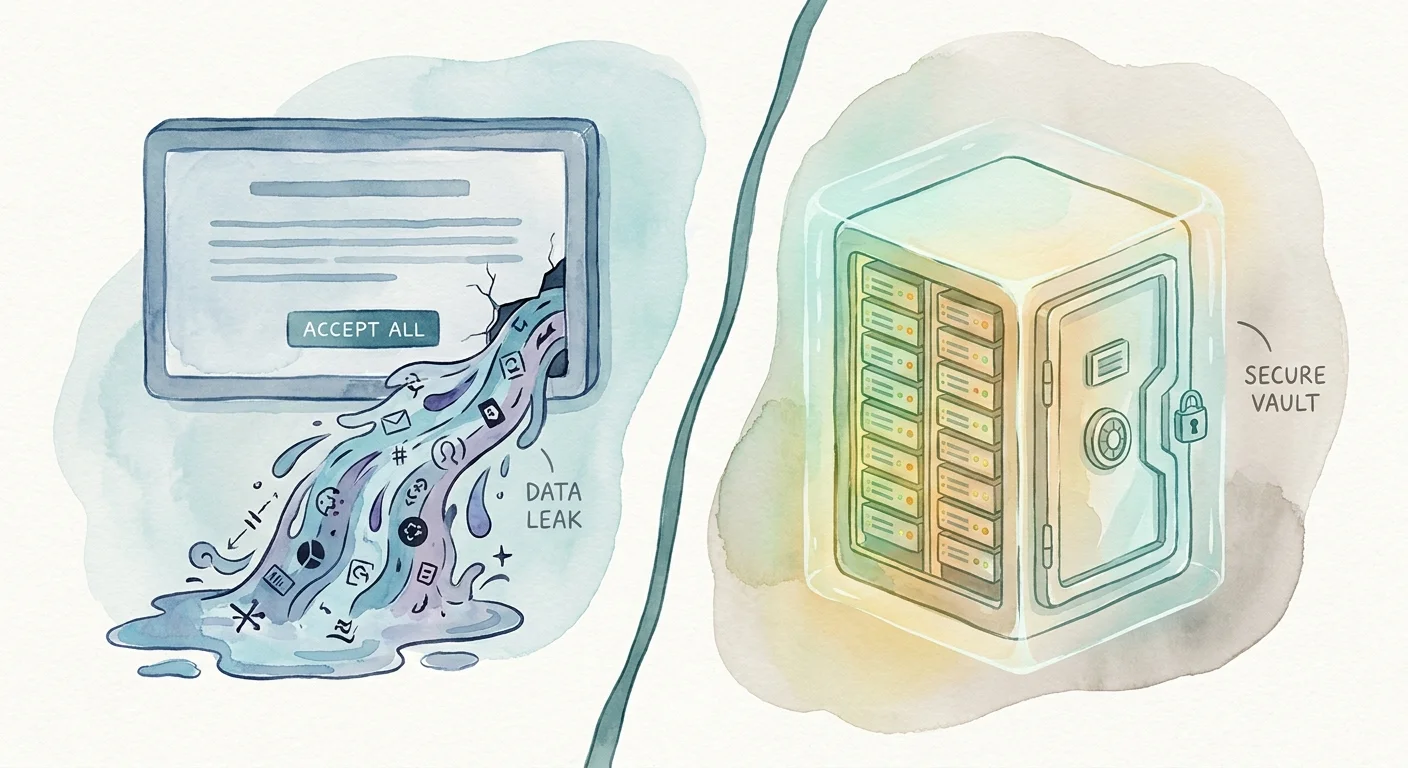
Beyond the hostile interface, legacy analytics relies on client-side cookies. Regulators actively enforce strict privacy laws globally, forcing sites to deploy consent management banners to avoid fines. Compliance splits sharply by region, as the European Union mandates explicit opt-in, which means tracking scripts cannot execute until a user clicks "Accept." A USENIX Security Symposium study shows US sites rely on opt-out models and load an average of 46.5 first-party cookies per page compared to the EU's 20.0.
This legal requirement destroys global reporting accuracy. When you route client traffic through a strict consent banner, a 2024 Advance Metrics study shows 68.9% of B2B users ignore or close the prompt without granting consent, a rate that varies by audience. The tracking script never fires, costing your agency up to 70% of measurable traffic data instantly. Your reports then show massive drops in organic traffic and paid campaign performance, even when internal sales data indicates growth, leading clients to cut budgets on successful campaigns because the analytics platform failed to record the attributions.
Calculating Your Agency's Measurement Gap
Calculate this measurement gap to prove the issue to your clients. Pull the total CRM transactions or processed leads over a 30-day window, and compare that exact figure against the recorded conversions in GA4. If your CRM shows 500 leads but analytics attributes 200, cookie rejection actively erodes reporting accuracy. Your client pays for traffic your current software cannot measure.
Criterion 1: Server-Side and Cookieless Tracking
Bypassing Client-Side JavaScript Failures
Client-side JavaScript tracking fails when privacy browsers, ad-blockers, and AI agents enter the mix. Because over half of web traffic originates from automated sources, bots like Claude, ChatGPT, and Gemini crawl client sites constantly to feed their language models, but they skip traditional cookies and standard JavaScript tags. Relying on client-side tracking creates a massive reporting blind spot for technical SEO.
Agencies must shift to server-side tracking to bypass these limitations legally. A specialized platform like Swetrix processes requests at the server level, capturing raw traffic flow without exposing user data to third-party scripts. The system logs the server request directly.
Instead of dropping persistent files on a visitor's device, the software uses daily rotating hashes to identify unique sessions. A hash combines the user's IP address and user agent, encrypts the string, and deletes the decryption key every 24 hours. The analytics platform records that a series of pageviews belongs to a single session, but the software cannot trace that session back to an individual person or track them across the web.
Removing the Consent Banner
Because this cookieless architecture anonymizes data by default, it complies with GDPR, CCPA, and PECR. You can remove the cookie consent banner from the client's site entirely, which recovers the data previously lost to ignored consent prompts. Restoring visibility into user flows, campaign attribution, and conversion rate metrics happens without risking non-compliance fines.
Test a server-side deployment on your agency's domain by removing existing Google tags and routing analytics requests through a direct API integration or Cloudflare worker. Your recorded traffic volume will spike as the system registers visitors who blocked client-side scripts.
Criterion 2: Intuitive Client Dashboards
Evaluating the Stakeholder Interface
Clients want to log in and see a graph trending upward rather than navigating feature flags, building custom dashboard environments, or running SQL queries. GA4 forces agencies to act as data engineers, which drives up retainer costs and delays monthly reporting cycles. Choosing a new platform requires evaluating the exact interface you hand over to stakeholders.
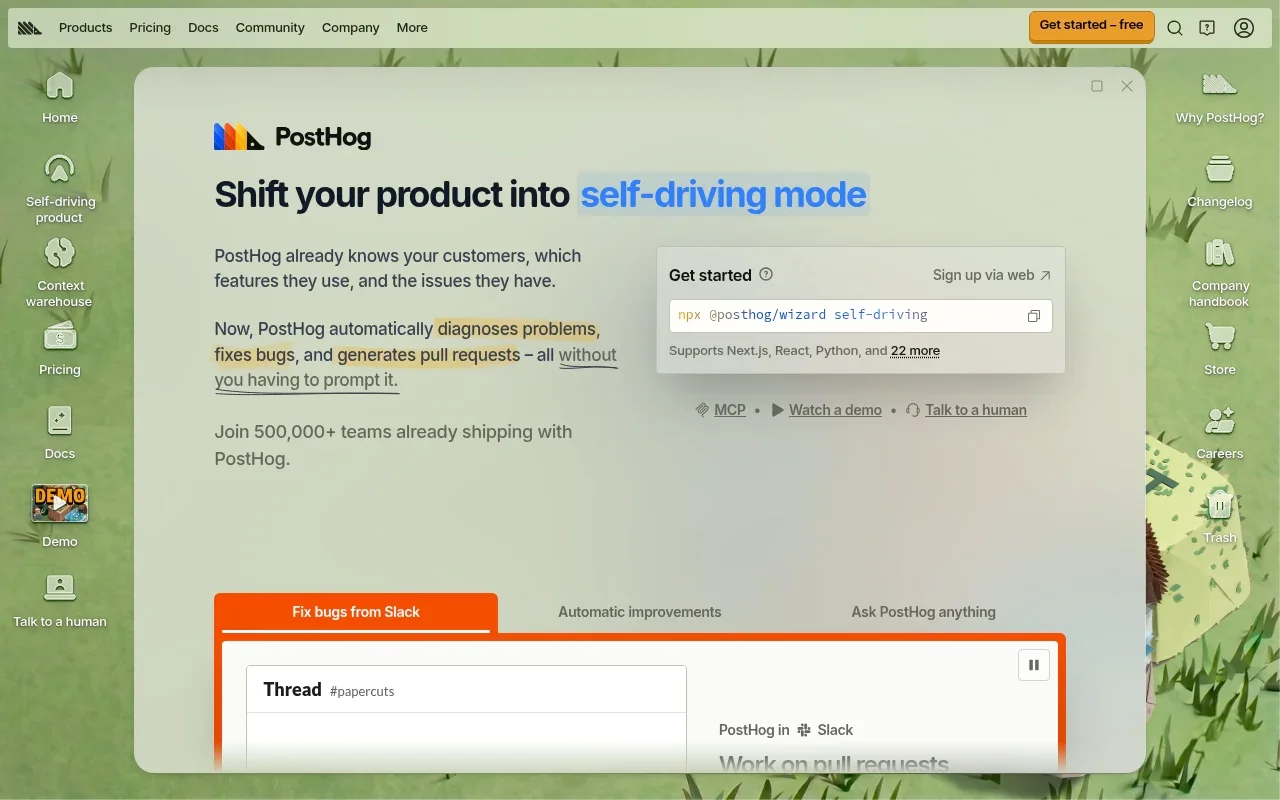
PostHog offers deep event tracking and product analytics, though its interface caters heavily to software developers. Navigating that platform requires technical knowledge of API endpoints and product event structures. A marketing director logging in to check weekly blog traffic will ask for help immediately, creating endless support tickets for your account managers.
Amplitude provides powerful behavioral cohorts and retention analysis, but the pricing scales aggressively based on event volume. This model prices out small-to-medium businesses before they see a return on the data investment.
Implementing Agency White-Labeling
Swetrix solves usability friction through native B2B2B white-labeling. Agencies can rebrand the dashboard, host it on a custom domain, and grant clients direct role-based access. The user interface displays pageviews, UTM campaigns, and referral sources on a single screen while housing advanced product analytics like session replays and conversion funnels. Your client receives a localized, branded portal that answers their questions immediately, cutting your reporting overhead in half.
When evaluating any tool, invite a non-technical client to test the platform by asking them to find last week's highest-converting landing page. If they cannot locate the metric within three clicks, the interface fails the usability test.

Criterion 3: AI Search and LLM Crawlability
Monitoring Automated Discovery Signals
Search engine optimization relies on more than Googlebot, as AI tools ingest website content to generate direct answers for users inside conversational interfaces. If an AI agent cannot crawl your client's site, that brand disappears from conversational search results. Standard analytics tools ignore this traffic because the bots block standard JavaScript, requiring an agency analytics platform to monitor these automated discovery signals directly.
Swetrix integrates a native AI Search LLM Crawlability Checker into its webmaster suite. This utility validates robots.txt directives against known AI user agents like GPTBot or ClaudeBot while confirming the presence and formatting of readable llms.txt files, which act as optimized sitemaps for language models.
Auditing Bot Indexability
The platform identifies which agents hit the domain, tracks how often they crawl the content, and highlights blocked paths. If a client accidentally pushes a server configuration that blocks OpenAI, you see the error in the analytics dashboard before it impacts brand visibility.
Run an indexability audit on your top three clients today to verify that their servers allow access to AI-specific user agents. Checking their server logs for AI bot activity reveals measurement gaps. If your current analytics tool cannot differentiate a Claudebot crawl from a human bounce, your agency lacks visibility into modern search.
Comparing Analytics Platforms for Agencies
Choosing a reporting system depends on your client roster, technical capabilities, and compliance requirements. Map your agency against these criteria:
| Primary Agency Need | Recommended Approach | Key Trade-off |
|---|---|---|
| Retaining legacy ad retargeting | GA4 + Dynamic CMP | Permanent data loss from rejected consent banners. |
| Developer-heavy SaaS clients | PostHog or Amplitude | Steep learning curve; alienates non-technical stakeholders. |
| Privacy-first client reporting | Swetrix | Requires investing time to map historical conversion events. |
Most marketing agencies fall into the third category because they need accurate data, complete compliance, and zero engineering overhead. Transitioning architectures avoids disrupting your current client workflows.
Migrating Your Agency's Analytics Stack
Deploying a Dual-Tagging Strategy
A successful migration happens in stages, starting with running platforms in parallel. Keep GA4 active on the client's site while deploying Swetrix alongside it. This dual-tagging strategy allows you to gather baseline metrics in the new system and verify data accuracy without disrupting historical reporting models.
Map out your core conversion events during the first week. If a client tracks form submissions, whitepaper downloads, and checkout completions, recreate those goals in the cookieless platform. Because Swetrix tracks custom events without convoluted parameter mapping, setting up a funnel takes minutes instead of hours. You define the start point, set the required steps, and let the system track the user flow based on session hashes.
Managing Cross-Border Compliance Rules
Address client-specific compliance needs by deploying a dynamic Consent Management Platform (CMP) if an enterprise client demands legacy cookie-dependent tools for Facebook pixel retargeting. Configure the CMP to adjust banner logic based on user geography by enforcing strict opt-in rules for European traffic while defaulting to opt-out for US visitors. This minimizes legal friction across borders while preserving tracking data for legacy tags.
Let both systems run for thirty days to compare the raw data volumes. Your agency will consistently record higher traffic and more accurate conversion attribution in the cookieless platform because the software bypasses ad-blockers and ignored consent banners.
Schedule a walk-through with the client to review the parallel data and showcase the unified dashboard. Demonstrating the session replays, error monitoring logs, and AI crawlability metrics proves the value of the new software. Once clients see the recovered data volume and experience the intuitive interface, you can safely remove the legacy Google tags and delete the cookie banner.
Stop losing client data to ignored cookie banners and broken event configurations. Set up a cookieless, fully white-labeled dashboard today at Swetrix.com.