- Date
Navigating Data Residency Requirements For European Websites In 2026
 Andrii Romasiun
European regulators have issued over €7.1 billion in cumulative GDPR fines since 2018. The heaviest penalties share a common denominator of unlawful cross-border data transfers. Sending a European website visitor's IP address to a server in California triggers complex legal requirements, and most companies fail to meet them. You protect your business by mastering data residency requirements for european websites, which means keeping user data tightly confined within the European Economic Area (EEA). Using sovereign, cookie-free analytics tools like Swetrix handles this automatically because hosting data exclusively on EU servers bypasses the international transfer trap.
The High Cost of Ignoring Data Boundaries
Why Data Residency Is No Longer Optional
Unlawful cross-border data transfers triggered the largest GDPR fines in history. Meta lost €1.2 billion for moving European user data to the United States, while other major platforms have faced significant penalties for routing telemetry to unauthorized jurisdictions. While those numbers reflect statutory maximums applied to tech giants, the enforcement mechanisms apply to websites of any size. Depending on traffic volume and data sensitivity, smaller businesses face administrative penalties ranging from €1,000 to €5,000 for misconfigured tracking scripts that leak personal data to third countries.
You cannot rely on obscure legal paperwork to defend US-bound data flows anymore, because GDPR Chapter V strictly governs how data moves outside the EEA. The regulation prohibits exporting personal data to countries lacking an adequate level of data protection unless you implement stringent safeguards. Historically, legal teams deployed Standard Contractual Clauses (SCCs) to bridge this gap, which require companies to conduct Transfer Impact Assessments (TIAs) to prove foreign surveillance laws will not compromise the data. Because US intelligence agencies maintain broad surveillance powers under FISA Section 702, proving this is nearly impossible for cloud-hosted software.
The 2026 EU-US Data Privacy Framework Crisis
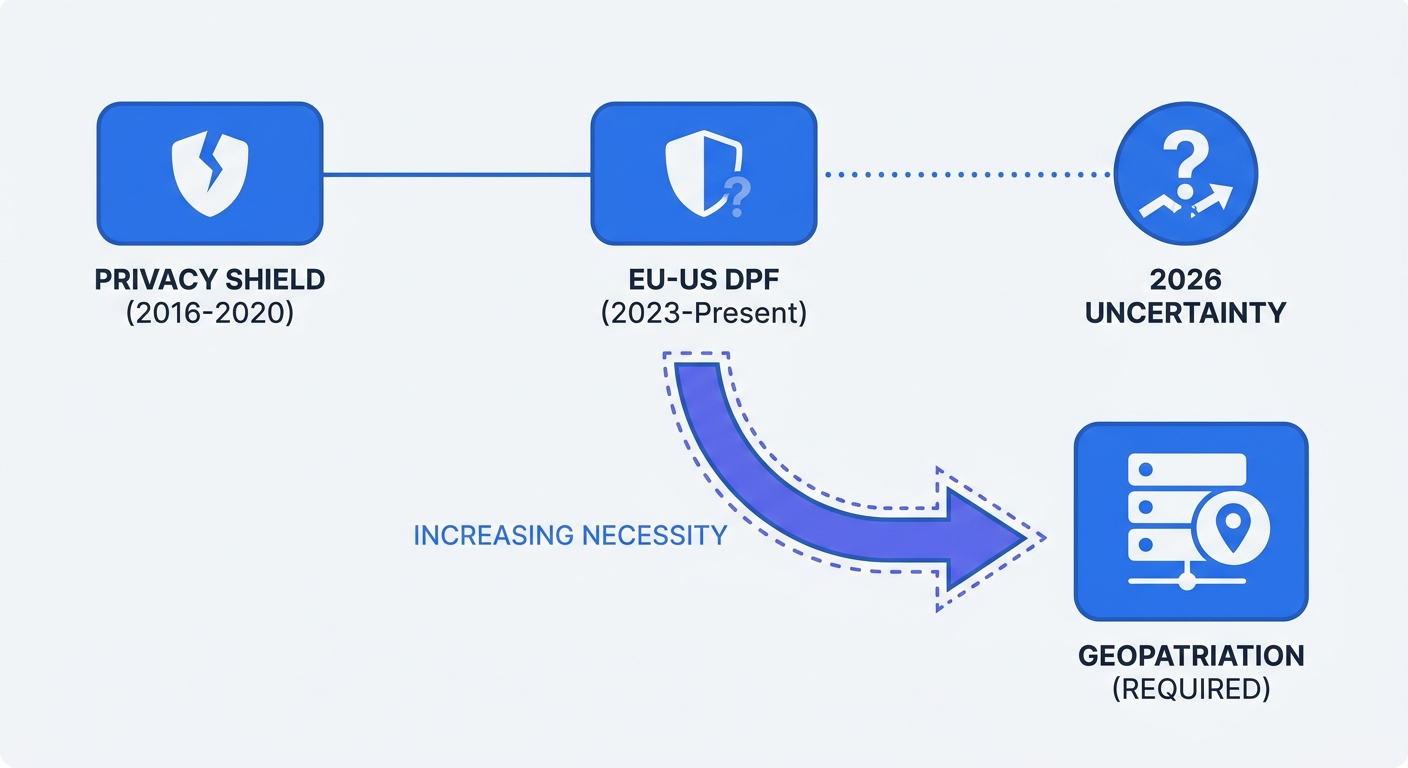
The 2023 Data Privacy Framework (DPF) briefly offered a legal safety net for transatlantic transfers, but that cover is breaking down. Following the July 2026 US Supreme Court ruling in Trump v. Slaughter questioning federal regulatory independence, the European Data Protection Board officially demanded a framework review. This development plunges EU-to-US data transfers back into the legal uncertainty that destroyed the previous Privacy Shield agreement.
Continuing to route your marketing telemetry through American servers guarantees compliance headaches. Data protection authorities will target organizations relying on fragile frameworks once the DPF faces formal invalidation, making local infrastructure migration the only defensive strategy that holds up under regulatory scrutiny.
Decoding Residency Versus Sovereignty
Defining Data Residency vs. Sovereignty
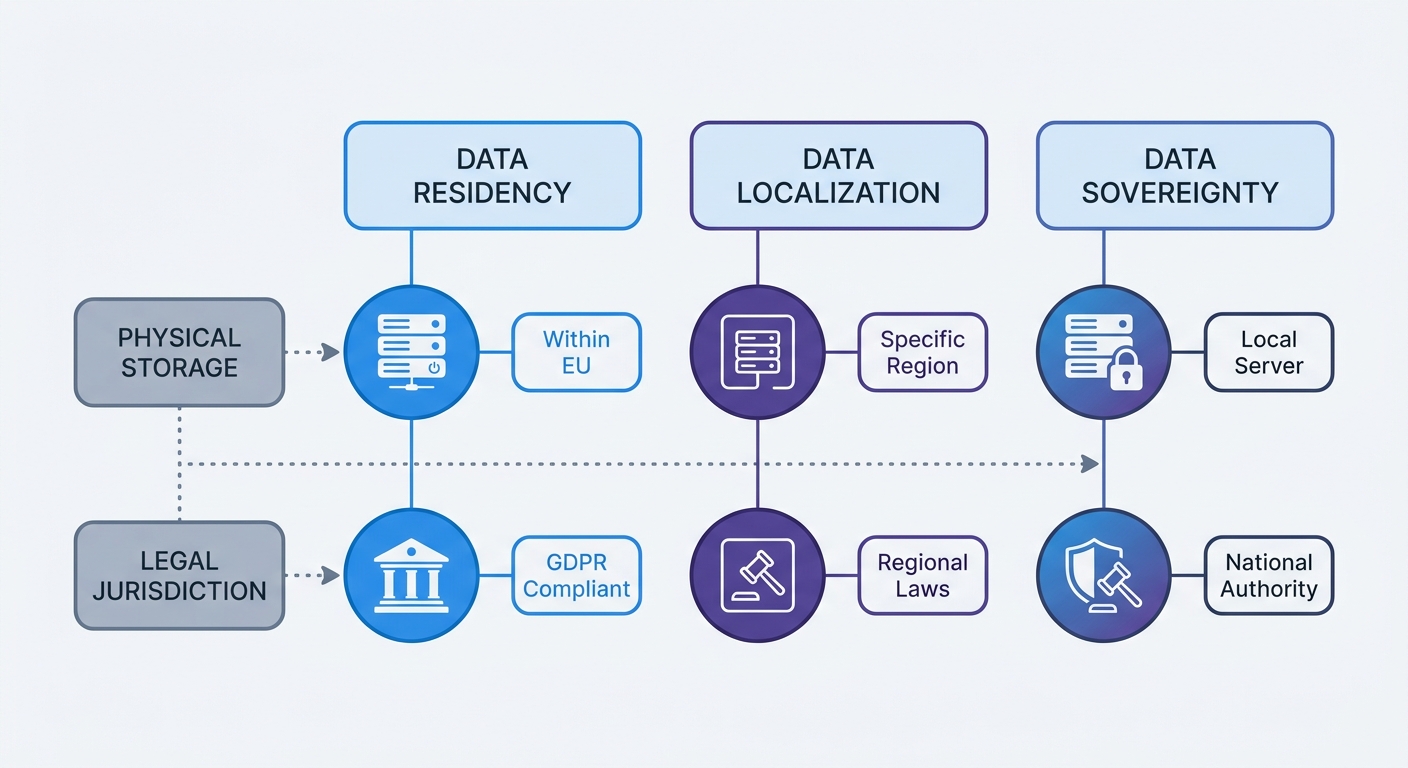
Hosting a database in Frankfurt dictates the physical location of the server hardware, but that physical boundary does not protect your website on its own. If a US-based hyperscaler like AWS or Google Cloud owns that Frankfurt facility, the US CLOUD Act allows federal agencies to demand access to the data inside it, overriding European privacy laws and putting you in breach of the GDPR.
Data sovereignty requires both physical residency and exclusive legal jurisdiction, ensuring foreign governments cannot legally compel access to your users' information. European-owned companies operating hardware on European soil deliver verifiable sovereignty. When evaluating analytics platforms, look past the "EU data center" marketing copy and identify the corporate entity controlling the servers.
The Rise of Geopatriation in Europe
Technology leaders treat this geographic distinction as strategic risk management. Gartner reports that analyst inquiries regarding cloud sovereignty and geopatriation, the process of repatriating data to local sovereign clouds, have increased substantially. By 2030, analysts expect over three-quarters of European enterprises to run localized workloads, though adoption rates will vary depending on sector regulations.
Check your current SaaS vendors today by reading their data processing agreements to verify if they provide European sovereignty or merely rent rack space overseas. Ask your vendor representatives if US authorities can access their European instances under a CLOUD Act subpoena, and if they hesitate or offer convoluted legal defenses, they do not offer sovereignty.
How Web Analytics Trigger GDPR Transfer Rules
The Cross-Border Transfer Trap
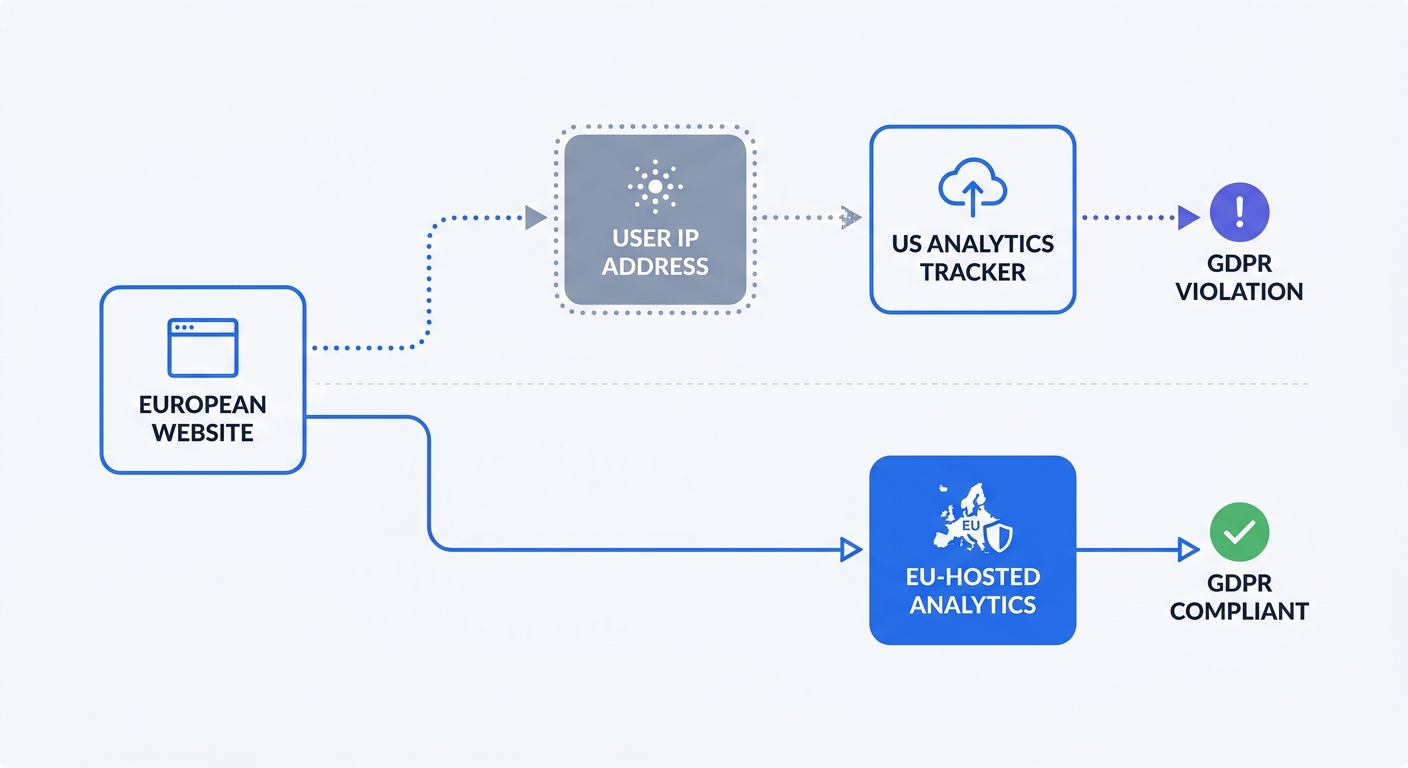
Standard analytics scripts collect personal data by default. When a user visits your site, their browser establishes a connection with the analytics server, and if that server sits in Virginia, the user's IP address travels across transatlantic submarine cables. The GDPR classifies an IP address as personally identifiable information because internet service providers can link it to a specific household. Collecting this data in Europe and reading it in America constitutes a restricted data export, causing data protection authorities across Austria, France, Italy, and Denmark to rule specific Google Analytics implementations unlawful between 2022 and 2023. Even if you configure a US-based tracker to anonymize IPs, the act of sending the initial request across the Atlantic exposes the user's data to foreign networks before the anonymization takes place.
Solving Compliance With Swetrix Sovereign Analytics
Keeping the telemetry in Europe solves this tracking vulnerability. Swetrix operates as a cookie-free, open-source platform built strictly on sovereign infrastructure. The platform processes every pageview and custom event on European servers, meaning your website analytics never trigger Chapter V transfer rules. Because our cloud-hosted alternative never exports data to the US, you skip the Transfer Impact Assessments.
The system also practices data minimization out of the box. Cookie-free tracking avoids persistent session identifiers by using short-lived hashes that reset daily instead of tracking individuals across the web. This daily reset provides accurate campaign performance without invading privacy, letting you measure conversions and monitor website performance without deploying intrusive consent banners that ruin user experience.
Steps to Audit Your Website Data Infrastructure
Conducting Vendor Infrastructure Audits
Start your compliance audit by mapping every third-party service connected to your website, exporting a list of your CRM platforms, email marketing tools, payment gateways, and analytics providers. Log into each dashboard to locate the data hosting settings and review your Data Processing Agreements (DPAs). A standard DPA will list sub-processors, the third-party companies your vendor relies on to provide their service.
Look for explicit "EU-only" guarantees rather than "EU-selectable" options, because selectable tiers frequently leak administrative telemetry, support tickets, and metadata back to US headquarters. If a European CRM uses a US-based email delivery service, the data still leaves the EEA, requiring you to follow the entire data supply chain to verify compliance. If a vendor cannot confirm their architecture isolates both storage and processing within the EEA, add them to a replacement shortlist. When tracking revenue from European customers, use integrations that maintain privacy, like connecting your Paddle subscription metrics securely to a sovereign analytics dashboard.
Eliminating Third-Party Script Leakage
Hidden trackers ruin otherwise perfect infrastructure setups, as external web fonts, embedded video players, and bloated tag managers silently ping non-EEA servers every time a page loads. Advocacy groups like NOYB routinely scan European websites for these unforced errors, triggering complaints that lead to formal investigations.
To detect these leaks, open your browser's developer tools, navigate to the Network tab, and reload your homepage. Filter the requests by domain and flag anything routing through unapproved third parties. From there, host your Google Fonts locally and replace embedded YouTube players with privacy-enhanced alternatives or click-to-load facades. Removing unnecessary ad pixels that fire before a user grants explicit consent eliminates external requests, reducing your legal exposure and improving your page speed.
Future-Proofing Your Digital Architecture
Preparing for Framework Collapse
Organizations that preemptively decouple their marketing analytics from US-hosted cloud infrastructure will survive the DPF invalidation without scrambling. Map out a migration timeline for your most critical data flows this quarter, and audit your campaign links alongside your infrastructure.
Unstructured UTM tags create a mess in any platform, requiring you to standardize them before migrating. Use a UTM generator to enforce consistent naming conventions across your team. Clean data structured with correct source, medium, and campaign parameters ensures your new analytics dashboard displays accurate attribution from day one.
Shifting to Localized European Tech
European software vendors are rapidly adapting to strict data boundaries. Shifting to localized European tools builds a resilient architecture immune to international data disputes and shifting political agreements.
Open-source platforms provide an additional layer of security through transparency, allowing you to inspect the codebase to verify exactly what data the platform collects and where it goes. Migrate your tracking to Swetrix today to future-proof your marketing stack by deploying our self-hosted web analytics on your own hardware for absolute physical control, or rely on our managed cloud to guarantee European sovereignty without the server maintenance. Setting up a project takes under five minutes, eliminating the compliance risks associated with legacy analytics.
Stop gambling with cross-border data transfers and start tracking your website traffic securely with Swetrix, a fully GDPR-compliant, cookie-free analytics platform hosted exclusively in the EU. Cloud plans scale with your business starting at $19 per month for 100,000 events, and you can start your 14-day free trial at swetrix.com/signup today.