- Date
How To Track Paddle Subscription Metrics For SaaS Growth
 Andrii Romasiun
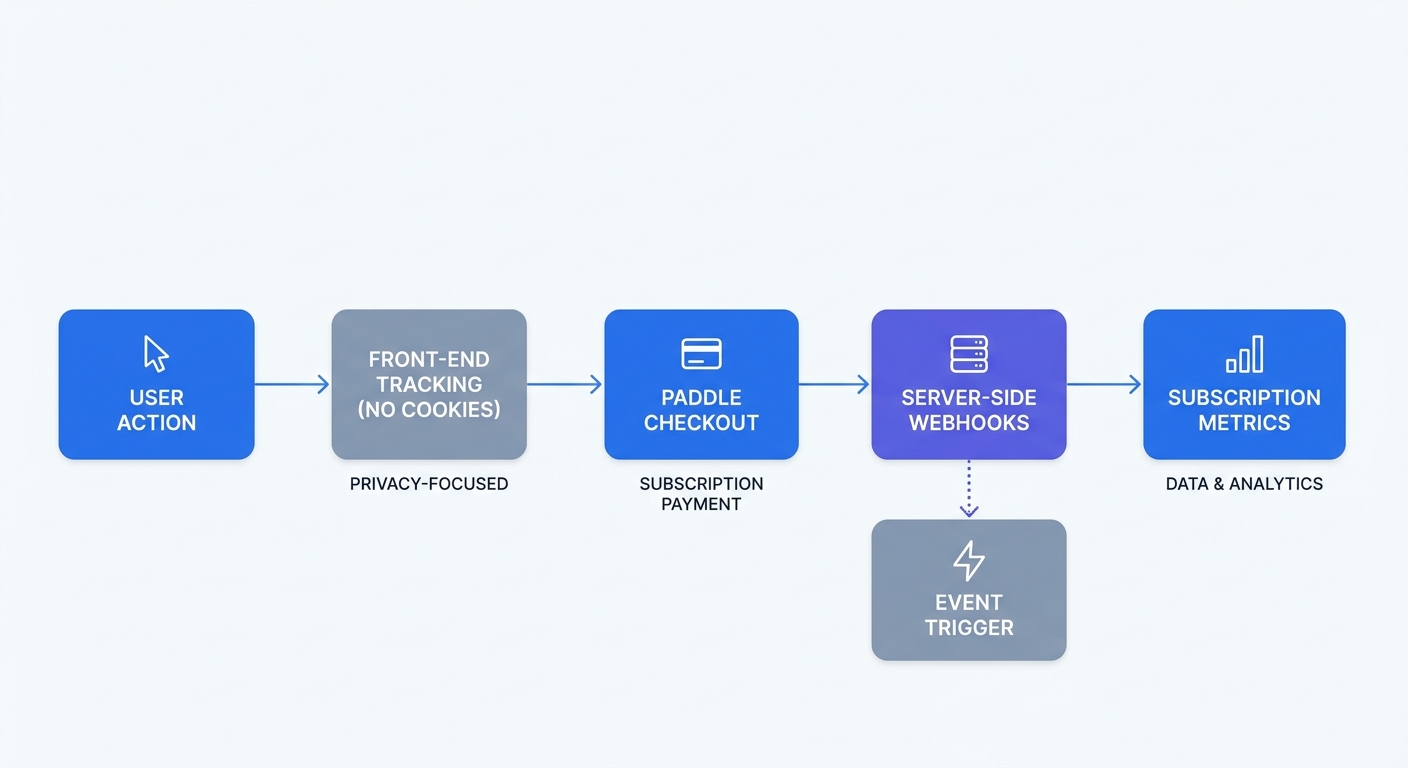
SaaS growth depends on tracking the moment a visitor becomes a paying subscriber. Paddle handles the billing side, and ProfitWell metrics give a clear view of Monthly Recurring Revenue (MRR). Backend billing numbers leave a massive gap. Analysts reviewing revenue data see the final outcome but miss the behavioral path showing how that user arrived. Bridging this gap requires connecting checkout data with a privacy-focused front-end tracking tool like Swetrix. We built Swetrix to capture the complete customer journey without invasive cookies.
The Basics of Tracking Paddle Subscription Data
Understanding Paddle and ProfitWell Integration
Paddle acts as a Merchant of Record (MoR) for thousands of software companies. The platform processes payments and handles global tax compliance. Following the ProfitWell acquisition, Paddle includes native subscription analytics inside the main dashboard at zero extra cost. Open the Subscription Metrics tab to view MRR, churn rates, and Customer Lifetime Value (LTV). This integration provides baseline revenue visibility.
Relying on billing software limits insight to financial transactions. When a user cancels a subscription, Paddle marks them as churned at the end of the billing cycle. Teams see the lost revenue but cannot determine why the customer left. Find the root cause by mapping billing events to frontend usage tracking.
Why You Need Privacy-First Analytics
Frontend web analytics provide the missing context. Connecting marketing attribution to revenue requires tracking the user journey from the first landing page visit to the final checkout confirmation. Third-party cookies fail at this task because browsers block tracking scripts. Furthermore, ad blockers strip client-side checkout events before those signals reach the database.
We designed Swetrix to bypass these issues using first-party data. Marketing teams gather precise insights on traffic sources, session duration, and feature adoption without violating user privacy. Integrating frontend analytics builds a complete picture of customer behavior, connecting initial clicks to final conversions.
Setting Up Your Analytics and Billing Stack
Connecting Swetrix to Paddle
Unifying a tracking stack requires precise configuration. Start by creating a Swetrix project and installing the tracking script on all marketing pages and web applications. Next, navigate to the Paddle dashboard to open the developer settings. Generate a standard checkout overlay or inline checkout link. Complete the connection by adding Swetrix custom event tracking to the checkout success callback. The code matches this format:
Paddle.Checkout.open({
  product: "12345",
  customData: {
    swetrix_profile_id: swetrix.getProfileId(),
    swetrix_session_id: swetrix.getSessionId(),
  },
  successCallback: function (data) {
    swetrix.track({
      ev: "paddle_checkout_success",
      meta: {
        plan_id: data.checkout.product_id,
      },
    });
  },
});
This setup allows teams to credit the specific marketing channel that drove the checkout. Marketers see the difference in the conversion column. Identifying a campaign that generates $5,000 in MRR allows teams to optimize their ad spend.
Configuring Server-Side Webhooks
Client-side tracking misses renewals and backend cancellations, making server-side webhooks a secure alternative. Configure Paddle to push lifecycle events straight to a backend server. Inside the Paddle Developer Tools section, navigate to Webhooks. Add a server endpoint URL and select specific event triggers like subscription_created, subscription_updated, and subscription_cancelled.
The backend server receives a JSON payload for each event. Verify the webhook signature to ensure Paddle sent the request. Next, extract the customer ID and subscription status from the payload before sending this formatted data to a database. Push custom events to Swetrix via API to keep tracking dashboards updated. Webhooks bypass browser restrictions, guaranteeing every subscription change registers in the analytics platform without relying on active browser sessions.
Merging Behavioral and Billing Data
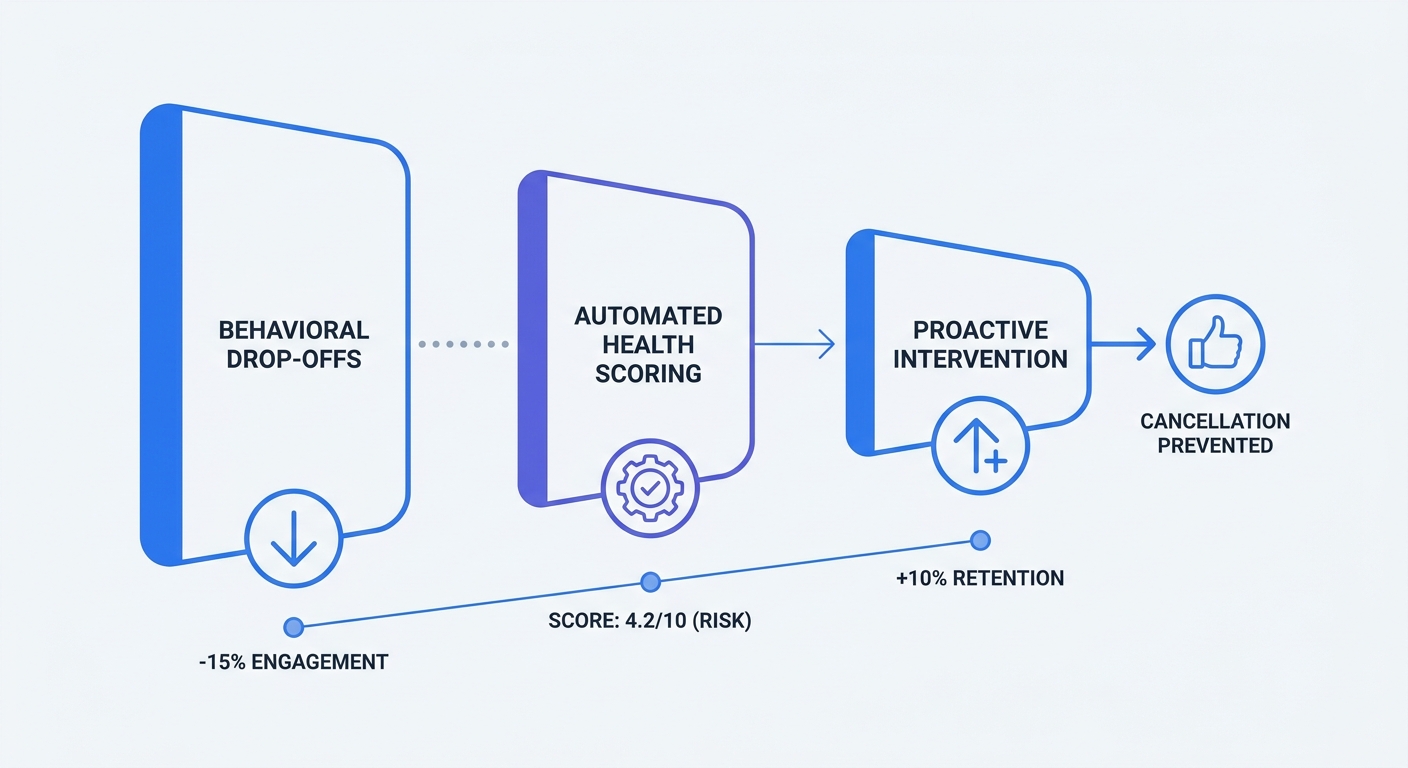
Integrating behavioral drop-off records with billing records helps identify account risk. A drop in active sessions precedes cancellation in most software accounts. Track login frequency and core feature usage inside the web app using Swetrix custom events. Map these custom events to specific user IDs, then compare the activity logs against Paddle subscription cohorts.
Users on a specific pricing tier logging in fewer than twice a month show high churn risk. Build a retention campaign for this exact segment. Customer success teams must reach out to inactive users before the renewal date hits. Measuring ecommerce performance requires tracking engagement alongside standard transaction volumes.
Key Paddle Metrics You Must Monitor
Monthly Recurring Revenue (MRR) and NRR
Track MRR as a foundational growth metric. ProfitWell categorizes this figure into new, expansion, and reactivated MRR. When a canceled user returns, Paddle logs the account as a reactivation. Segmenting these return users prevents marketing teams from distorting Customer Acquisition Cost (CAC) calculations.
Focus attention on Net Revenue Retention (NRR). Analysts measure NRR to track revenue growth from existing customers after accounting for downgrades and cancellations. Sustainable growth demands high retention numbers. Best-in-class SaaS companies achieve over 110 percent NRR by expanding existing accounts. Product teams should upsell active users to higher tiers or offer cross-platform add-ons to boost this metric.
Voluntary vs. Involuntary Churn Rates
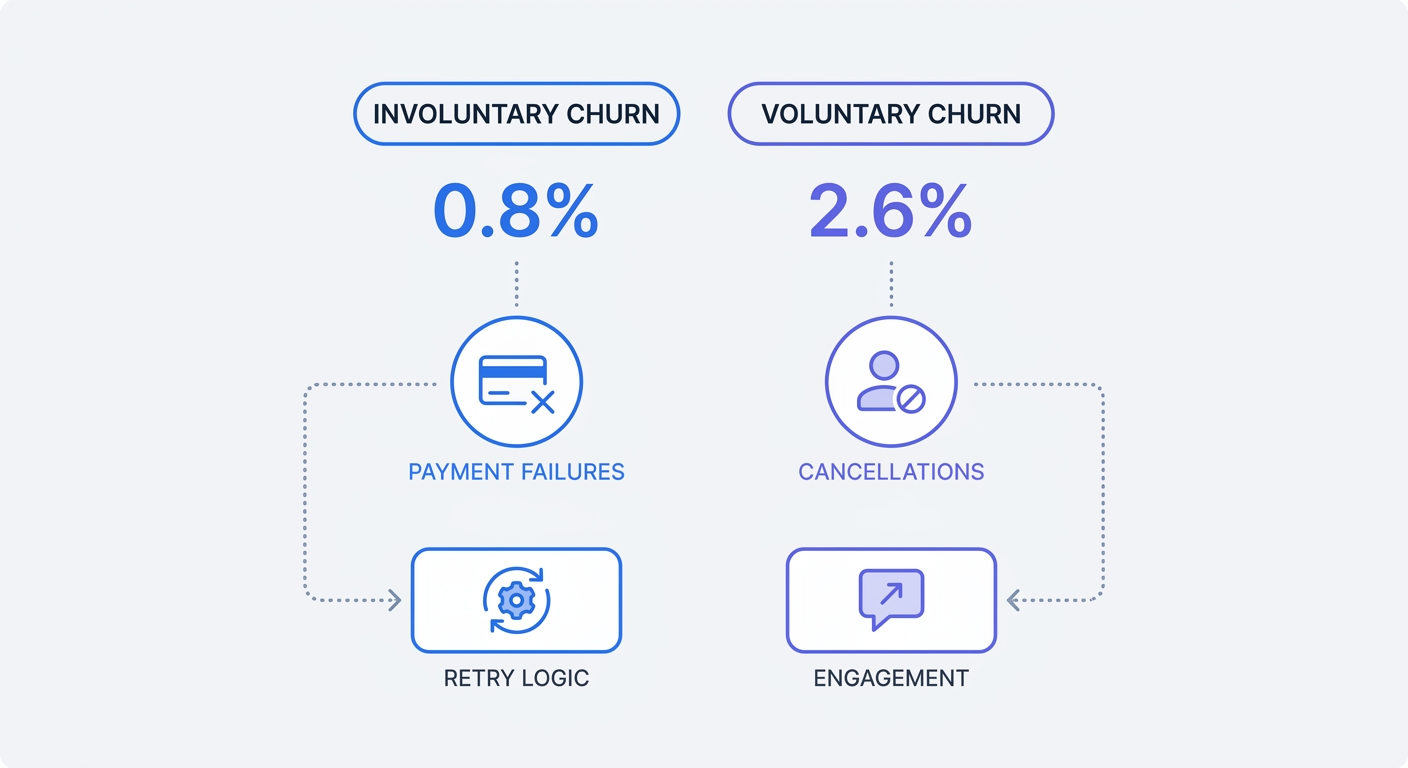
Customers cancel for two specific reasons. Voluntary churn happens when a user decides the product no longer provides value. Involuntary churn occurs due to expired credit cards, failed bank transfers, or billing errors.
Analyze the B2B SaaS median churn baseline. Industry research typically puts average monthly churn at 3.5 percent. This figure breaks down into 2.6 percent voluntary churn and 0.8 percent involuntary churn. Specific benchmarks vary by content type and target industry. SMB-focused software experiences higher attrition, while enterprise SaaS models see lower cancellation rates due to annual contracts. Track both churn types as distinct metrics in the analytics dashboard.
Cohort Segmentation by Channel
Group subscribers based on acquisition source. Segmenting revenue data helps marketers identify which marketing channels generate the highest lifetime value (LTV). Open Swetrix campaign reports and cross-reference the UTM source data with Paddle subscriber lists. Shift marketing budgets toward the channels producing low-churn cohorts. Filter Paddle data by pricing tier to identify plans suffering from higher drop-off rates. Starter plan users tend to churn faster than enterprise clients. Adjust marketing copy to attract the persona with the highest retention rate.
Preventing Churn with Data and Automation
Predicting At-Risk Accounts
Waiting for a cancellation notice guarantees a lost customer. Proactive intervention saves accounts. Monitor user engagement metrics to predict churn risk in advance. Product managers must track pageviews, session duration, and feature clicks within the SaaS application.
A user dropping from daily logins to weekly logins signals a lack of engagement. Set up alerts for these usage drops. Implement predictive health scoring based on activity patterns to reduce monthly churn. Send a targeted email offering a personal training session or highlighting a new feature. Identifying disengagement in advance provides time to restore the relationship.
Automating Dunning Management
Involuntary churn destroys revenue independent of product quality. Payment issues account for half of all subscription cancellations, requiring a dedicated recovery system.
Implement automated dunning management inside Paddle or through a connected tool like Baremetrics. Configure retry logic for failed payments. The system should attempt the charge on different days of the week. At the same time, trigger automated emails alerting the customer to update their payment method.
Paddle offers configurable billing grace periods. A seven-day grace period keeps the account active while the processor retries the credit card. These automated recovery campaigns recapture up to 80 percent of failed transactions. Once the customer updates the card, the subscription renews and MRR stabilizes.
Maintaining Privacy and GDPR Compliance
The Merchant of Record Advantage
Selling software worldwide introduces regulatory friction. Paddle acts as the Merchant of Record, assuming legal responsibility for the transaction. The platform calculates VAT across international jurisdictions and secures all payment details.
This structure limits the personally identifiable information (PII) stored on company servers. SaaS businesses outsource the payment compliance burden. The internal database holds only the customer ID, email, and subscription status. Paddle handles the sensitive credit card data.
First-Party Data Collection
Combining Paddle with Swetrix future-proofs the data stack. Global privacy laws dictate strict consent rules for tracking scripts. Standard analytics platforms drop tracking cookies on customer devices, which requires complex cookie banners and consent management tools.
Switching to cookieless tracking removes this friction. Swetrix collects first-party data using anonymized session identifiers, ensuring GDPR compliance out of the box. Combine this privacy-first web data with server-side webhooks from Paddle to generate precise business metrics. Companies respect user privacy while maintaining full visibility into the growth funnel. As a Google Analytics alternative, our platform delivers accurate conversion data without compliance headaches.
Stop losing data to ad blockers and privacy updates. Own frontend web analytics to track the metrics driving revenue. Swetrix provides a cookie-free, open-source platform that respects user privacy and displays real-time visibility into SaaS growth. Try the Swetrix 14-day free trial today. Paid plans scale alongside transaction volumes, starting at $19 per month for 100,000 events. Visit https://swetrix.com/signup to create an account.