- Date
How to Track Affiliate Links Without Using Cookies
 Andrii Romasiun
Affiliate tracking breaks when developers build it on third-party cookies. Browsers block external scripts, while visitors reject consent banners. Apple limits tracking lifespans. These actions destroy your conversion attribution.
You see a direct visit in your analytics dashboard, but a partner drove that traffic. The partner receives zero commission. You lose visibility into a profitable channel. Rebuilding your infrastructure without cookies fixes this blind spot.
The Hidden Cost of Traditional Affiliate Tracking
The Data Loss Reality
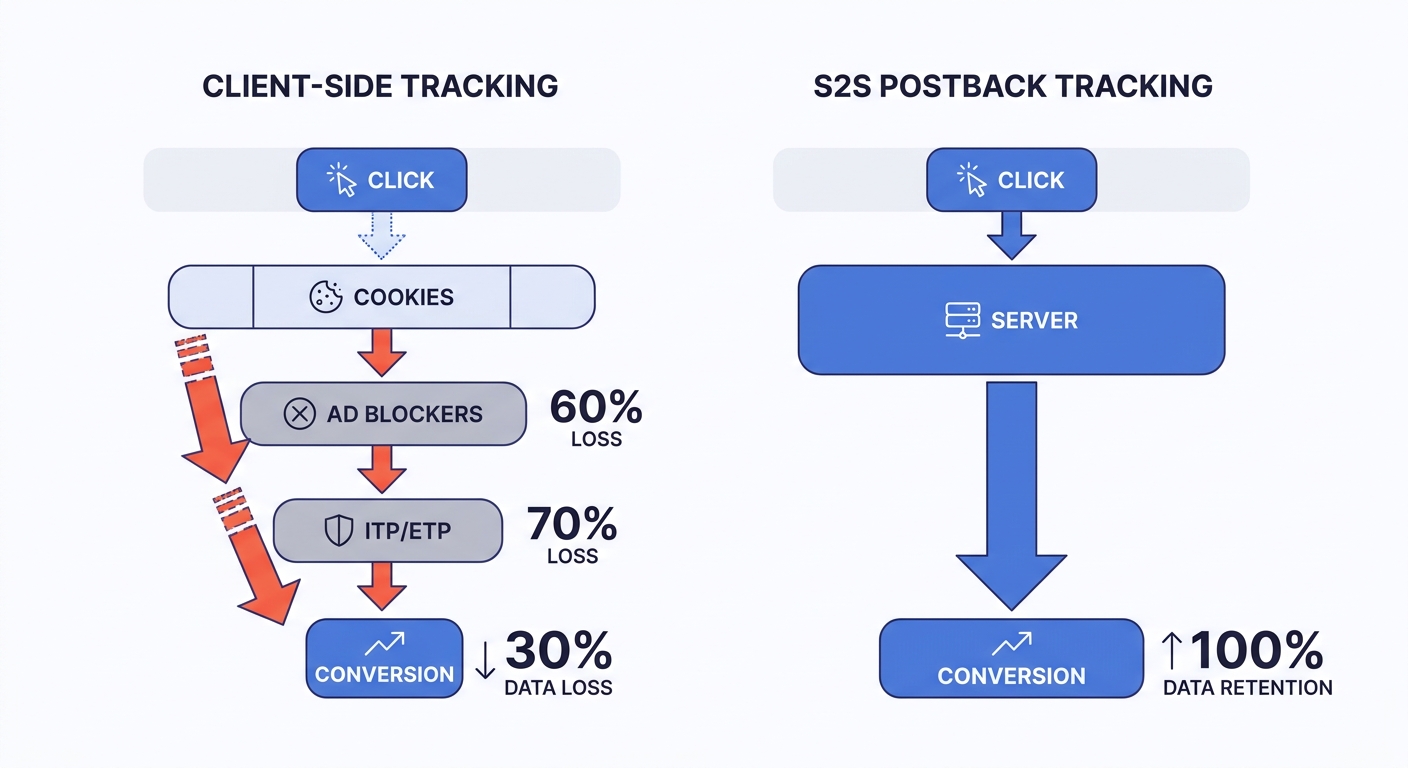
You lose conversion data through standard browser-based pixels. Privacy extensions stop client-side tags from firing. Apple restricts third-party tracking capabilities on iOS and macOS through Intelligent Tracking Prevention. Browser-based tracking typically sees a 15 to 45 percent data loss rate, though this metric fluctuates depending on your target device demographics and e-commerce niche.
Apple enforces a strict seven-day cap on script-writable cookie lifespans across Safari and iOS devices. A visitor clicks an affiliate link on Monday. The visitor returns on Tuesday of the next week to purchase. Apple assigns the sale to direct traffic through Safari. Audit your own conversion drops by filtering your direct traffic analytics by device type.
Google Chrome and the User Choice Era
Google shifted Chrome to a "user choice" model in 2025. Third-party cookies remain active by default, but users can manage cross-site tracking preferences in their browser settings. Large portions of your audience block cross-site data collection.
Marketing teams lose data due to consent banners. Users reject cookie banners at high rates, causing artificial traffic drops for platforms dependent on consent opt-ins. Review your consent banner analytics to calculate your exact opt-out rate.
Close this gap using Swetrix. You track aggregate sessions using cookieless analytics platforms without storing Personal Identifiable Information. You maintain accurate traffic reports despite user consent status. Implementing this system restores visibility into your acquisition channels.
Core Methods for Cookieless Affiliate Tracking
Move away from third-party scripts by building new architecture. Attribute affiliate sales using three methods without touching the browser cookie storage.
Server-to-Server Postbacks
Pass a unique identifier through the URL parameters using server-to-server tracking. The user clicks an affiliate link. Append a unique string called a Click ID to the destination URL.
https://yourbrand.com/checkout?click_id=8f7d6a5b
Store this ID in a local session variable on your server. The user completes the purchase. Send a webhook payload back to the affiliate network containing the transaction details and the Click ID. This confirmation bypasses the browser.
Set up this tracking by mapping your checkout events to your affiliate network API. Open your server-side tag manager, and create a webhook trigger for the purchase event. Map the click_id variable to the network destination endpoint.
Promo Code Attribution
Track sales with zero clicks using promo codes. Attribute conversions through your CRM backend. Influencers and video creators give their audience a specific discount word.
The customer enters "SPRING20" at checkout. Configure your e-commerce backend to log the code. Match the order to the affiliate assigned to that specific discount.
Create unique codes for every active partner. Export a monthly report from your merchant backend filtering orders by discount code usage. Pay your partners based on this internal data. You prevent ad blockers from breaking the attribution chain through server-side database matching.
First-Party Data Subdomains
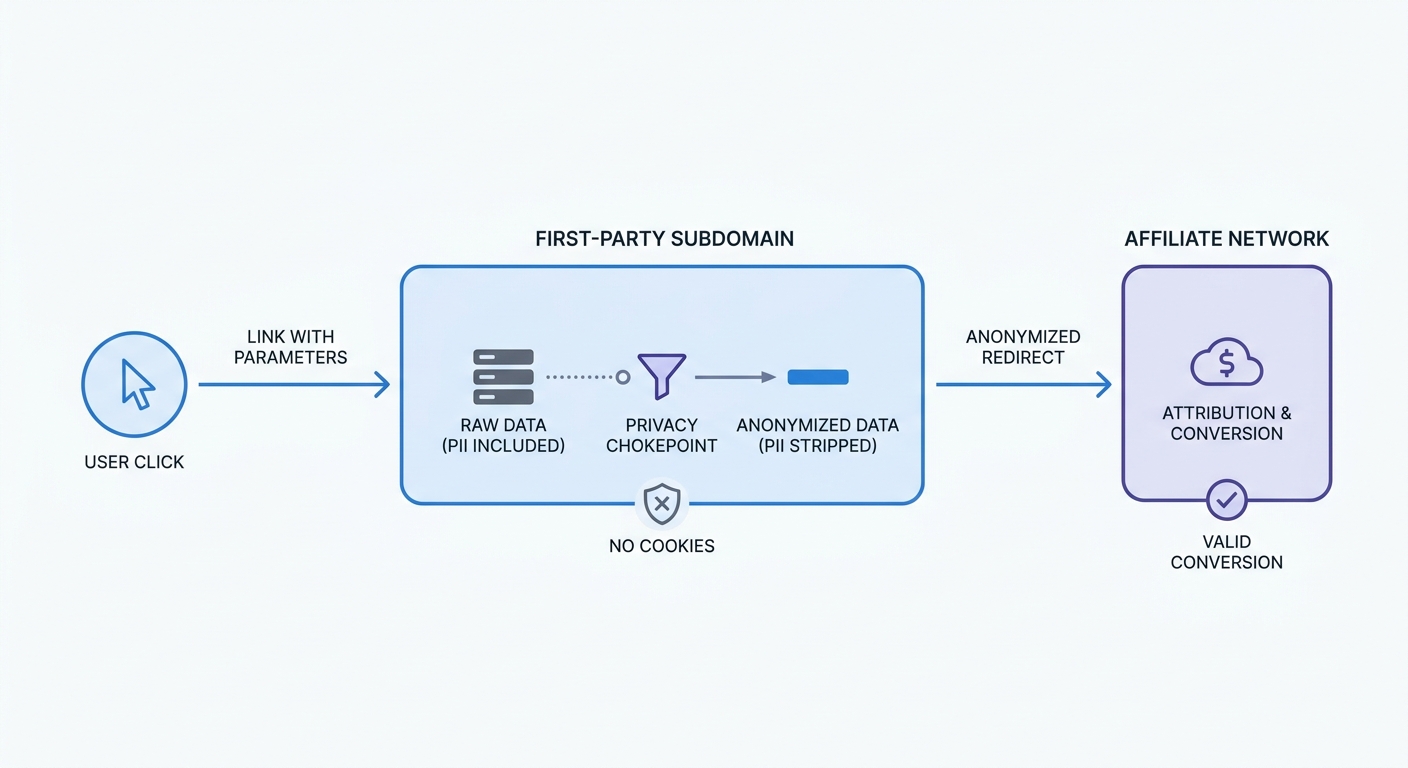
Privacy extensions block known third-party analytics domains. Browsers block tracking scripts loaded from external domains upon page load. Disguise analytics requests as native website traffic using first-party tracking.
Configure a custom subdomain for your data collection. Open your DNS provider settings to create a new CNAME record pointing metrics.yourdomain.com to your analytics server. Update your tracking scripts to load from this new custom endpoint.
Ad-blocking extensions allow requests going to yourdomain.com to pass. You capture the data that third-party scripts drop.
Why Swetrix is the Cookieless Solution
You lose data with many analytics tools when visitors reject cookies. Legacy platform developers rely on client-side state storage. Rejecting a consent banner keeps these scripts inactive. You see 1,000 visitors in your dashboard while server logs record 4,000 unique requests.
Bypassing Artificial Traffic Drops
You capture 100 percent of your traffic using Swetrix. Hash visitor data to track sessions without storing cookies or personal data. You see exact visitor counts, page views, and event completions. Eliminate artificial traffic drops from your reporting.
Read more about cookieless tracking to understand the hash rotation mechanics. The system resets visitor hashes every 24 hours. You gain accurate Daily Active User metrics while preventing cross-site tracking.
Privacy-First Analytics for Affiliates
Affiliate marketers need conversion data without storing personal user details. Gain complete visibility into campaign performance with Swetrix while remaining GDPR compliant. The platform serves as a Google Analytics alternative for privacy-conscious teams.
Create custom events in the Swetrix dashboard to track affiliate link clicks. Append UTM parameters to your inbound partner links. Standardize your campaign naming conventions to organize the incoming data. Capture the source, medium, and campaign data on page load to measure partner performance.
Swetrix plans start at $19 per month for 100,000 events. You gain access to real-time dashboards, performance monitoring, error tracking, and shared analytics views.
Implementing Your Server-Side Tracking Architecture
Route data through your own server to control outbound information. You dictate what the ad networks see.
Creating a Data Privacy Chokepoint
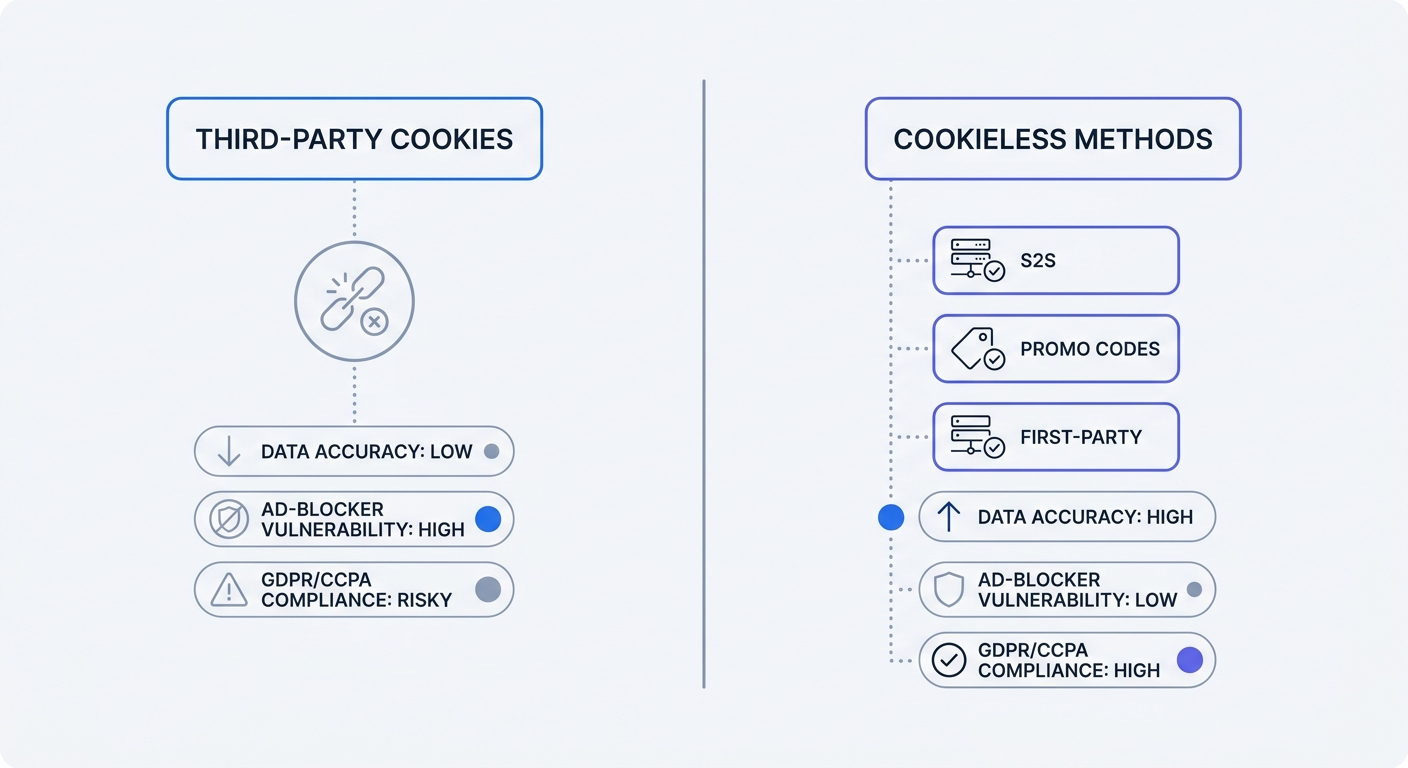
Ad networks use client-side pixels to scrape user data and send it to third-party platforms. This configuration exposes your brand to legal liability under data privacy laws. Build a secure checkpoint using server-side tracking.
Send raw event data from your website to your server. Process the payload. Configure rules to remove regulated data before forwarding the event to the affiliate network.
Remove the user IP address from the headers, and delete the raw user agent string. Forward the event name, the transaction value, and the unique Click ID. Provide the affiliate network with proof of the sale without sending regulated personal data.
To build this chokepoint, route your traffic through a reverse proxy. Configure your Nginx or Caddy server to intercept the tracking requests.
location /track {
    proxy_pass https://analytics.yourdomain.com;
    proxy_set_header X-Real-IP "";
    proxy_set_header X-Forwarded-For "";
    proxy_set_header User-Agent "Redacted";
}
Intercept the request and overwrite the sensitive headers using this configuration. Strip the IP address and mask the device fingerprint at the proxy level. Send clean, anonymized event data to the destination server.
Mastering Event Deduplication
Marketing teams use a hybrid tracking model. Send lightweight "view" signals through a browser pixel, and transmit concrete conversion data via a server API. You cause double counting in your ad platform by sending both signals for one purchase.
Assign a unique identifier to every event instance by generating a random alphanumeric string on page load. Attach this event_id to both the browser pixel payload and the server API payload.
{
  "event_name": "purchase",
  "event_id": "abc_123_xyz",
  "value": 49.99,
  "currency": "USD"
}
Ad platforms receive the browser signal first. You send the server signal seconds later. Ad networks compare the event_id values. Configure your ad manager to merge the two signals into a single attributed conversion.
Validating Your Cookieless Setup
Never turn off old tracking scripts without testing the new infrastructure. You break your attribution reporting with a bad configuration.
The Two-Week Parallel Test
Run client-side and server-side tracking in parallel for fourteen days. Create a custom dashboard to compare event counts.
Check your purchase events every day. Ensure the server-side count equals or exceeds the client-side count. Calculate the variance between the two totals. Assume a misconfiguration in your server triggers if you see a discrepancy above five percent. Review your webhook logic if you observe lower server counts.
Isolate your test variables by sending test conversions using different browsers and devices. Purchase a test product using Safari on an iPhone. Buy another test product using Chrome on a desktop computer. Verify both transactions appear in your server-side logs.
Reclaiming Your Cost Per Acquisition
You inflate your Cost Per Acquisition metrics when you miss conversion data. Ad platforms miscategorize campaigns as poor performers. Ad networks stop bidding on profitable audiences due to flawed data.
Feed accurate data back to the bidding algorithms using first-party and server-routed methods. Register the missing conversions in the platform. Lower your reported Cost Per Acquisition. Guide ad networks to optimize for the right user profile based on complete data.
Capture your lost traffic by auditing your analytics for missing affiliate sources. Switch to a privacy-first infrastructure to protect your data and restore your affiliate attribution.
Track your campaigns without relying on fragile third-party cookies. Deploy open-source, cookie-free web analytics with Swetrix starting at $19/mo for 100,000 events. Reclaim your traffic data and stay GDPR compliant. Start your 14-day free trial today.