- Date
Top Open Source Alternatives To Google Analytics In 2026
 Andrii Romasiun
Google tracks 81.4% of websites using known traffic analysis tools, though adoption ranges from roughly 43% among the top 10,000 highest-ranking sites to over 85% depending on the server environment. Google introduced strict data sampling thresholds in GA4 alongside an interface that frustrates digital teams. Privacy regulators run proactive audits on consent banners to penalize unauthorized data collection. Solve these tracking problems by exploring open source alternatives to google analytics in 2026. Platforms like Swetrix allow teams to capture clean data and eliminate GDPR compliance risks by switching to self-hosted or cookie-free tracking.
Reasons To Ditch GA4 For Open-Source Alternatives to Google Analytics
The Growing Cost Of Data Privacy Fines
Regulatory bodies shift from reactive consumer complaints to proactive website audits. Agencies test consent overlays and monitor cross-border data transfers on business websites. EU authorities have issued billions of euros in GDPR fines since enforcement began. Google transmits visitor IP addresses to external servers for processing. Audit your tracking stack for data residency compliance today. Run self-hosted or EU-cloud options like Swetrix to secure visitor metrics without exposing user data to third-party ad networks.
GA4 Fatigue And The Push For Simplicity
Google mandated migration from Universal Analytics, leaving organizations with fragmented reporting views. Teams waste hours building Looker Studio dashboards to recreate standard traffic interfaces. Developers build open-source alternatives to present metrics without complex menus or steep learning curves. Implement a transparent tracking environment to restore organizational trust in traffic numbers.
The Hidden Cost Of Data Sampling
Google distorts conversion reports through GA4 sampling thresholds. Marketers view exact metrics in standard reports until event volumes exceed specific quota limits. Once traffic spikes, Google extrapolates total counts from a small subset of visitors. Professionals misallocate advertising budgets due to this data extrapolation. A business might generate 500 sales from a specific ad set but see 412 in the dashboard because of aggressive sampling algorithms. Developers program open-source servers to log every individual event without applying statistical guesses. Monitor campaign returns with a ROI calculator to measure the financial impact of exact versus sampled traffic counts.
Core Advantages Of Open-Source Web Analytics
Total Data Sovereignty And Self-Hosting
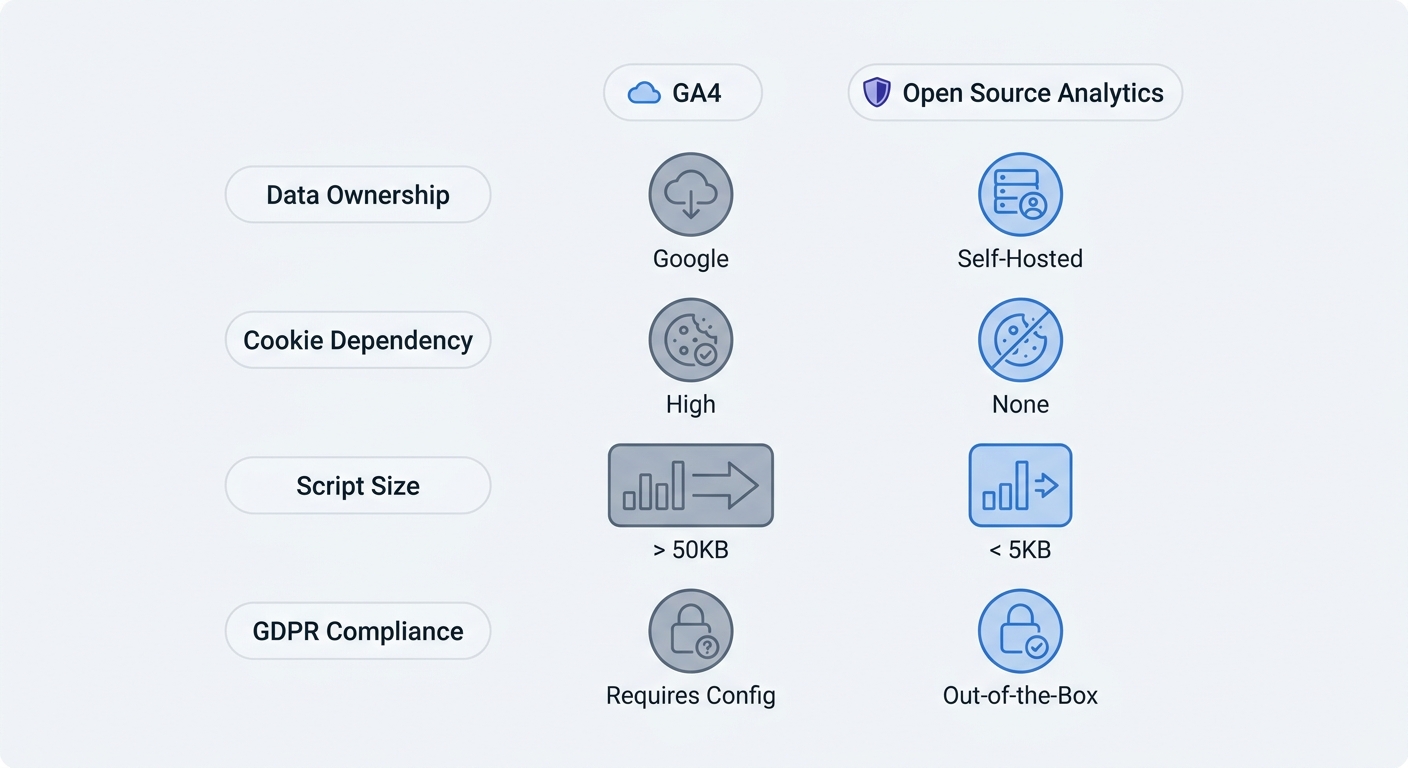
Companies build closed-source trackers as black boxes. Marketers and developers cannot verify the specific data processing methods these external vendors use. Open-source codebases remain public and auditable. Privacy regulators inspect the code repository to confirm the absence of hidden device fingerprinting. Deploy analytics on a virtual private server to guarantee total data ownership. Organizations comply with strict internal security policies by maintaining records on internal infrastructure. National governments enforce comprehensive data privacy laws worldwide. Administrators insulate their business from shifting international compliance frameworks by self-hosting data. Review server capacity to determine if internal hosting fits the operating budget.
Bypassing The Cookie Banner Friction
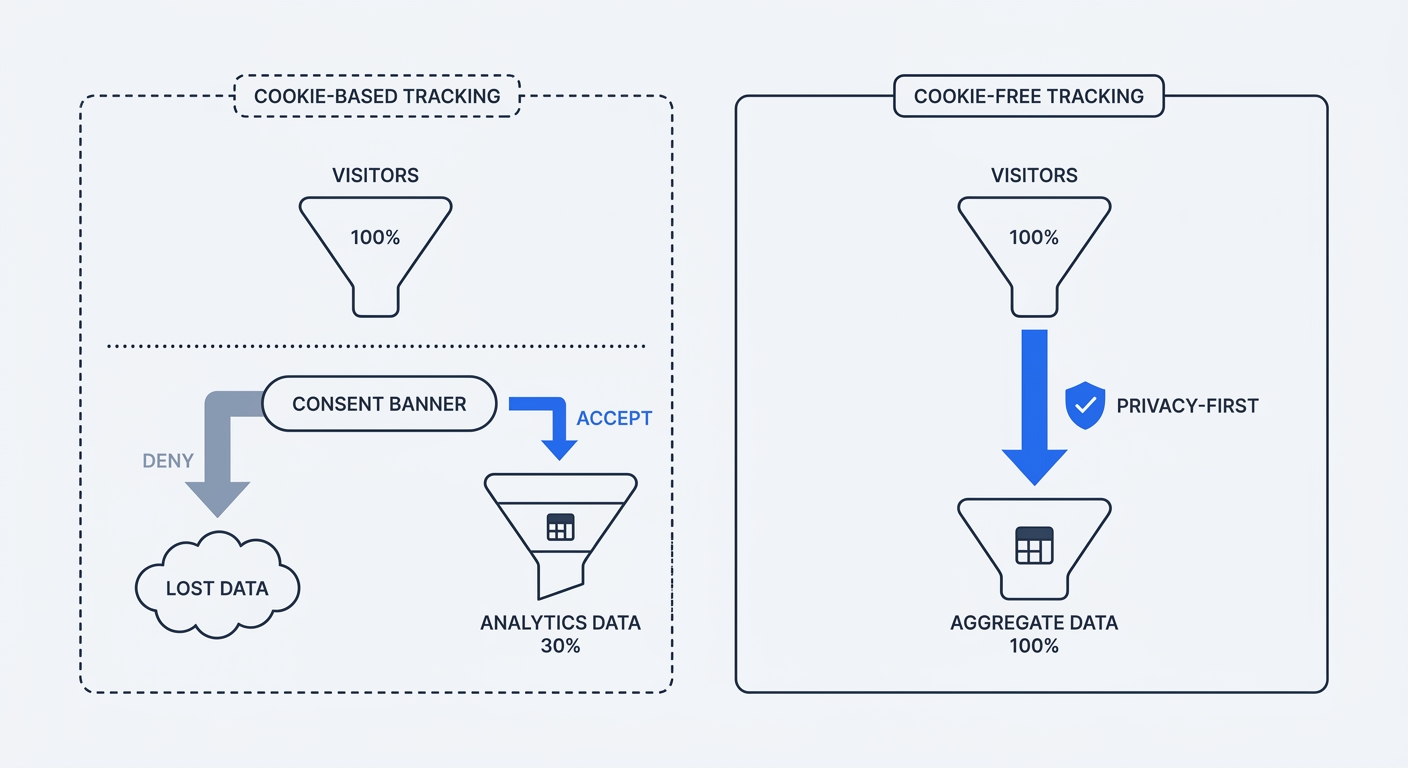
Site owners deploy cookie consent banners that block page content and distort traffic metrics. Vendors of traditional platforms ignore the session data when users decline cookies. Tracking maximum non-PII traffic requires abandoning tracking cookies. Teams bypass ePrivacy banner requirements by selecting software that operates without cookies. Remove the banner from the website to lower bounce rates. Businesses capture every browsing session without violating user trust. Marketers replace invasive individual profiling with aggregate cohort analysis to map broad trends. Evaluate dependence on individual cross-site tracking to determine if aggregate models meet current reporting needs.
Top Open-Source Alternatives To Google Analytics
Swetrix: The Best Cookie-Free Platform
The Swetrix team provides un-sampled analytics without the bloat of traditional enterprise trackers. We built this platform for marketers and developers who demand fast, actionable insights through a real-time dashboard. Users track custom events, outbound links, and pageviews via a minimal JavaScript payload that maintains site performance. Engineers ensure compliance across global privacy regions by utilizing a cookie-free setup by default. Track every campaign source with our UTM generator to capture complete attribution data.
Swetrix Cloud is hosted entirely on EU-based servers to guarantee strict data residency. For those requiring total infrastructure control, engineering teams can self-host the open-source repository. Beyond simple traffic metrics, Swetrix allows you to monitor application health with built-in performance monitoring and error tracking features. You can also utilize shared dashboards to keep your entire team or clients aligned. Adopt Swetrix as your primary Google Analytics alternative to regain exact daily visitor counts.
Matomo: The Enterprise Powerhouse
Organizations use Matomo when they require complex funnel reporting and deep ecommerce integration. Teams deploy it as a direct replacement for heavy GA4 enterprise setups. Developers of Matomo include multi-touch attribution modeling and detailed customer log analysis. Administrators need significant server resources to run the software on high-traffic sites. Implement Matomo when the marketing department relies on custom variable tracking to segment specific user cohorts. Calculate the monthly infrastructure costs before committing to a self-hosted enterprise deployment.
Plausible And Umami: Lightweight Trackers
Indie developers favor Plausible and Umami for minimal script footprints. Creators of both tools bundle small JavaScript payloads to prevent negative impacts on Core Web Vitals. Users access top-level metrics like pageviews, bounce rates, and referrers in a single-page view. Neither tracker supports advanced ecommerce integrations or robust error monitoring. Select these products for basic content sites or standalone landing pages. Compare feature sets against technical requirements before installing the script.
| Platform | Cookie Dependency | E-commerce Depth | Data Sovereignty | Primary Use Case |
|---|---|---|---|---|
| Swetrix | Cookie-free | Moderate | Self-Host or EU Cloud | Marketers & Developers wanting clean data & error tracking |
| Matomo | Cookies optional | Deep | Self-Host or Cloud | Enterprise teams needing robust GA4 replication |
| Plausible | Cookie-free | Basic | Self-Host or EU Cloud | Indie developers prioritizing lightweight scripts |
| Umami | Cookie-free | Basic | Self-Host or Cloud | Startups needing simple pageview dashboards |
How To Implement Your New Analytics Stack
Setting Up First-Party Domain Proxying
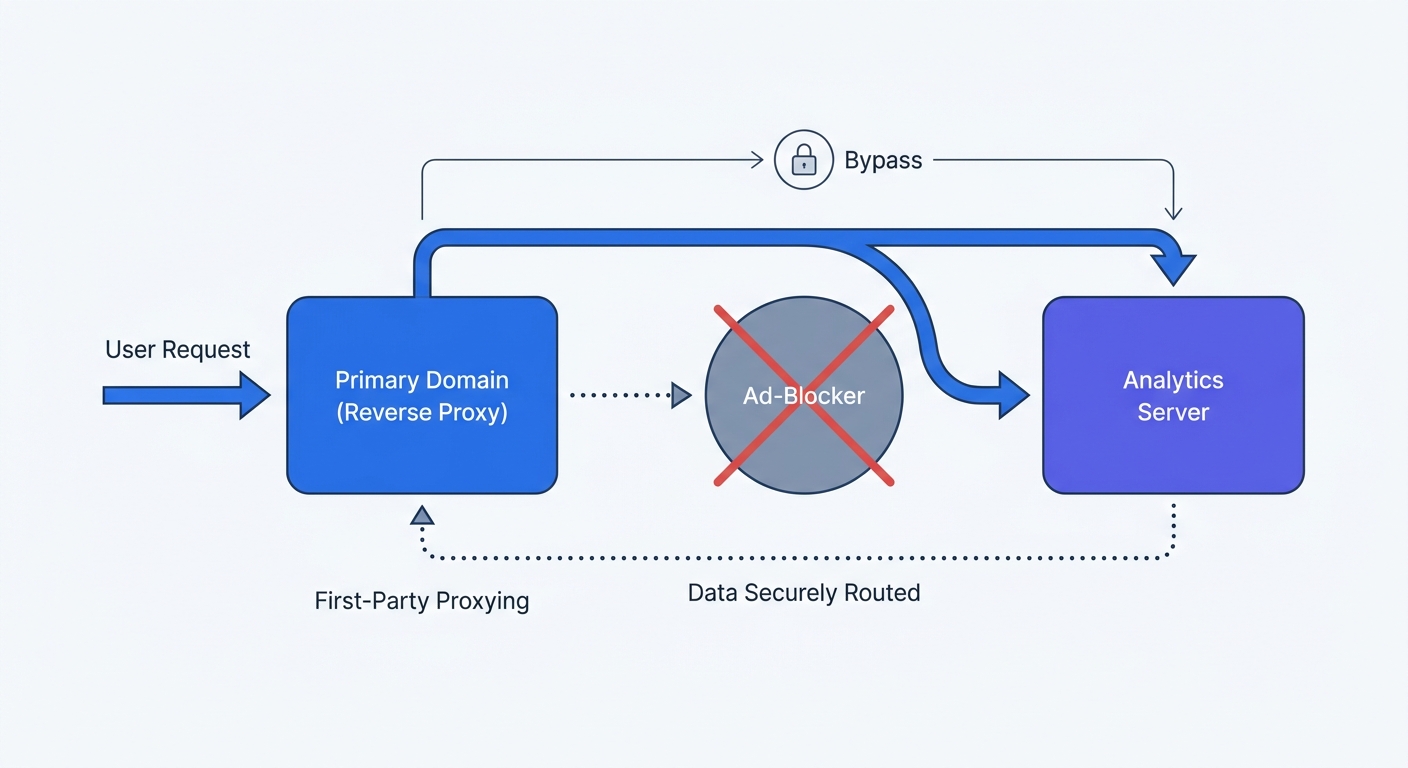
Users block third-party analytics scripts using ad-blockers that match network requests against public filter lists. The client device terminates the connection before the script executes on the page. Route the tracking payload through a reverse proxy to solve this issue. The device processes a native request to the primary domain and permits the data transfer. Create a Cloudflare Worker to intercept the request and forward it to the analytics server.
- Open the Cloudflare dashboard and navigate to Workers & Pages.
- Create a new application and open the code editor.
- Paste the following reverse proxy fetch script:
export default {
  async fetch(request) {
    const url = new URL(request.url);
    url.hostname = "swetrix.org";
    return fetch(url.toString(), request);
  },
};
- Bind the worker to a custom route like
analytics.yourdomain.com/*. - Update the website header to load the analytics script from the new custom subdomain.
Engineers configure Cloudflare to intercept the request and forward it to the analytics endpoint. Administrators return the response through the same custom domain. Marketers bypass standard filter lists without compromising user privacy.
Anonymization By Design Through Salting
Tracking unique visitors without cookies requires temporary session identifiers. Lawmakers classify IP addresses as personal information under GDPR. Developers solve this constraint by hashing the user IP address alongside a daily rotating salt. System administrators program the server to generate a random string at midnight. Analysts count active sessions on a specific day by generating a unique hash for each visitor. The identical user generates a new hash the following day. Administrators view exact daily numbers without connecting individual user sessions across multiple days. Check the tracking configuration to confirm IP anonymization is active before pushing the setup to production.
Validating Your Implementation
Deploying a new tracker requires rigorous testing before release. Open the browser developer tools and navigate to the network tab. Trigger a custom event on the staging environment. The outgoing request payload populates in the network tab. Inspect the request headers to confirm the absence of third-party cookies. Verify the server returns a successful 200 code. Open the analytics dashboard to confirm the event registers in the live view. Test the setup across Chrome, Safari, and Firefox to guarantee the tracking functions inside strict browser privacy shields.
Bulletproofing Your Data Privacy Compliance
Adapting To Multi-Tool Analytics Stacks
Digital teams face technical compromises when using monolithic tracking platforms. Marketing departments require complex funnel attribution, while developers demand fast page load speeds. Resolve this conflict by splitting tracking responsibilities across two systems. Run a deep ecommerce tracker on dedicated checkout pages for paid acquisition campaigns. Install a separate cookieless tracking script across the entire application for raw performance monitoring and error tracking. Segment the data pipelines to keep the frontend fast. Marketing teams analyze conversion paths in one dashboard. Developers monitor speed metrics and Javascript errors in Swetrix without slowing down the initial page render.
Maintaining Unified Audit Logs
Regulatory bodies calculate fines based on organizational negligence. The European Data Protection Board rewards companies that maintain documented proof of tracking infrastructure. Start by mapping every data collection point on the website. Teams must document the specific open-source repository utilized for each tracker. List the hosting provider and the physical location of the server. Consolidate these records into a single audit document for the legal team. Updates to the log must happen whenever a developer adds a new custom event or tracking pixel. Present this log during automated compliance audits to prove adherence to data minimalization principles.
Stop losing traffic data to complex GA4 setups and ad-blockers. Swetrix provides a privacy-first, cookie-free open-source analytics platform that respects users and delivers exact traffic numbers with integrated error tracking and performance monitoring. Build a custom dashboard and regain control of web data today. Start a 14-day free trial at swetrix.com/signup.