- Date
Top Hotjar Alternatives For User Behavior Tracking
 Andrii Romasiun
Launch a heatmapping tool to understand why users abandon your checkout page, and you will notice half your traffic never shows up in the replay. Because traditional behavior tracking relies on cookies, visitors who click "Reject All" vanish from your dataset entirely. Overcome this data blindness by switching to privacy-first Hotjar alternatives for user behavior tracking. Platforms like Swetrix use cookieless architecture to measure engagement legally, which restores analytics visibility without forcing an invasive consent banner on your audience.
The Cookie Crisis Hurting Web Analytics
The default analytics stack is broken. For years, marketing teams relied on client-side cookies to stitch together user journeys and record screen interactions, but regulators dismantled that system by enforcing strict consent rules. This shift leaves website owners with fragmented data and unreliable reporting.
The Rise of Data Blindness
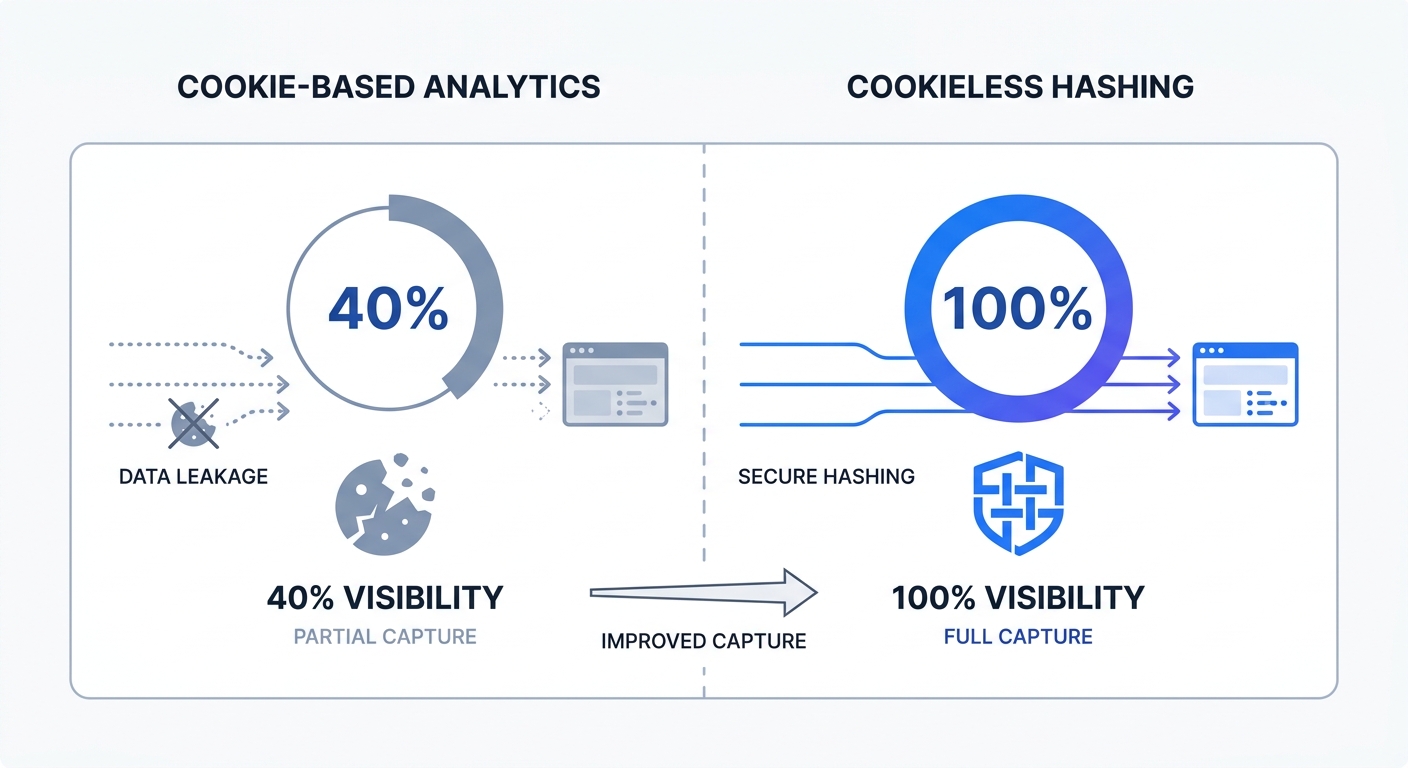
When websites deploy legally compliant, equal-weight "Accept" and "Reject" buttons on their tracking banners, average cookie rejection rates often exceed 50 percent. Complying with the law means losing more than half your behavioral data, which creates massive analytics blindness for teams trying to optimize conversion rates. Optimizing a landing page based on 40 percent of the traffic yields decisions built on skewed, unreliable samples.
Those missing users do not behave like the ones who opt in, as privacy-conscious visitors often use different browsers, operate different devices, and interact with content differently. Excluding them forces your reports to generate false averages that push design decisions in the wrong direction. Accurate A/B testing becomes impossible when the majority of your visitors never register as participants in your analytics dashboard.
Why Legacy Tools Are Losing Data
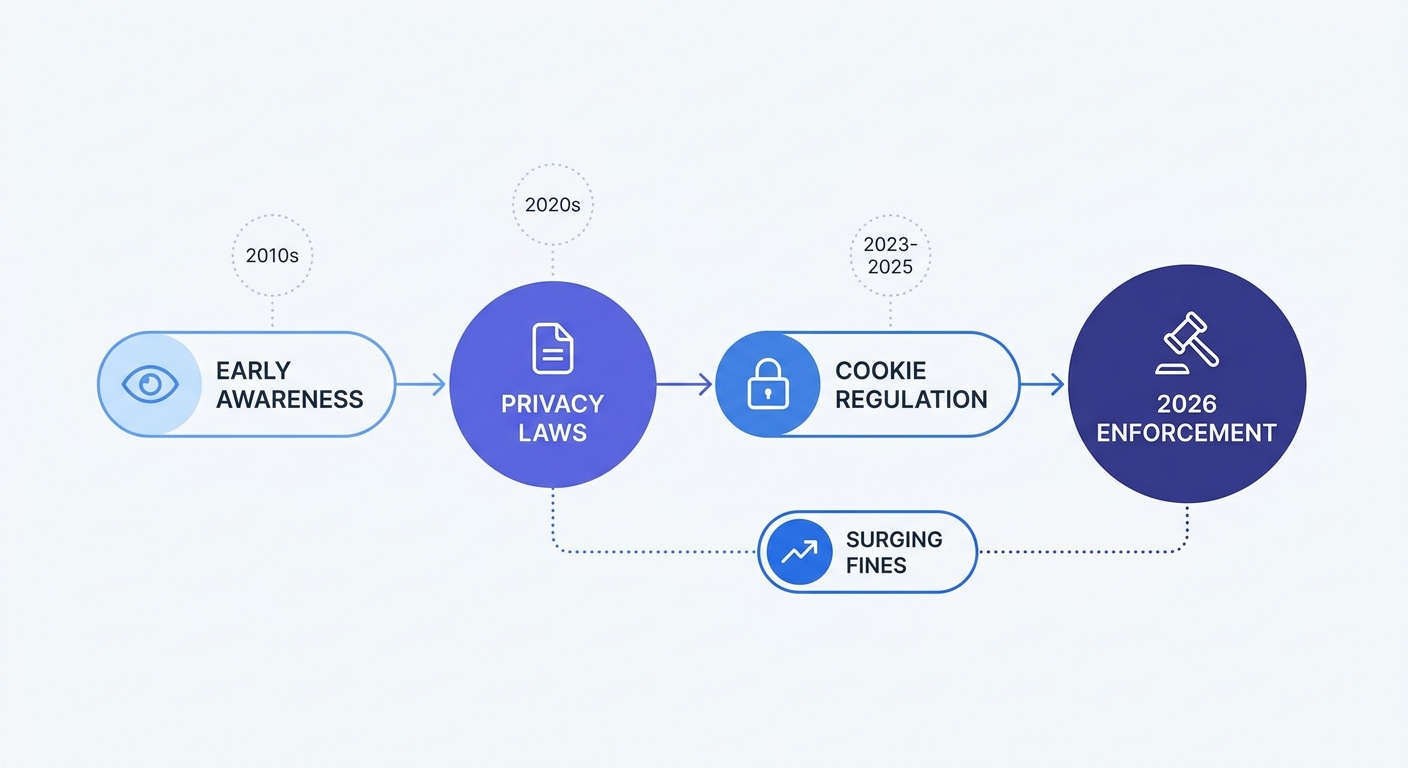
Session recording software captures individual keystrokes, mouse movements, and screen activity. Under the General Data Protection Regulation (GDPR) and the California Consumer Privacy Act (CCPA), deploying these invasive scripts requires explicit, prior opt-in consent. Regulators have moved past issuing warnings and transition periods, aggressively fining companies that hide rejection options behind dark patterns or bury them in secondary menus.
Modern privacy laws now cover nearly 80 percent of the global population, making the regulatory risk of tracking individual user sessions severely outweigh the marketing benefit. Attempting to use legacy tracking forces you to maintain complex Consent Management Platforms, debug missing data pipelines, and risk hefty non-compliance penalties to see how a fraction of your users scroll down a page. Continuing to rely on these outdated tools guarantees permanent visibility loss.
Hotjar Alternatives for User Behavior Tracking
The analytics industry is moving away from granular surveillance and toward aggregated insights. Changing how you collect data allows you to bypass the legal triggers that mandate consent banners entirely.
The Shift to Cookieless Analytics Platforms
Replace invasive replays with systems designed around data minimization. Cookieless analytics platforms track engagement by observing server-level requests and anonymous event triggers rather than storing persistent identifiers in the visitor's browser. When a user clicks a "Submit" button, a lightweight script sends a ping to the server documenting the interaction, and the platform logs the event without attaching it to a personal profile.
Stripping out identifying metadata eliminates the legal requirement to ask for tracking permission. This structural shift allows you to capture behavioral data for every visitor while complying with strict privacy mandates. You retain the ability to measure which features drive engagement, executing that measurement at the cohort level rather than the individual level.
Embracing Aggregate Behavioral Metrics
Staring at individual session replays wastes hours and introduces massive liability, so replace isolated recordings with aggregated engagement metrics that highlight systemic UX issues. Track scroll depth to see where content loses momentum on your long-form sales pages, or configure custom events to fire when users interact with specific accordion menus, video players, or add-to-cart buttons.
Implement this tracking by mapping specific actions to custom events in your codebase. Adding an attribute like swetrix-track="pricing-signup" to an HTML button tells the analytics server exactly when that conversion step occurs, letting you measure specific interaction points across your entire audience:
- Set up a funnel tracking report to monitor macro-conversions from landing page to purchase.
- Track outbound link clicks to measure which affiliate partners or external resources receive the most traffic.
- Monitor file downloads to gauge interest in your whitepapers and technical documentation.
Measuring the collective behavior of 10,000 visitors reveals patterns that single replays obscure. You identify conversion bottlenecks faster without spying on specific keystrokes. Tools like Swetrix handle this process by allowing you to analyze website conversion funnels entirely through anonymous event counting.
Top Features to Look for in a Tracking Alternative
Not all privacy-focused tools capture behavioral data effectively, so select a platform that balances compliance with deep technical capabilities.
Server-Side Tracking Capabilities
Move your data collection from the visitor's browser to your own server infrastructure. Client-side tracking scripts slow down page rendering, trigger strict ad blockers, and expose raw interaction data to third-party vendors. In contrast, server-side tracking executes the analytics logic on the backend, passing clean, sanitized data directly to your reporting dashboard.
This setup improves Core Web Vitals scores by drastically reducing the JavaScript payload your site forces visitors to download and execute. It also bypasses browser-level tracking protections, like Apple's Intelligent Tracking Prevention (ITP), which routinely block traditional analytics tools from firing. Configure your environment to send interaction data straight from your server to secure total control over what information reaches the analytics provider.
Anonymous Hashing for User Privacy
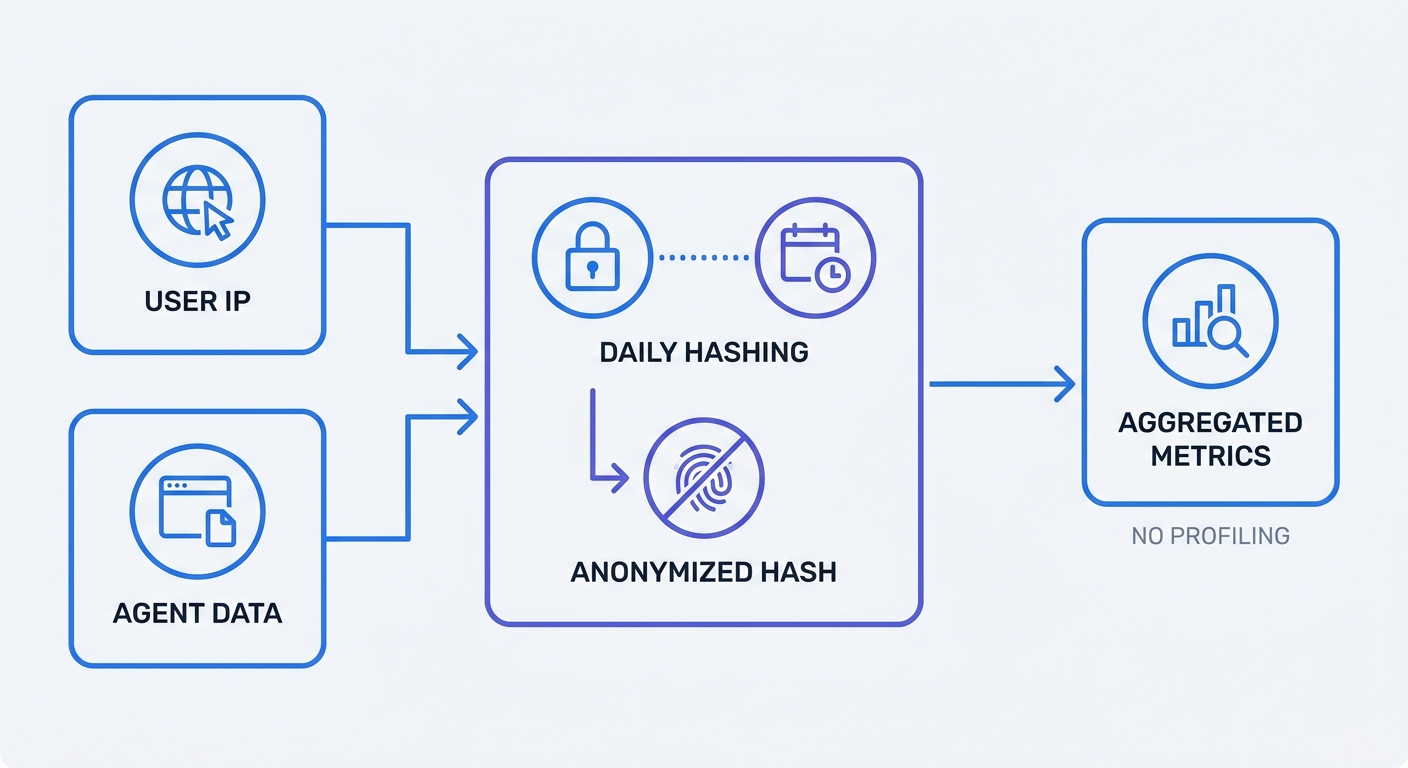
Unique visitor counts require a method to recognize returning traffic without storing a permanent cookie on the device. The strongest technical defense against individual profiling relies on anonymous daily hashing. When a request hits the analytics server, the system combines the visitor's IP address and user agent string with a daily rotating cryptographic salt.
This process creates an encrypted hash that identifies the user for a single 24-hour window. At midnight, the salt changes, making yesterday's hashes completely untraceable. Swetrix builds its entire data collection model on this hashing process, showing exactly how many unique users visited your pricing page today without enabling cross-site tracking or advertising profiling over time.
Comparing the Best Privacy-First Tracking Tools
Finding a functional Google Analytics alternative requires a tool that handles both traffic attribution and on-page behavior tracking.
Swetrix: A Full Analytics Solution
Website operators need actionable engagement data without the compliance headache. Swetrix provides a fully open-source, cookieless platform that tracks user behavior natively. Because it discards personal data and relies entirely on anonymous hashing, the software restores 100 percent data visibility across your entire audience. Track custom events, measure traffic sources, and analyze funnels in a real-time dashboard hosted securely on EU servers.
Swetrix goes beyond basic traffic counting by integrating performance monitoring and JavaScript error tracking directly into the interface. If a broken checkout button drives up your bounce rate, the error log details exactly which script failed on the user's end. Pricing scales predictably based on traffic volume, starting at $19 per month for 100,000 events, and the architecture supports both self-hosting for data control and a managed cloud solution.
Other Notable Options in the Market
Several platforms offer cookieless data collection, though their feature sets diverge significantly when analyzing complex user behavior.
| Feature | Swetrix | Plausible | Fathom | Matomo |
|---|---|---|---|---|
| Custom Event Tracking | Yes, unlimited | Yes | Yes, limited | Yes |
| JavaScript Error Tracking | Yes | No | No | No |
| Web Vitals Monitoring | Yes | No | No | Optional plugin |
| Open Source Codebase | Yes | Yes | No | Yes |
| Cookie-free by default | Yes | Yes | Yes | Requires config |
Plausible delivers a lightweight dashboard optimized for simplicity, handling basic traffic metrics efficiently but lacking the deep error tracking required for rigorous behavior analysis. Fathom excels at pageview tracking via its global CDN, yet its custom event limits feel rigid compared to heavier alternatives. Matomo offers a dense analytics suite with both cookie-based and cookieless modes, but configuring it for strict compliance without a consent banner requires adjusting complex backend settings panels.
Swetrix balances these extremes by providing the advanced event tracking of heavier suites while maintaining a clean, privacy-by-default architecture. For teams exploring Matomo alternatives, this combination of features removes the friction of maintaining complex local databases.
Actionable Steps to Transition Your Tracking Setup
Switching to a cookieless platform requires updating your tag deployment and cleaning up your frontend code to match your new privacy standards.
Removing the Cookie Banner Safely
Rip out the consent pop-up that degrades your user experience. After replacing legacy tracking tools with a cookieless alternative, you no longer need to request permission to analyze your own website.
- Audit your site for remaining third-party trackers using browser developer tools. Open the Network tab and filter for cookies to verify what fires on page load.
- Remove all existing tracking pixels tied to Facebook, Google Ads, or legacy heatmapping tools.
- Install your new cookieless tracking script in the
<head>of your website code. - Deactivate your Consent Management Platform (CMP) plugin or banner script entirely.
Check your network tab again to verify no cookies drop when you load the homepage in an incognito window. Dropping the banner removes the friction that causes instant bounces, which immediately improves the speed and visual feel of your first touchpoint.
Benchmarking Your Engagement Metrics
Establish new baselines immediately after your data visibility returns to 100 percent. The numbers will shift because you are finally capturing the 50 percent of users who previously rejected cookies and stayed off your radar, so compare your new statistics against established industry benchmarks to gauge your actual performance.
The cross-industry average website bounce rate often sits near 50 percent (though this baseline can range anywhere from 20 to 70 percent depending on your specific industry and content type). If your B2B landing page registers a 45 percent bounce rate under full cookieless tracking, your engagement remains healthy. Conversely, email campaign landing pages should retain higher engagement, typically bouncing at 25 to 40 percent due to the pre-qualified nature of the traffic.
Filter your Swetrix dashboard by traffic source and build a custom report tracking specific event triggers. Combine this behavior data with strict URL tagging, as tracking UTM parameters effectively segments behavior by specific marketing campaigns. If organic search traffic bounces at 70 percent on your product features page, restructure the opening paragraph to match search intent faster. Use the complete data picture to audit your conversion bottlenecks and stop guessing what the missing half of your audience is doing.
Stop losing half your engagement data to cookie rejections. Start your 14-day free trial of Swetrix today to track user behavior natively, fix JavaScript errors in real time, and analyze conversion funnels without invasive consent banners.