- Date
How To Generate A Website Privacy Policy Free
 Andrii Romasiun
A visitor lands on your new project, reads your content, and signs up for your newsletter. Behind the scenes, your website fires a tracking pixel, logs an IP address, drops a retargeting cookie, and syncs the email to a marketing CRM. If your site lacks a legal document explaining exactly how those four actions happen, you are breaking data protection laws.
You cannot borrow a document from another website, because regulators deploy automated web crawlers that scan for missing disclosures. Copying another company's terms leaves you legally responsible for processes you do not use. You either pay legal counsel to draft custom documentation, or you learn how to generate a website privacy policy free using automated compliance tools.
Minimizing the data you collect is the fastest way to reduce your legal exposure before you write a single legal clause. Switching your site to a cookie-free platform like Swetrix eliminates the need for extensive third-party data sharing disclosures. Once your tracking stack is clean, generating a valid policy takes minutes instead of weeks.
Why You Need a Privacy Policy Now
Data privacy enforcement no longer focuses exclusively on social media giants and enterprise data brokers. Instead, automated watchdogs flag small businesses, independent ecommerce stores, and personal portfolios for missing documentation.
The $930 Lawyer vs. Free Alternatives
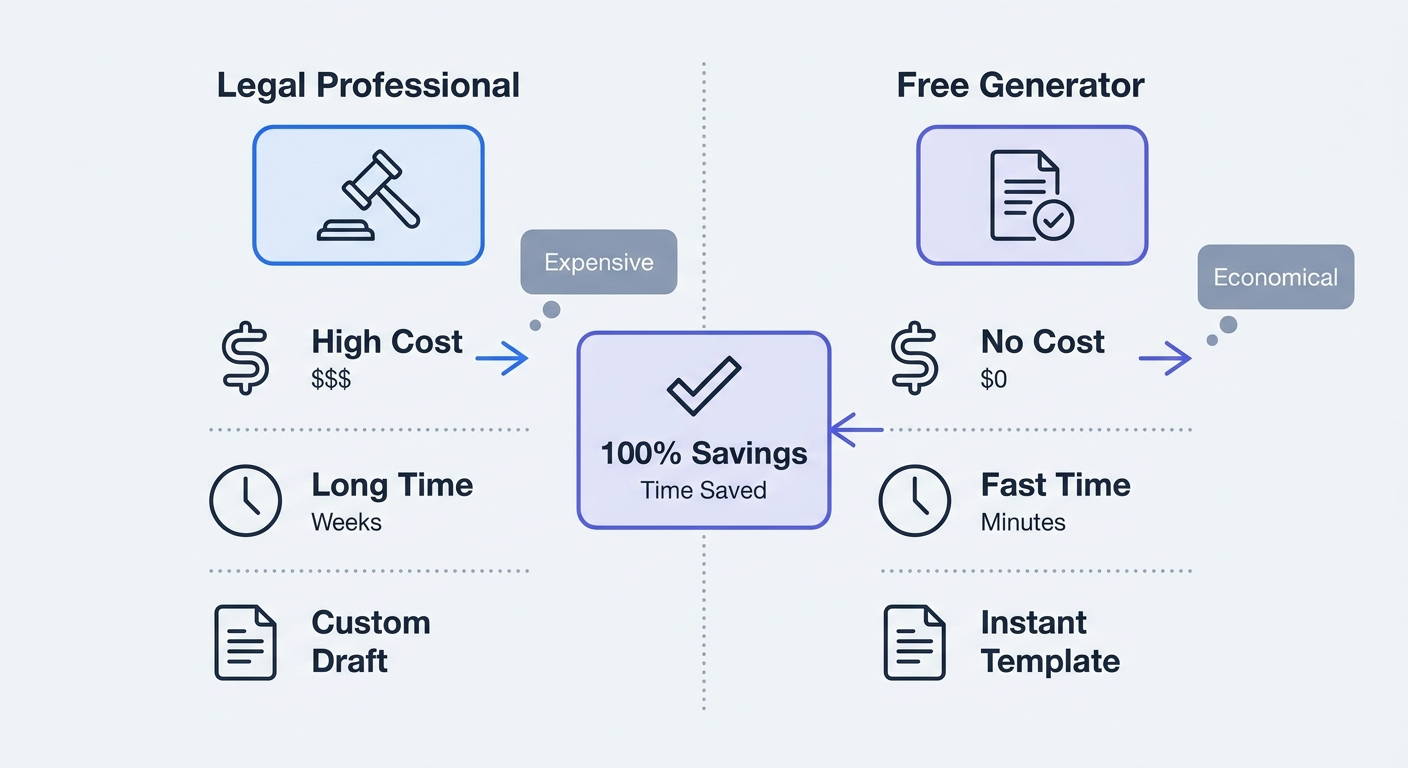
Hiring legal counsel to review your website data flows and write custom terms requires a significant budget. A legal marketplace analysis puts the average cost to draft a custom privacy policy at $930. The price fluctuates based on geographic scope and third-party data relationships, occasionally reaching $1,500 for sites with complex advertising setups.
Even if you draft the document yourself and hire a lawyer strictly for review, flat-fee legal reviews still average $580. Custom legal counsel remains necessary for enterprise SaaS applications handling sensitive health or financial records. However, standard marketing websites, blogs, or ecommerce storefronts can bypass this expense. You can generate a website privacy policy free by answering guided questionnaires that compile standardized legal clauses based on your specific inputs, mapping your answers to current regulations to output a compliant document.
The Rising Cost of Global Privacy Fines
Ignoring the requirement carries steep financial penalties. In 2025 alone, regulators issued €1.2 billion in GDPR fines across more than 330 enforcement actions.
Lack of user consent historically drove these penalties, but recent European enforcement aggressively targets operational failures. Roughly 29% of recent GDPR fines penalized companies for insufficient technical and organizational measures, which penalizes websites that fail to disclose a marketing pixel or promise data security that the underlying hosting infrastructure lacks.
A privacy policy acts as a binding contract. When a visitor reads that you do not sell their data, but your site loads a third-party advertising script that aggregates behavioral profiles, you violate that contract.
Steps to Generate a Website Privacy Policy Free
A generator tool operates only as accurately as the information you provide. If you build a policy that fails to mention your payment processor, the resulting document leaves you exposed.
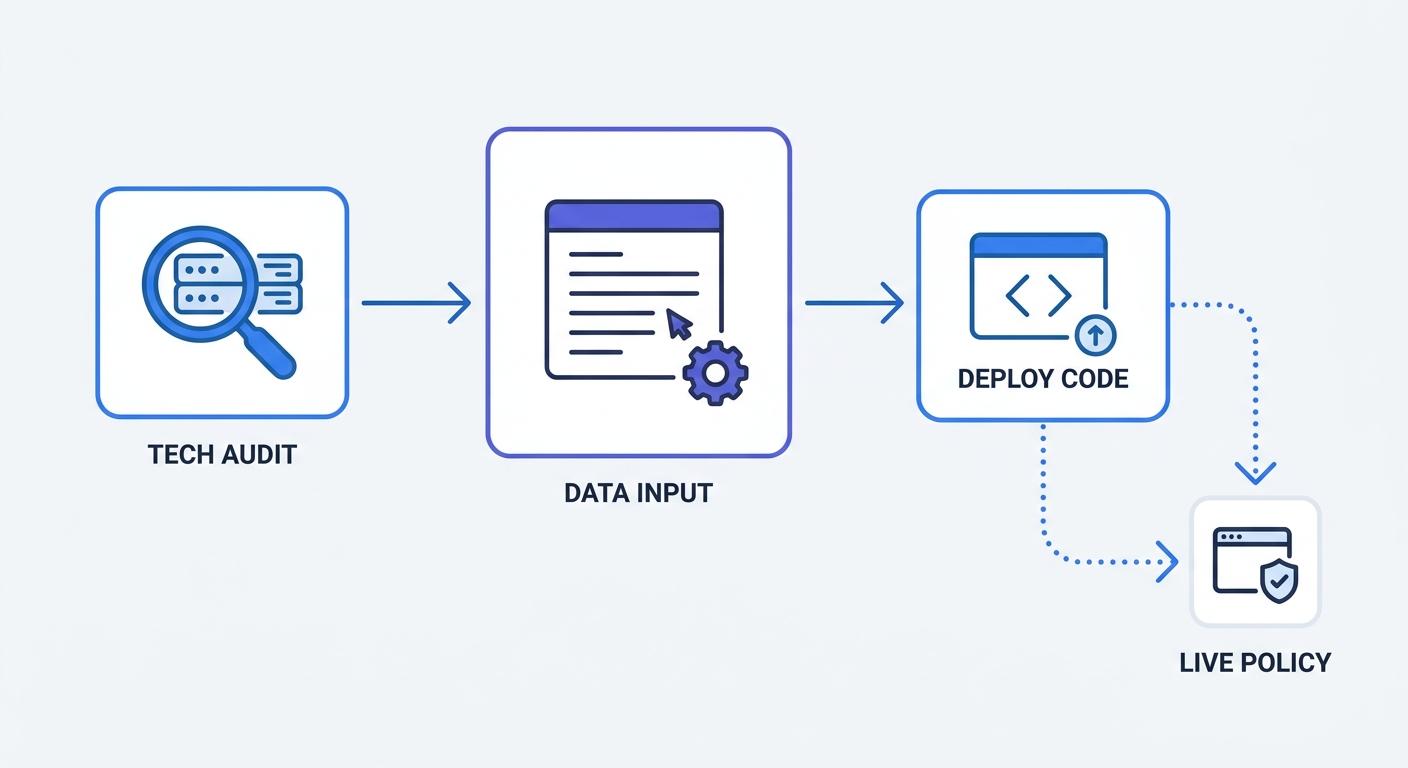
Audit Your Marketing Tech Stack
Before opening a generator tool, you must inventory exactly what your website does behind the scenes. Missing a single tracking script renders the final policy invalid.
Open your website in an incognito browser window, launch the developer tools, navigate to the Network tab, and refresh the page to identify requests sent to external domains. Afterward, check the Application or Storage tab to review local storage and active cookies.
List every tool that touches user data:
- Analytics: Do you log IP addresses, device IDs, or behavioral flow?
- Marketing: Are Facebook, TikTok, or LinkedIn retargeting pixels active?
- Communications: Does a live chat widget store conversation history?
- Payments: Does Stripe or PayPal process transactions on your domain?
- Forms: Does your contact form sync directly to Mailchimp or HubSpot?
You must accurately declare every one of these services when you generate a website privacy policy free, and a long list of external vendors indicates you need to audit your data collection practices.
Choose a Reliable Generator Tool
Several compliance platforms offer free tiers that compile legally sound documents for small businesses and standard websites. Avoid random text-spinning websites; stick to established privacy management platforms.
| Generator Tool | Best Use Case | Dynamic Code Embed | Free Tier Limitations |
|---|---|---|---|
| Termly | Standard business websites | Yes | 1 legal policy, basic banner |
| TermsFeed | Custom app deployments | Yes | Premium clauses cost extra |
| PrivacyPolicies.com | Simple blogs and portfolios | Yes | No custom branding on free |
| Usercentrics | Sites needing heavy consent | Yes | Limited monthly pageviews |
Select a tool, create an account, and walk through the guided questionnaire while keeping your tech stack audit list nearby. Whenever the software asks about third-party analytics or marketing scripts, check the corresponding boxes to match your active integrations.
Use Dynamic Embedding Over Static Text
Never copy the final text from the generator to paste it statically into your content management system, because data privacy laws shift rapidly. By January 2026, 19 individual U.S. states enforced their own regional data privacy laws, forcing compliance documents to account for fragmented requirements.
Pasting static text causes your policy to go out of date the moment a new state passes a law, so you should use the dynamic HTML or JavaScript snippet provided by the generator tool. Embedding this <script> or <iframe> tag on your dedicated privacy page allows the provider's legal team to update the master document on their server when regulations change. Your website then pulls the new language automatically without requiring developer intervention or manual edits.
Minimize Data to Simplify Your Privacy Policy
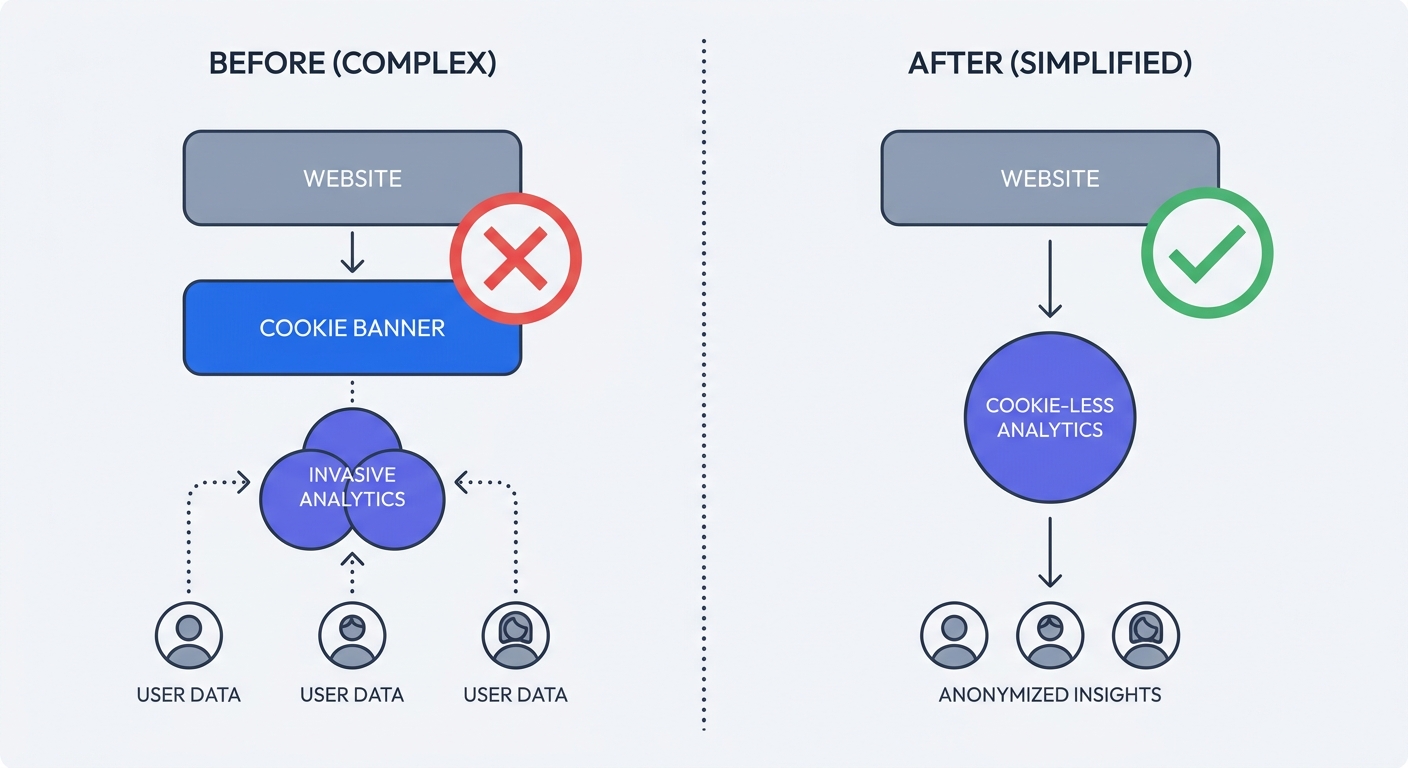
The complexity of your legal documentation scales directly with the amount of data your site hoards. If you collect invasive cross-site tracking metrics, your policy requires dozens of additional clauses explaining data retention, user opt-out procedures, and third-party processing agreements.
The Swetrix Advantage: Cookie-Free Analytics
You can bypass the most complex parts of a privacy policy by refusing to collect the data in the first place. Replacing legacy tracking tools with a Google Analytics alternative changes your compliance burden.
Swetrix is an open-source, privacy-focused web analytics platform that operates without cookies, IP address storage, or individual user profiling. When you deploy Swetrix, the platform anonymizes visitor data and files it on our EU-hosted cloud infrastructure.
Because you no longer collect personally identifiable information (PII) or track users across different websites, your privacy policy generator skips the extensive clauses required for third-party advertising trackers. You specify that you use cookieless analytics to monitor website performance, and the generator outputs a clean, concise paragraph.
Current public pricing for Swetrix Cloud starts at $19 per month for 100,000 events, allowing you to configure custom events, track UTM campaigns, and monitor page speeds without exposing your business to legal liability. Start your 14-day free trial to see the difference in your reporting dashboard.
Ditch Invasive Trackers and Banners
Websites running standard Google Analytics or Meta pixels must deploy aggressive cookie consent banners, forcing visitors to click through a popup before the site can legally load the tracking scripts.
Switching to cookie-less analytics allows you to rely on a legal concept called "legitimate interest." You have a legitimate business interest in knowing how many people visit your site and which pages load slowly, and because Swetrix anonymizes this data, you avoid needing explicit user consent to track these aggregate metrics.
Removing the cookie consent banner entirely ensures your website loads instantly, improves user experience, and prevents ad blockers from hiding analytics data. Read our article on whether you need a cookie banner to understand exactly how legitimate interest applies to your traffic.
Avoid Costly Mistakes With Your Free Policy
A perfectly generated document still fails compliance if your users cannot find it, because regulators penalize operational neglect as harshly as missing disclosures.
Prevent 404 Errors and Broken Links
Website redesigns often break URL structures, meaning your policy link goes dead if you migrate from /privacy-policy to /legal/privacy without setting up a 301 redirect.
Automated watchdogs crawl business websites specifically looking for missing documentation. If your privacy policy URL returns a 404 status code, the system flags you for processing user data without providing legally required notices, triggering manual reviews and potential fines.
Treat your legal pages like critical infrastructure by setting up automated uptime monitoring specifically for your privacy policy URL. If the page goes down or returns an error, the monitoring software pings your developer immediately.
Guarantee High Visibility on All Pages
Hiding your legal terms inside a dense terms of service document violates transparency requirements. Users must be able to access the policy from any page on your website with a single click.
Place the link permanently in your global website footer, or place it in the primary settings menu if you run a mobile application.
Linking the policy directly at the point of data collection prevents consent disputes. Add a clear hyperlink beneath your checkout button, next to your newsletter signup field, and under your contact form. Never use pre-ticked checkboxes to assume a user has read the policy; force the user to actively check the box or rely on clear text stating that clicking "Submit" constitutes agreement with your linked terms.
Common Questions About Free Privacy Policies
You might hesitate to rely on automated tools for legal protection, but understanding how these systems function resolves common compliance concerns.
Are Free Generators Legally Binding?
Yes, a document produced by a free generator is a legally binding contract. The generator maps standardized legal language to the specific technical inputs you provide.
The software itself guarantees nothing without accurate inputs. If you tell the generator you avoid sending marketing emails while actively running a newsletter, the resulting document becomes legally void. Operational inaccuracies invalidate the contract. Provided you complete the tech stack audit accurately and update your inputs when adding new software, the generated document holds up under regulatory scrutiny.
Do Small Blogs Need a Policy?
Traffic scale does not exempt you from data protection laws. Even if your personal portfolio or small blog makes zero revenue, you still process user data.
If your server logs visitor IP addresses, if you embed a YouTube video that drops tracking cookies, or if you use a standard analytics script, global privacy laws apply to your site. California's CPRA and Europe's GDPR protect the user regardless of the size of the website they visit. Generating a website privacy policy free takes minutes and eliminates the risk of an automated compliance sweep suspending your hosting account.
Stop complicating your compliance with invasive tracking scripts. Swetrix provides accurate, real-time analytics without using cookies, logging IP addresses, or requiring consent banners. Minimize your data collection, simplify your legal risk, and build trust with your visitors. Try Swetrix today with a 14-day free trial.