- Date
Master Ecommerce Conversion Tracking Without Cookies
 Andrii Romasiun
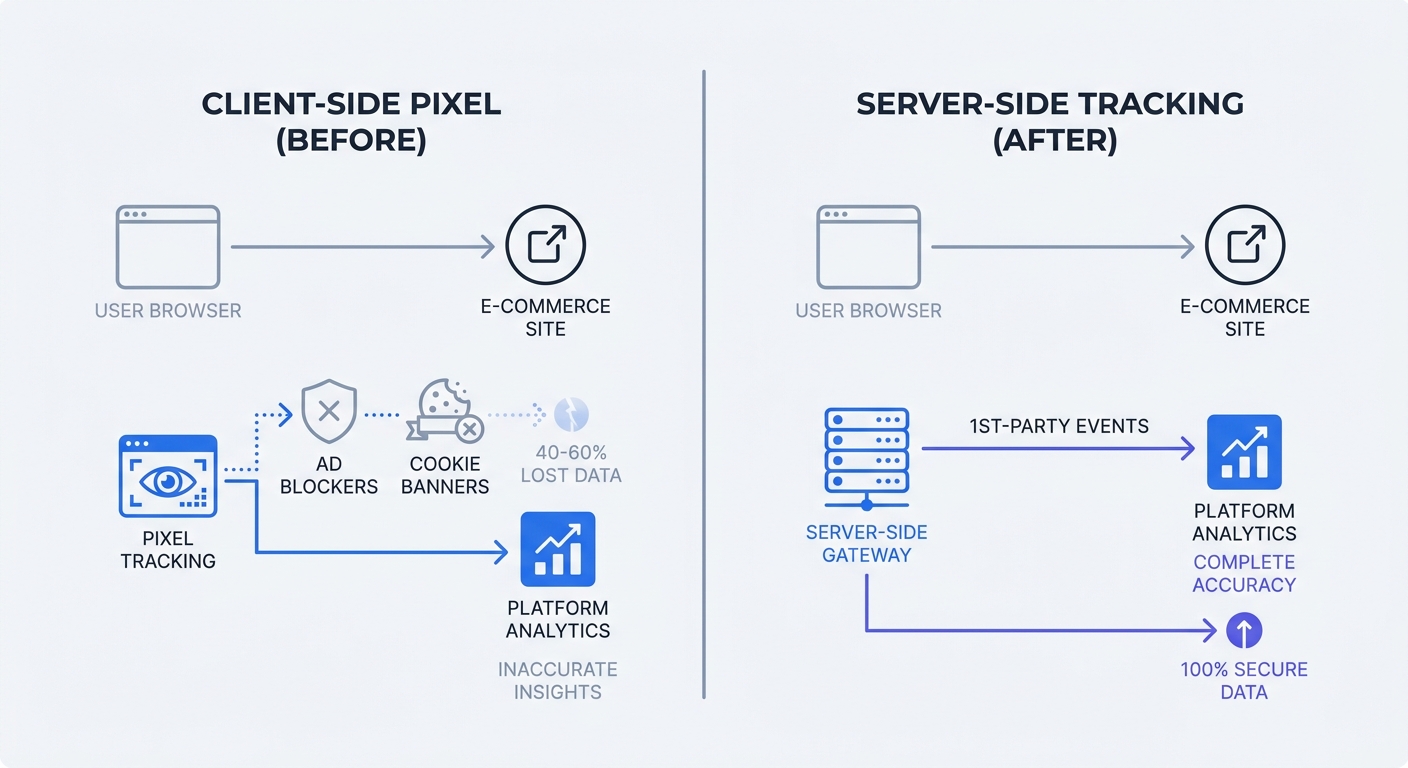
Standard client-side tracking configurations fail to record between 30% and 40% of your conversion data, though this varies by industry and typical audience browser habits. Visitors click ads, browse products, and buy. Ad blockers and privacy browsers strip tracking scripts before the confirmation page loads. Your ad platform records a lost lead while your bank account registers a sale.
Ecommerce conversion tracking without cookies solves this discrepancy. Replacing fragile browser pixels with server-side architecture and privacy-first tools restores measurement accuracy. Organizations secure revenue data and feed precise signals back to advertising algorithms. Platforms like Swetrix capture anonymous event data without relying on vulnerable client-side storage.
Why Traditional Pixel Tracking is Failing Ecommerce
The True Cost of Ad Blockers and Privacy Updates
Global ad blocker usage ranges from 32.5% to 42.7% depending on target demographics and industry verticals. Browser extensions identify and block third-party tracking scripts. Apple Safari and Mozilla Firefox enforce strict tracking prevention by default. Google Chrome allows users to toggle third-party cookies off with a single click. iOS 17 Link Tracking Protection strips click identifiers from URLs accessed in Private Browsing or Apple Mail.
Apple's Intelligent Tracking Prevention (ITP) caps client-side cookie lifespan at seven days. A customer who clicks an ad and waits eight days to buy breaks the attribution link. The ad platform records zero return on ad spend.
Shopify brands experience massive visibility gaps under these conditions. Researchers highlight a 40% loss in conversion event visibility for retail stores relying on client-side tracking. Marketing budgets drain when advertising platforms fail to attribute these sales. The algorithm categorizes the campaign as a failure and stops showing ads to similar buyers.
Audit your current analytics discrepancy today. Pull your total order volume from your ecommerce backend for the last 30 days. Compare that number to the reported conversions in your advertising dashboard. A gap larger than 10% indicates severe client-side tracking failure.
How Cookie Banners Kill Conversion Data
Privacy regulations require explicit consent before tracking users with cookies. Website visitors reject cookies 60% of the time when presented with a compliant prompt in strict regulatory regions, though this rejection rate fluctuates depending on audience demographics. Visitors experience high friction when a consent banner covers half the screen on a mobile device. Users click the closest button to dismiss the annoyance. That button triggers a rejection of marketing cookies. Analytics data disappears before the customer sees a product image.
Every rejection deletes analytics context. A visitor buys a high-margin product but clicks "Decline" on the banner. Traditional tools like Google Analytics drop the session. Marketing teams lose the source, the medium, and the conversion event. Reporting dashboards display declining traffic alongside record shipping volumes.
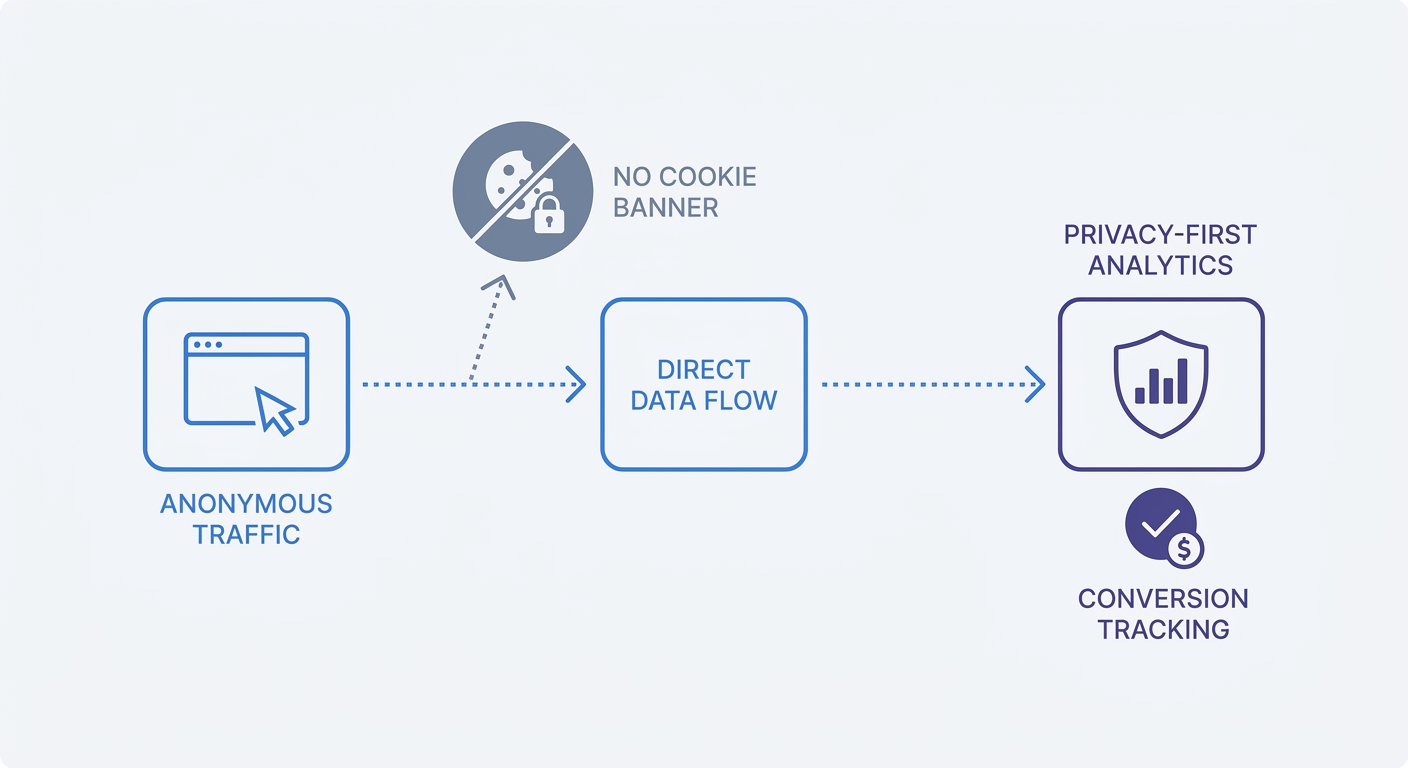
Swetrix prevents this massive data loss from the first pageview. Operating without cookies, Swetrix tracks website traffic using anonymous events. Because the platform stores no personal information, website owners bypass the legal requirement for a consent banner. Store managers capture complete visibility into traffic volume and top-of-funnel metrics while respecting user privacy.
How Ecommerce Conversion Tracking Without Cookies Works
Understanding Server-Side Architecture
Standard pixel tracking forces the user's browser to send purchase data to Facebook or Google. Implementing Server-to-Server (S2S) architecture changes the data sender by establishing direct communication between your ecommerce backend and the advertising platform.
When a customer completes a checkout, your backend software processes the order. The application packages the transaction details and transmits them via API. Browser extensions cannot intercept this server-level communication. Ad blockers have no jurisdiction over backend APIs.
Check your ecommerce platform for native server-side integrations. Shopify Plus provides built-in Web Pixels and direct API connection options. WooCommerce users need dedicated plugins to route data through a server container. Configure these native connections before attempting complex custom code setups.
First-Party Data: Your New Analytics Foundation
Third-party tracking scripts trace users across different domains to build profiles. First-party data originates from direct interactions on your specific website. Customers generate high-quality first-party signals when they interact with your brand. Capture these precise data points:
- Account creation forms
- Newsletter signup fields
- Post-purchase warranty registrations
- Loyalty program dashboards
Your server transmits hashed versions of this information to match users. A customer buys a shirt and enters their email address. Your server hashes the email into a secure string of characters and sends it to the ad network. The ad network database matches that hash to a user account and credits the conversion.
Build an authentication strategy to increase first-party data capture. Offer a 10% discount for creating an account before checkout, or implement a VIP loyalty program that requires an active login session. Persistent authentication connects individual user journeys across multiple devices without cross-site text files.
Combine first-party tracking with direct customer feedback. Ask post-purchase survey questions to gather zero-party data. Match these self-reported attribution sources against your server-side logs to verify campaign effectiveness.
Privacy Regulations and Consent Requirements
The Legal Risks of US-Based Trackers
European regulators enforce strict rules regarding data localization and user tracking. Regulators have levied billions of euros in cumulative GDPR enforcement fines, with companies incurring the majority of these penalties through illegal cross-border data transfers and cookie consent violations.
The Schrems II ruling forced companies to change international data flow. The Austrian Data Protection Authority and the French CNIL issued rulings banning standard Google Analytics configurations. They determined that anonymization features failed to prevent the transfer of identifying data to American intelligence agencies. Operating a GDPR-compliant analytics stack requires hosting data on European soil.
Audit your current analytics vendor's server locations. Open your platform settings and locate the data storage region. If your provider hosts data in the United States without specific local isolation, migrate to an EU-hosted alternative.
Going Consentless with Swetrix Analytics
High banner rejection rates destroy marketing attribution models. When a banner blocks tracking, your dashboard loses half of its revenue data. Cookieless web analytics circumvent this gap.
Swetrix operates as a consentless analytics solution. The platform processes IP addresses in memory to determine the user's country and discards the IP. No personal identifiers persist in the database. Swetrix avoids device fingerprinting and cross-site tracking techniques.
The system generates a cryptographic hash combining a rotating daily salt, the masked IP address, and the user agent string. This hash expires every 24 hours. Dashboard reports display accurate visitor counts for the session. The system forgets the user by the next morning. No personal data touches a hard drive.
Remove your cookie consent banner after replacing legacy trackers with Swetrix. Collecting anonymous event data eliminates the legal requirement for a banner. Your store loads faster, and visitors experience a cleaner interface. Store managers record total inbound traffic volume while maintaining legal compliance.
A Step-by-Step Guide to Cookieless Implementation
Setting Up Server-Side Tagging
Deploying a cloud server provides control over data flow. Routing data through Server-Side Google Tag Manager (sGTM) creates a secure middleman between the website and third-party vendors.
Start by provisioning a cloud hosting environment. Google Cloud Platform provides native integration, but independent European hosting providers offer better privacy compliance. Create a new Server container inside your Tag Manager account.
Point your website's tracking script to your new custom subdomain. Your site will send data to metrics.yourstore.com instead of a third-party domain. The server software receives the raw event, scrubs out personal information, and forwards the clean data to your analytics destination.
- Log into your domain registrar.
- Create a new A or AAAA record pointing to your server's IP address.
- Update your sGTM container settings with the new subdomain URL.
- Modify your web tracking tags to route through this custom transport URL.
Integrating Direct Conversion APIs
Advertising networks require robust data pipelines to maintain performance. Meta's Conversions API (CAPI) and Google's Enhanced Conversions bypass browser restrictions.
Generate an access token inside your advertising platform's event manager. Paste this token into your ecommerce backend or your sGTM container. Map your purchase event variables to the corresponding API fields.
| Parameter Name | Data Type | Required/Optional | Description |
|---|---|---|---|
event_name | String | Required | The conversion type (e.g., Purchase) |
event_time | Unix timestamp | Required | When the transaction occurred |
user_data | Object | Required | Hashed customer details (email, phone) |
custom_data | Object | Optional | Value, currency, order ID |
Marketing teams using server-side setups recover a significant portion of missed conversion data across generic campaigns, though this baseline varies by industry. Ecommerce stores see similar recovery rates. Test your connection using the platform's payload validator before pushing the configuration live. Watch the network requests in developer tools to confirm the browser stops firing the legacy pixel.
Running legacy pixels alongside server APIs creates duplicate events. Ad platforms count the same purchase twice without deduplication configuration. Send an identical event_id variable from both the browser and the server. The ad network receives both signals, recognizes the matching ID, and discards the redundant browser event.
Proving ROI with Privacy-Centric Attribution
Restoring Visibility in Ad Algorithms
Ad networks depend on continuous signal flow to bid on relevant users. Privacy limiters block cookies and cause algorithmic bidding to fail. Passing hashed data via secure connections sustains digital marketing ROI.
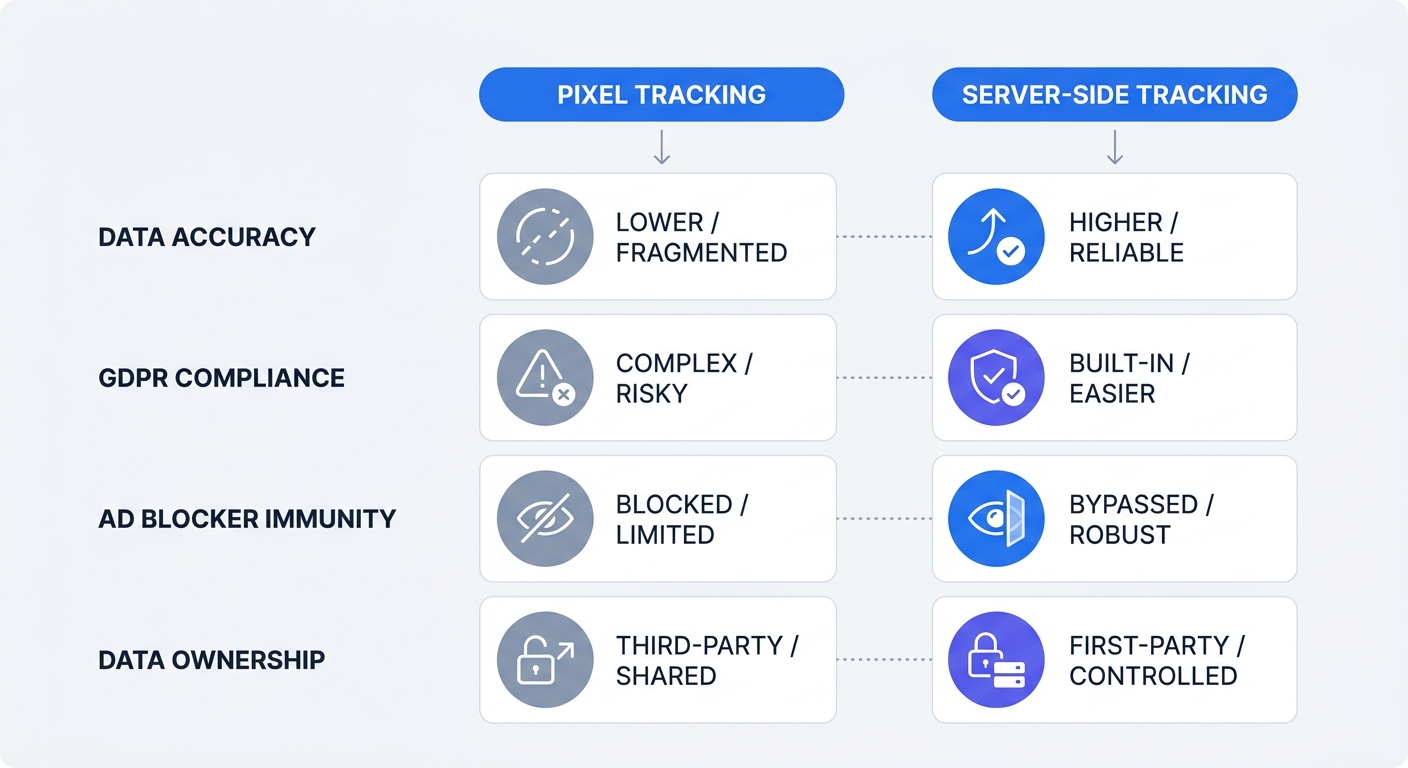
Implementing cookieless tracking improves data accuracy. Server-side configurations bypass ad blockers to capture durable data. Machine learning models receive precise purchase values. Client-side trigger dependency disappears.
Consider a $10,000 monthly ad budget. A client-side setup records 100 conversions, resulting in a $100 CPA. The true conversion count sits at 142, but ad blockers hid 42 of them. The advertising platform registers the campaign as a failure. Implementing server-side tracking reveals those 42 hidden conversions. Your dashboard displays the true $70 CPA. The algorithm scales your budget into profitable auctions.
Modeled Conversions
Direct measurement remains imperfect. Users operating strict privacy browsers or specific mobile operating systems obscure their origin paths. Platform-native machine learning bridges this gap through statistical estimation.
Machine learning models in tools like Google Consent Mode v2 analyze aggregate trends from users who allow tracking. The system applies those trends to the anonymous visitors who block trackers. It models the missing conversions and assigns them to the correct campaigns.
Consent Mode relies on cookieless pings. When a user rejects the banner, the browser refuses to store a cookie. The browser sends a generic ping containing the timestamp and the page URL to the ad network. The network database compares these anonymous pings against historical data to model the conversion probability.
Combine modeled conversions with robust first-party analytics. Use Swetrix to maintain truth over total pageviews, traffic sources, and on-site behavior. Compare your precise Swetrix pageview metrics against the modeled ad conversions. This dual approach provides a complete picture of ecommerce performance.
Relying on outdated tracking methods costs your ecommerce store revenue and data. Browser restrictions no longer need to dictate marketing success. Start your 14-day free trial of Swetrix and regain control of your ecommerce analytics with a privacy-first foundation.