- Date
What Is Zero Party Data? A Privacy-First Marketing Guide
 Andrii Romasiun
Browser updates block tracking scripts by default. Mobile operating systems restrict data sharing across applications. Marketers lose visibility into their audience every time a user declines a cookie banner. Mastering what is zero party data gives marketing teams a method to map customer behavior without passive surveillance.
Customers hand you their preferences, intentions, and demographic details. This active information sharing replaces hidden tracking pixels. Marketers building audience profiles on explicit user consent drive higher conversion rates. Teams stop guessing visitor intent from page views by asking customers to state their goals.
What Is Zero Party Data?
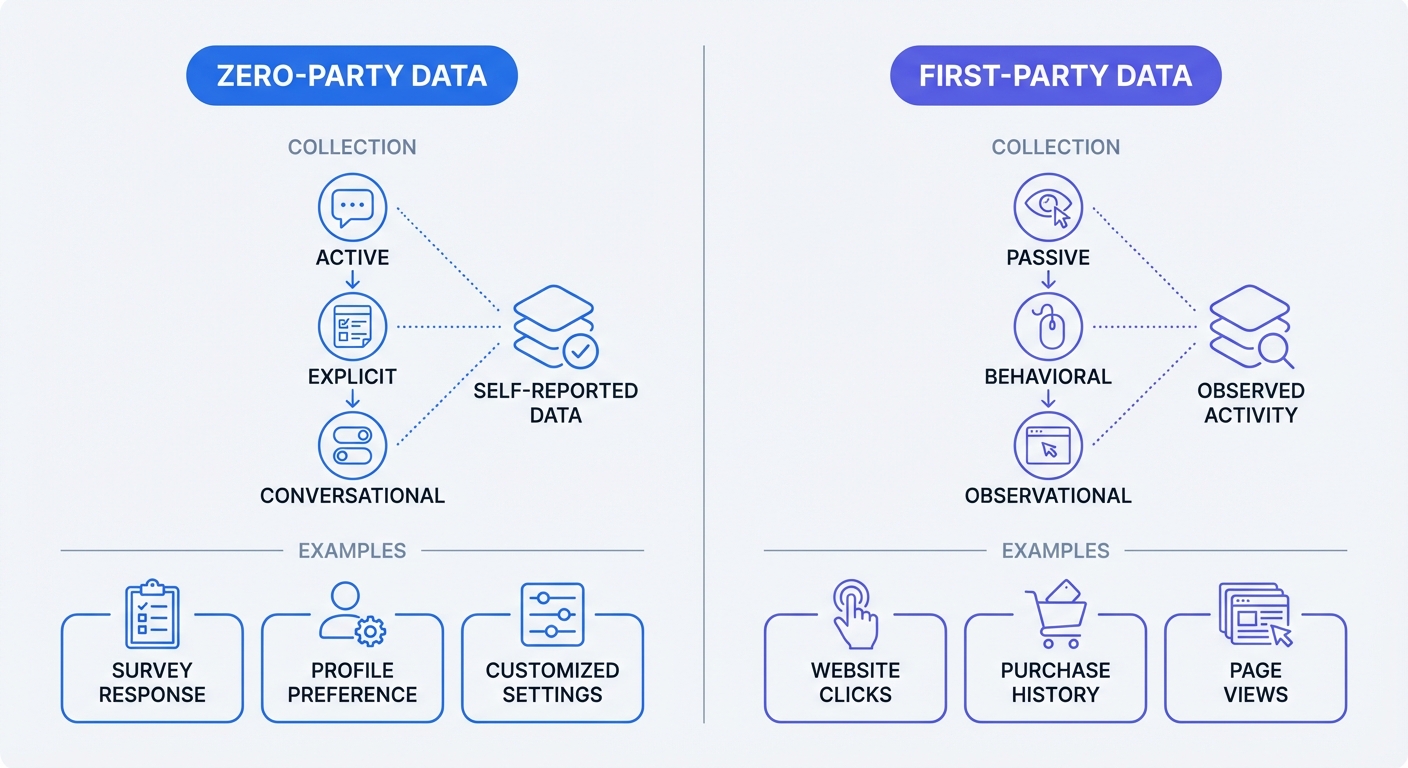
Marketers categorize data based on acquisition methods. Forrester Research originated the term "zero-party data" to describe information a customer shares with a brand by choice. Examples include preference center selections, purchase intentions, personal context, and customized communication settings. The process requires a business to ask a direct question and a user to provide a specific answer.
Understanding What Is Zero Party Data Compared to First-Party Signals
Marketers gather first-party data through observation. Track behavioral metrics like time on page, scroll depth, and purchase history. Analytics platforms log actions as users browse the site. These metrics show marketers past behavior.
Zero-party data requires conversation. Ask the user for specific details like shoe size, dietary restrictions, or timelines for buying a software product. The user fills out a form or clicks a poll option. This explicit input reveals the motivation behind the customer's actions.
| Feature | First-Party Data | Zero-Party Data |
|---|---|---|
| Collection Method | Passive tracking, observational logging | Active input, conversational interfaces |
| Nature of Data | Behavioral (clicks, pageviews, sessions) | Intentional (preferences, demographics, timelines) |
| User Awareness | Implied via terms of service | Explicit via deliberate form submission |
| Common Example | User abandons a shopping cart | User selects "Buying a gift" in a popup poll |
Audit your customer relationship management platform by opening a random user profile to review the populated fields. Administrators see a mix of transactional records and behavioral flags. Locate the fields indicating "Primary Goal," "Budget Range," or "Communication Preferences." Blank fields indicate a lack of explicit customer input.
Why Your Business Needs Zero-Party Data
Modern privacy standards render passive data collection ineffective. Mobile users block tracking at the operating system level. Industry data shows that 75% to 85% of iOS device owners opt out of cross-app surveillance, though exact rates vary by app category and region. Marketers relying on passive signals face massive gaps in their user profiles.
Solving the Privacy-Personalization Paradox
Customer engagement can look different from each side of a transaction. In Twilio’s 2024 State of Customer Engagement Report, 84% of businesses rated their engagement as good or excellent, while 54% of consumers agreed. Ask customers about their experience rather than relying only on internal assessments.
Users punish invasive tracking practices by deleting applications and abandoning shopping carts over privacy fears. Marketers face a paradox. People want personalized recommendations while refusing passive surveillance.
Asking for explicit inputs resolves this tension. Marketers offer a clear transaction. The user provides preferences, and the business provides a customized experience based on those inputs.
Thriving Without Third-Party Cookies
Ad networks use third-party cookies to track users across unrelated domains. Regulators fine companies for deploying these scripts without explicit consent. Browser developers enforce strict blocking policies to protect consumer privacy.
Brands pivoting to conversational marketing bypass these technical restrictions. A visitor completing an interactive quiz generates permanent server-side data tied to their account profile. Marketers retain this information regardless of cookie expiration dates. The database holds its value despite future browser updates.
How to Collect Zero-Party Data Effectively
Gathering explicit inputs requires active customer participation. Drop the passive tracking mindset to treat data acquisition like a product feature.
Structuring a Clear Value Exchange
Never ask for information without offering a reward. Users guard their personal details, causing generic "Subscribe to our newsletter" prompts to suffer low conversion rates.
Define the transaction upfront before asking for specific data points. Give the user an immediate benefit in return.
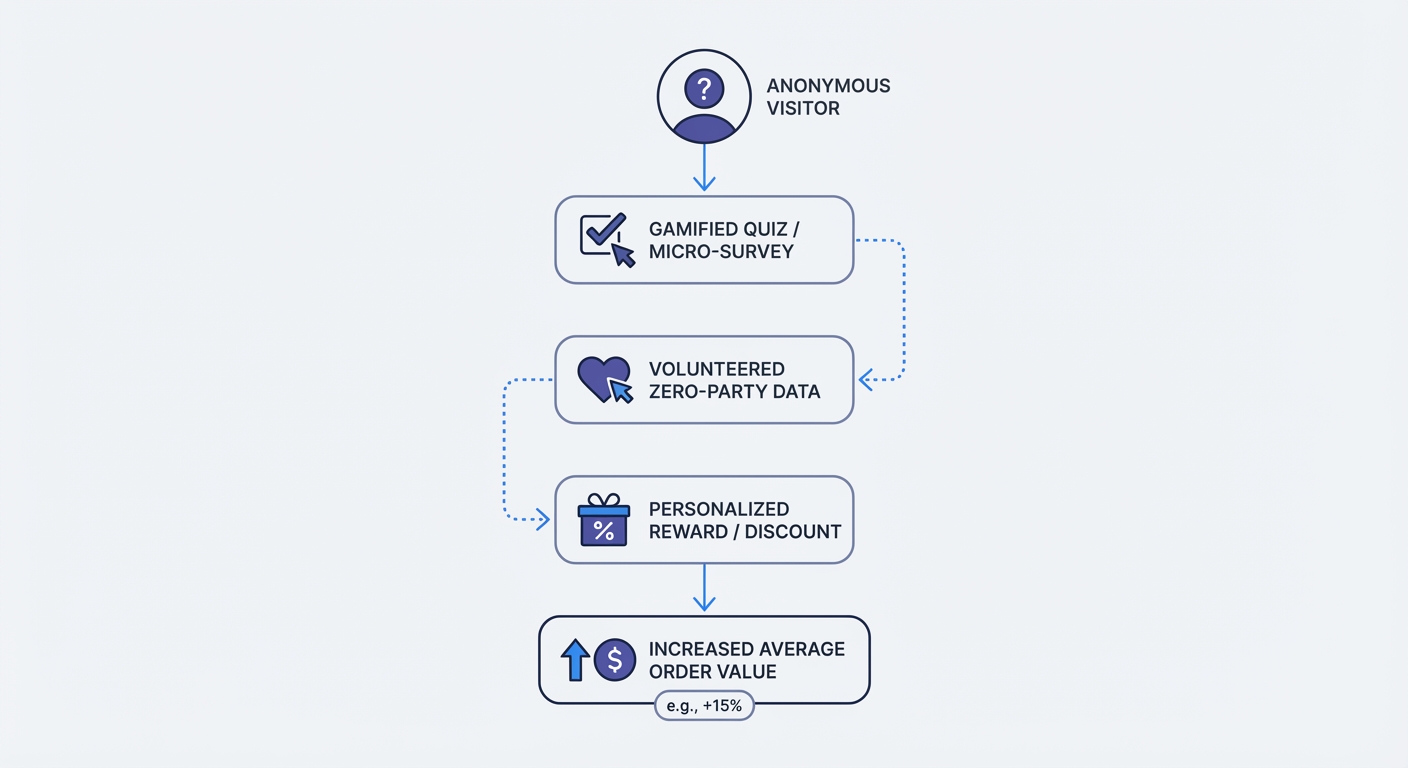
Provide a 15% discount code when a user shares their birthday and product interests. Send a personalized industry report after a visitor selects their job title and company size. Award loyalty program points for post-purchase survey completions. Marketers must match the reward to the effort required to submit the data.
Interactive Quizzes and Gamified Inputs
Long intake forms destroy momentum. Replace static pages with gamified experiences.
Build a product-matching quiz. An apparel brand might ask users to select body type, preferred fit, and typical climate. The system filters the product catalog based on each answer. Ask for an email address on the final screen to reveal tailored recommendations. Octane AI reports these interactive quizzes achieve conversion rates between 7% and 25%, alongside a 47% increase in average order value for e-commerce brands, though results naturally vary by industry.
Deploy micro-surveys at high-intent moments. Administrators can trigger a single-question popup when a user adds an item to the cart. Ask, "Who are you buying this for?" while providing three clickable options: "Myself," "A Partner," or "A Friend." Store that single data point in the CRM to segment future holiday email campaigns.
Optimizing Onboarding Questionnaires
Product managers collect explicit data during account creation by building mandatory onboarding questionnaires. Ask the new user about their primary goal. A project management tool might offer options like "Managing a remote team," "Tracking personal tasks," or "Client reporting."
Customize the initial dashboard based on that selection to give the user a better first experience. This strategy secures a permanent segmentation tag for the marketing team.
Use progressive profiling to space out data requests. Marketers should avoid asking twenty questions on the first visit. Request an email address and a primary interest during the initial signup. Wait until the user clicks a link in the welcome sequence before sending the next question. Trigger a micro-survey on the second website visit to ask for company size. The business enriches the customer profile with every touchpoint.
Structuring Your Database for Explicit Inputs
Users typing in free-text fields create messy databases. Standardize input methods to keep the data actionable.
Build predefined dropdowns or radio buttons for demographic questions. A user typing "marketing manager" creates a different tag than one typing "Head of Marketing." Force visitors to select from a standardized list of job roles. Database administrators use this clean data to build accurate segments in the marketing automation platform.
Store preference data using boolean values. Assign a true or false status to specific product categories based on user selections. Marketers query the database for all users with a "true" value in the "Interested_in_Software" column before launching the next campaign.
Update the email preference center to stop forcing users into a binary "Subscribed" or "Unsubscribed" state. Offer granular controls that let users choose the frequency of emails and select specific content categories. A hardware retailer could let subscribers opt into "Power Tools" while opting out of "Gardening Supplies."
What Is Zero Party Data's Role in Cookie-Free Analytics?
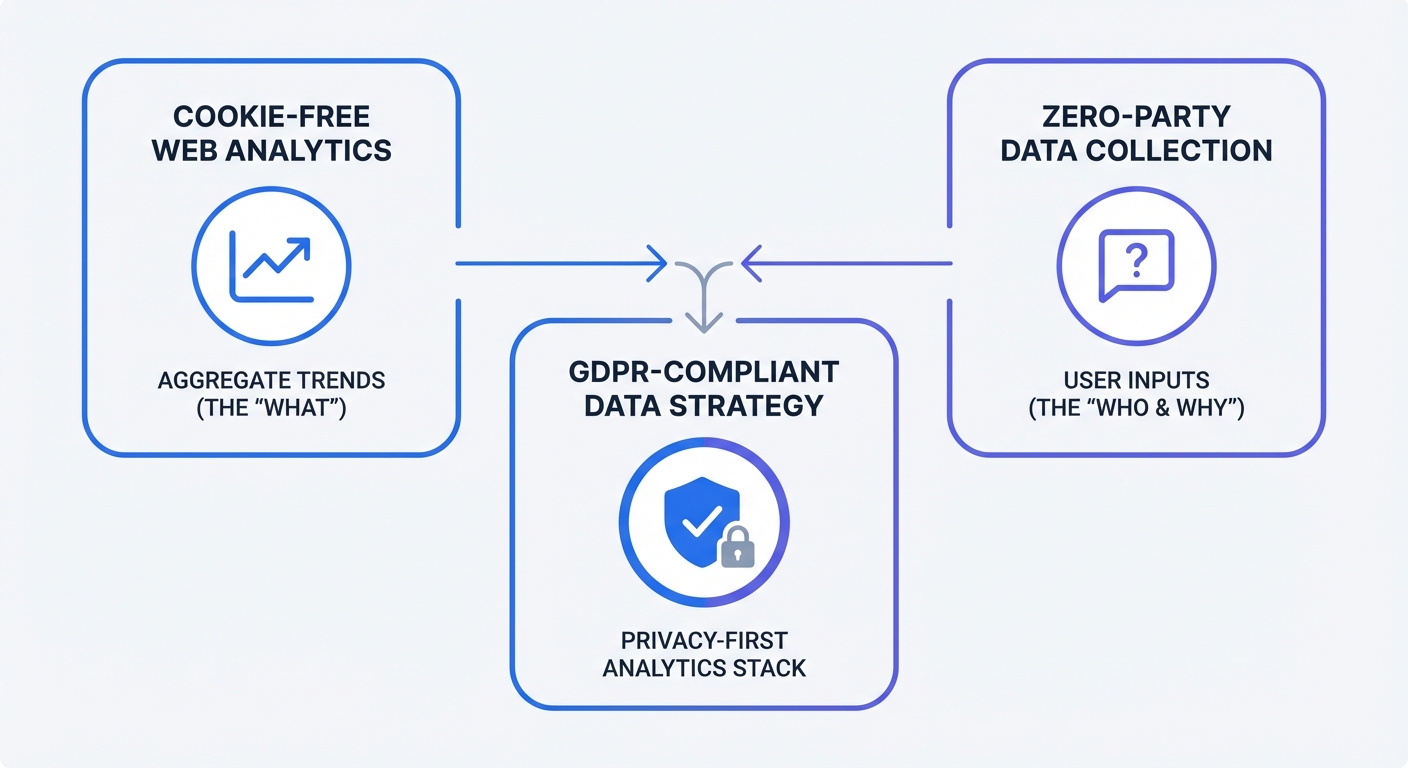
Marketing professionals separate behavioral trends from individual identities to build resilient technology stacks. Run analytics to understand overall website performance. Collect direct inputs to understand the individual buyer.
Achieving Bulletproof GDPR Compliance
Asking for direct inputs helps companies avoid the ambiguities of consent banners. The user types information into a form and clicks a submit button. Legal teams recognize this action as explicit consent under privacy laws.
Pair this proactive collection with a cookie-free analytics tool. Monitor website traffic without deploying tracking pixels. Swetrix captures aggregate pageviews, geographic regions, and conversion events without storing personal identifiers. Marketers comply with GDPR while maintaining full visibility into campaign performance.
Isolate the "what" from the "who." Analytics dashboards display the 500 people who visited the pricing page. Marketers review explicit inputs to understand why specific users decided to buy. Combining these strategies helps businesses build a website visitor tracking ecosystem without third-party cookies.
Building Unshakeable Brand Trust
Transparent data policies drive customer retention. Customers appreciate brands that ask questions instead of making assumptions. A study by Forrester found that 72% of consumers show higher likelihood to engage with a brand that provides a clear explanation of how explicit data informs the user experience.
Tell visitors what happens to their answers by adding a short disclaimer below every micro-survey. Display a statement like, "We use this information to filter your search results."
Merge these tools into a single workflow. Pass explicit inputs into the email marketing platform to build targeted segments. Rely on a cookie-free analytics platform to measure the aggregate success of those campaigns.
Measuring the ROI of Explicit Data
Track specific metrics to validate collection efforts. Compare the performance of segmented campaigns against broad broadcasts.
Calculate the conversion rate of data-collection widgets. Treat a quiz or a micro-survey as a distinct marketing funnel by dividing the number of completed surveys by the number of widget impressions. Marketers seeing a completion rate below 5% need to fix a weak value exchange. Increase the incentive or simplify the questions to improve completions.
Measure email engagement rates for segmented lists. Send a targeted campaign to users who requested information about a specific product category. Compare the open and click-through rates against the general newsletter audience. Marketers should see higher engagement metrics from the targeted campaign.
Abandon passive tracking methods to transition to a model built on mutual exchange. Ask the audience for their preferences, deliver the requested experience, and measure the resulting conversion rate improvements in the analytics dashboard.
Transition to a privacy-first marketing stack today. Stop relying on invasive tracking scripts that slow down the website and violate user trust. Start a free trial with Swetrix to capture cookie-free web analytics alongside explicit data collection campaigns.