- Date
Assisted Conversions: How They Work
 Andrii Romasiun
An assisted conversion is a successful goal completion where a specific marketing channel appeared on the path before the final, closing interaction. Instead of crediting only the channel tied to the final interaction, assist reporting identifies the earlier touchpoints that contributed to the journey. A newsletter click might bring a reader to a blog, while a later branded search query triggers the purchase. In that scenario, the newsletter assists the final search conversion. Relying entirely on the closing interaction often skews marketing budgets toward bottom-of-the-funnel campaigns, starving the top-of-funnel content that introduces buyers to the brand. Measuring the earlier steps provides a wider view of how different channels interact.
What Is an Assisted Conversion?
In Google's legacy Universal Analytics definition, any channel on a conversion path other than the final interaction counted as an assist. That included the first interaction on the path, which Google described as a kind of assist, along with any middle interactions before the conversion.
Because a complex B2B buying journey can span weeks and involve dozens of visits, a single sale could generate distinct assists across email, social media, and organic search. Consequently, you cannot add individual assist totals together as unique conversions. Doing so would double or triple the reported conversion totals, so teams evaluate assist metrics as a separate category of engagement.
Moving away from legacy tools to privacy-first platforms requires adjusting how you view these touchpoints. Swetrix focuses on session-based goal reporting and precise campaign tracking. The platform supports source and UTM reporting, conversion funnels, and session journeys, but it does not document a native, weighted multi-touch assist report that mimics legacy Google Analytics. You define the conversion event, and the analytics tool links it back to the active campaign source. The specific assist logic always follows the lookback window, which is the number of days a platform will look back into a visitor's history to find prior clicks. A touchpoint that occurred 45 days ago might register as an assist in a 60-day window, but disappear if the report defaults to 30 days.
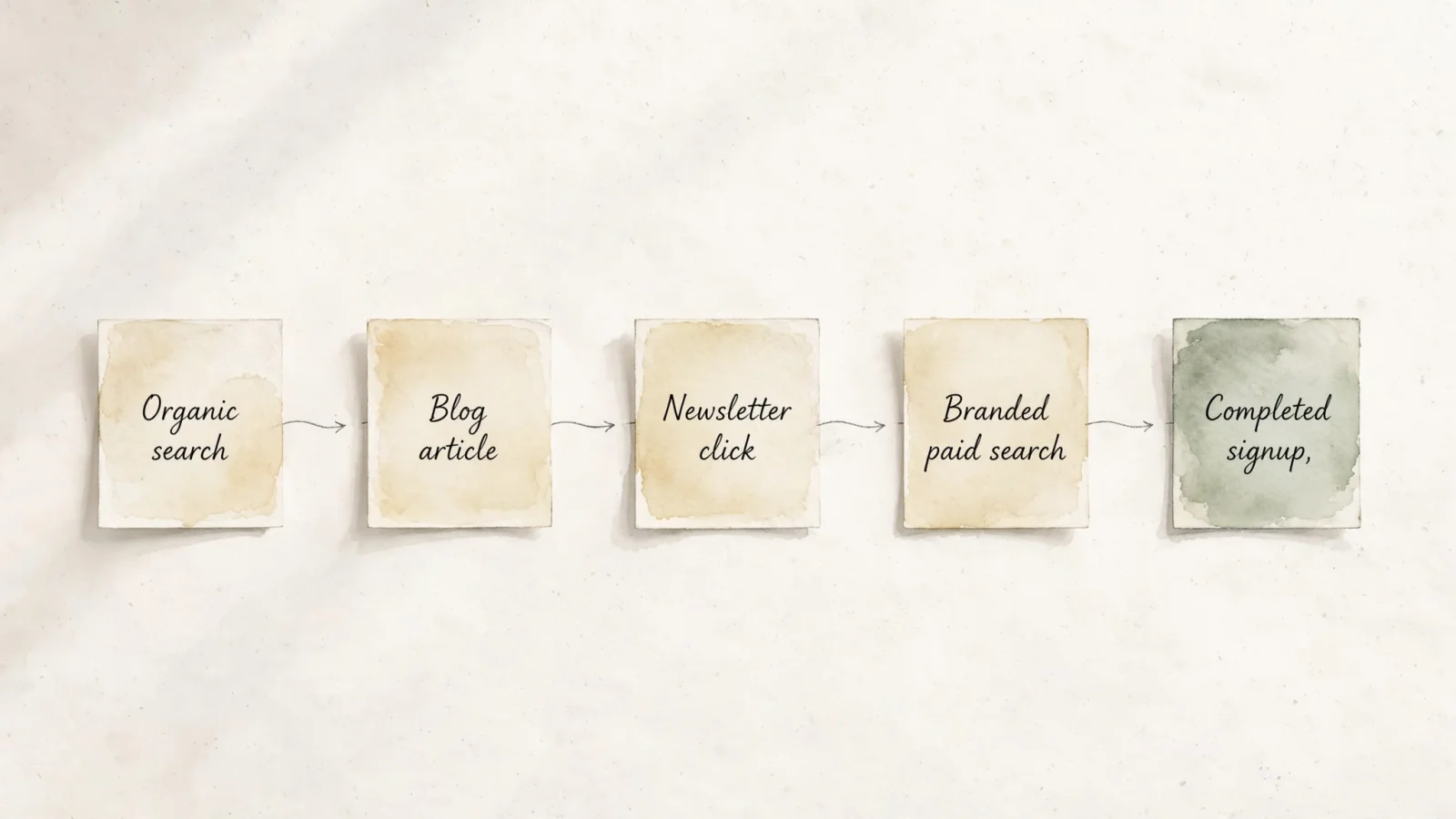
How an Assist Appears in a Conversion Path
To see how reporting limits visibility, follow a standard software purchasing journey. A buyer starts with an organic search for an industry problem, landing on a technical blog article. A week later, they click a link in an industry newsletter that routes them to a case study. Finally, after securing budget approval three weeks later, they execute a branded paid search query for the company name and complete the signup process.
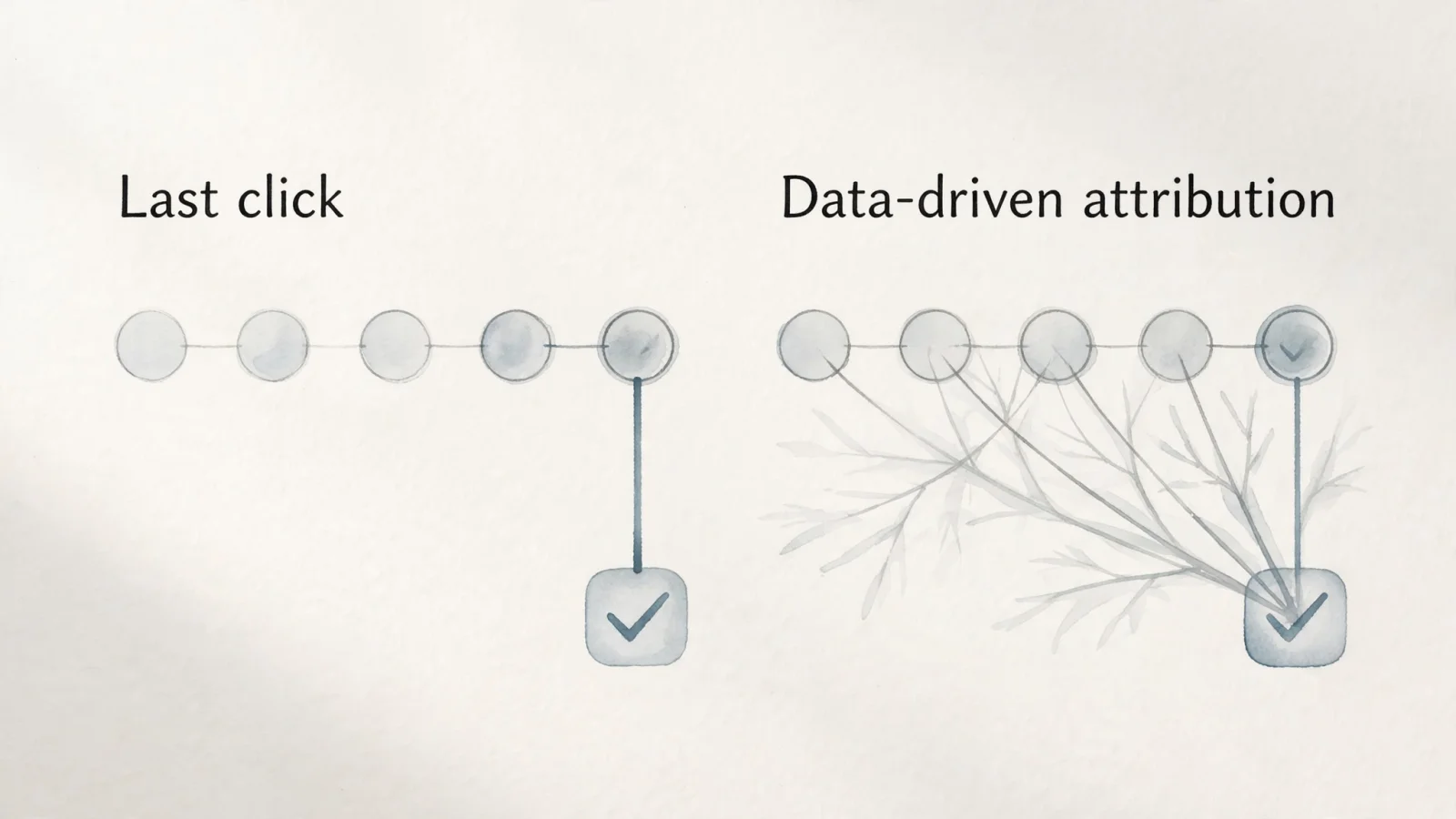
Under a basic last-click model, that branded paid search interaction receives full credit for the closing touchpoint. The organic search and the newsletter click disappear from the primary conversion column, making it look as though the paid search campaign generated the demand entirely on its own. If a finance team adjusts budgets based solely on that last-click column, they will likely cut funding for the blog and the newsletter, eventually causing the branded search volume to drop.
An assist report surfaces those hidden interactions. It shows that the newsletter and the organic search played a role in the sequence, even if they did not push the visitor over the final threshold. Different attribution models handle this path differently. A position-based model might assign heavy fractional credit to the organic search for initiating the journey and the paid search for closing it, while splitting the remainder among the middle touches. A data-driven model evaluates historical paths to assign variable credit based on algorithmic probability. Regardless of the model, the path report lays out the sequence so you can see the historical timeline of interactions, where the earlier touchpoints are the assists.
How GA4 Reports Assisted Conversions in 2026
A persistent claim in marketing forums suggests that Google Analytics completely removed all assist reporting when Universal Analytics retired, but that is inaccurate. The platform still records earlier touchpoints and surfaces them, though it relies on different interfaces and dynamic attribution models to do so.
Key events attribution paths report
The key events attribution paths report shows these marketing journeys. Its data visualization divides channels by their roles: initiating, assisting, and closing. Credit in the visualization depends on the selected attribution model, and the report's dropdown lets you choose a different model; the visualization defaults to Paid and organic channels last click.
Selecting a data-driven model distributes fractional credit across the touchpoints based on Google's algorithm, which compares converting paths against non-converting paths to determine the weight of a touchpoint. Conversely, the last-click models assign the entire conversion value to the final interaction, leaving the earlier steps marked strictly as zero-credit assists. The paid-and-organic last click model evaluates all available traffic sources before assigning credit to the final touchpoint. The Google-paid-channels last click model ignores organic search, direct traffic, and third-party campaigns, assigning 100 percent of the conversion value to the last Google Ads click in the path. Under that Google-paid model, an organic search interaction that closed the sale gets ignored, artificially inflating the reported ROI of the paid campaign.
The beta Assisted Conversions view
Beyond the standard path interface, Google's 2026 release notes list a Conversion attribution analysis report with a specific "Assisted conversions (Last Click)" view. Google labels the report as beta and says it may not be available to every property while it expands access. The view surfaces assists, which Google describes as early-journey touchpoints that were not the final click, helping marketers identify undervalued upper-funnel channels.

Track Campaign-to-Goal Performance With Swetrix
Many teams hesitate to adopt privacy-friendly analytics because they assume abandoning cookies means losing visibility into campaign performance. You can track sources, funnels, and goal completions without requiring intrusive consent banners or collecting personal data. Swetrix connects campaign parameters to specific outcomes through direct session and event tracking, allowing you to measure exactly what your traffic does.
Start by defining a meaningful conversion. A simple pageview does not measure marketing success; you need a concrete action like a completed purchase, an account creation, or a form submission. Configure a custom event named signup_completed to fire when the user successfully finishes the registration flow. Next, ensure every inbound marketing link uses consistent UTM parameters. If a weekly email goes out, tag the links with utm_source=newsletter, utm_medium=email, and utm_campaign=october_guide. You can also append utm_term and utm_content to differentiate between specific buttons or ad variations. Strict consistency prevents fragmentation in your traffic reports.
With the tags in place, create a multi-condition goal. A thorough goal setup might combine the campaign parameter, a required visit to the pricing page, and the final signup_completed event within a single session. When you review the dashboard, you see which campaigns generated signups rather than raw clicks. If you need to evaluate how frequently visitors complete defined actions, grouping your goal completions by UTM source shows where your most qualified traffic originates.
You can also analyze the steps leading up to that completion, as Swetrix allows you to build funnels and view session journeys to locate drop-offs. If the newsletter campaign drives heavy traffic but zero completions, checking the session flow might reveal users abandoning the site at the registration form or encountering a broken link. When users reach the registration form but fail to submit it, the session recording pinpoints which form field caused the friction. This workflow provides actionable, session-based campaign-to-goal visibility. It does not attempt to natively calculate weighted multi-touch fractions across months of anonymous cross-device visits; instead, it provides reliable, compliant data about what visitors do after clicking a campaign link.
While mapping these conversions, ensure your own site architecture supports clean tracking. Redirect chains or lost query parameters can strip UTM data before the analytics script ever loads. Running a quick check on your SEO migration redirect paths confirms that campaign parameters survive the journey from the external click to the final landing page. A broken redirect will sever the connection, causing the visit to show up as direct traffic and ruining your conversion reporting.
What Assist Data Can and Cannot Tell You
An assist is an observational attribution signal, not a guarantee of causality. Seeing a specific whitepaper appear frequently in early conversion paths confirms that buyers downloaded it during their research phase, but it does not prove that the document caused an incremental sale that would have otherwise been lost.
When you review performance, record the platform, reporting view, attribution model, and lookback window. For context, Google notes that conversion totals can differ between its attribution reports and the Campaigns page because of differences in network coverage, event timing, and conversion sources. Google Ads offers its own assisted-conversions report, which covers only ad interactions in the account, so a paid search click can appear as an assist while organic-search interactions fall outside its scope.
If multiple channels receive assist credit for a single conversion, adding those totals together will artificially inflate your reporting. A long path with three earlier touches generates three assist records for one converted customer. Keep the closing conversions separate from the assist metrics to avoid presenting mathematically impossible revenue numbers to stakeholders.
For questions about causality, budget scaling, or channel expansion, attribution paths show the conversion journey, while randomized experiments can measure incremental impact. Google says businesses can use randomized controlled experiments, also known as lift or incrementality studies, to set channel-level budgets or optimize future campaigns; its lift measurement guidance describes Conversion Lift as a way to measure the impact of YouTube ads on user actions.
Connecting long-term journeys requires careful configuration. Swetrix offers an optional profileId parameter for linking events across sessions and devices, giving you a longer view of returning visitor behavior. This requires an explicit configuration choice rather than acting as an automatic default for anonymous sessions. When implementing any cross-session identifier, never send personally identifiable information like email addresses or plain-text names in the event metadata.
Also verify that your canonical URLs are properly set across your marketing pages. Duplicate content issues can muddy the analytics data by splitting traffic across multiple versions of the same landing page, making it much harder to track which specific page assisted the user during their research phase.
Frequently Asked Questions
Navigating attribution reporting often raises a few structural questions about methodology and platform capabilities.
Are assisted conversions the same as last-click conversions?
They serve different functions. A last-click report emphasizes the final interaction that immediately preceded the completed goal. An assist report focuses on the earlier touchpoints in the path that helped guide the visitor toward that final action without closing the sale.
Does GA4 have assisted conversions in 2026?
The platform includes them, though the presentation differs from legacy versions. A key-event attribution paths report identifies initiating, assisting, and closing touchpoints based on your selected model. Additionally, Google's 2026 release notes identify a specific assisted-conversions view, though it remains in beta and may not be available to every property.
Can cookie-free analytics track campaign conversions?
Privacy-focused platforms handle this tracking through session-based goal reporting and standard UTM parameters. You can identify which campaigns lead to completed actions and analyze the funnel drop-offs without relying on invasive cross-site tracking scripts.
Does an assisted conversion prove a channel caused a sale?
An assist metric only proves that a specific marketing touchpoint appeared in a sequence that eventually led to a conversion. Evaluating incremental impact requires running controlled holdout experiments rather than reading observational attribution paths.
Transitioning to privacy-first analytics doesn't mean flying blind. Track your marketing campaigns, measure conversion goals, and analyze user journeys without relying on invasive cookies. Try Swetrix to get granular, compliant product analytics for your website today.