- Date
What Is ICP In Marketing: A Data-Driven Guide
 Andrii Romasiun
Ask sales teams to name their target customer, and they describe an individual. Ask marketing the same question, and they outline an entire industry. Both departments miss the mark.
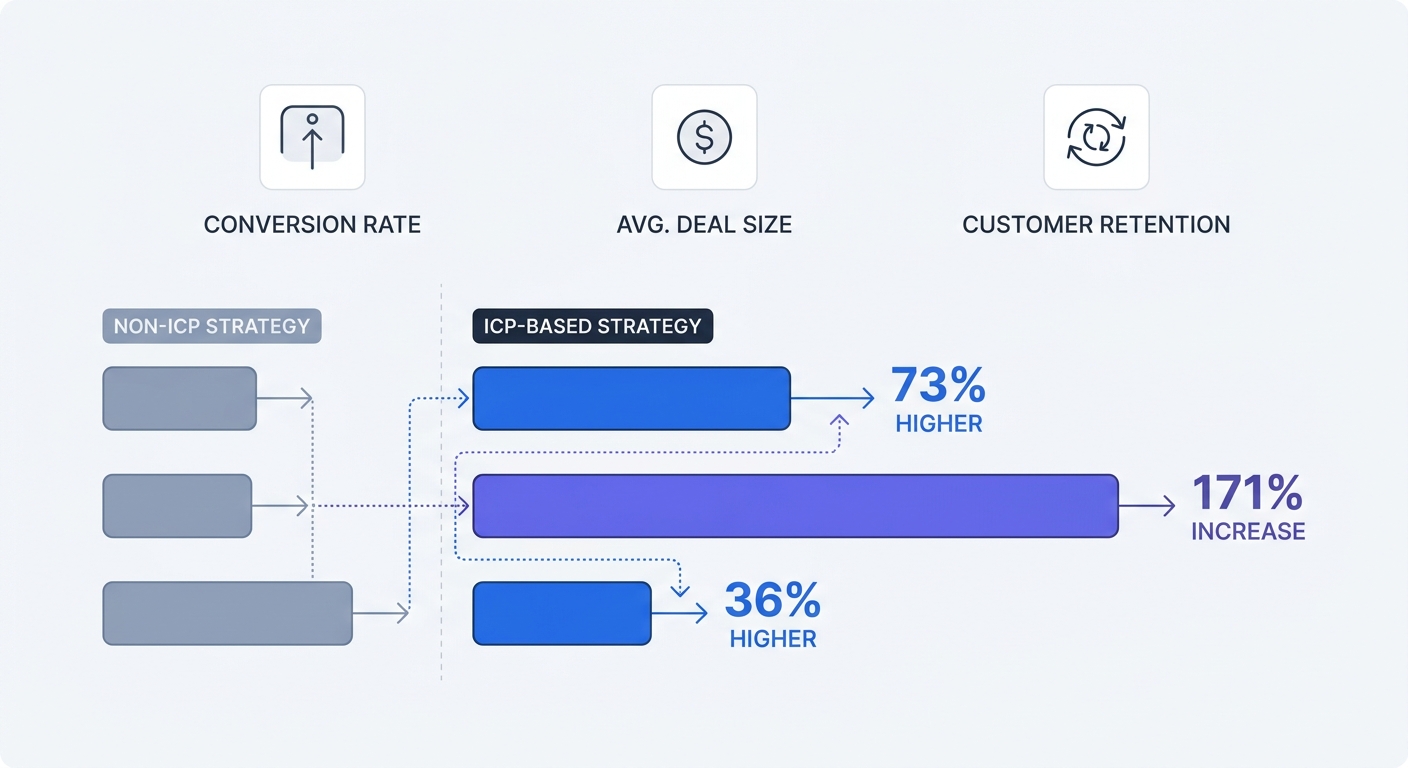
An Ideal Customer Profile (ICP) defines the firmographic and behavioral attributes of the perfect account for your product. Aligning your revenue teams around a shared account profile stops wasted ad spend and shortens sales cycles. Businesses with documented profiles in the B2B SaaS space achieve up to 36% higher customer conversion rates across the board, though this baseline varies heavily by industry and specific deal size.
Define what is ICP in marketing using user data to improve your acquisition metrics. Targeting broad audiences burns budget on leads that fail to convert.
Understanding the Basics: What Is ICP in Marketing?
An Ideal Customer Profile details the characteristics of a company that gains value from your product while providing consistent revenue back to your business. Define this profile by evaluating attributes that make an account affordable to acquire, fast to close, and profitable to retain. Measure these factors using metrics like customer acquisition cost (CAC) and time-to-close averages in your CRM.
ICP vs. Buyer Persona: The Key Differences
Marketers often confuse the ICP with a buyer persona. These two tools serve different functions in your strategy.
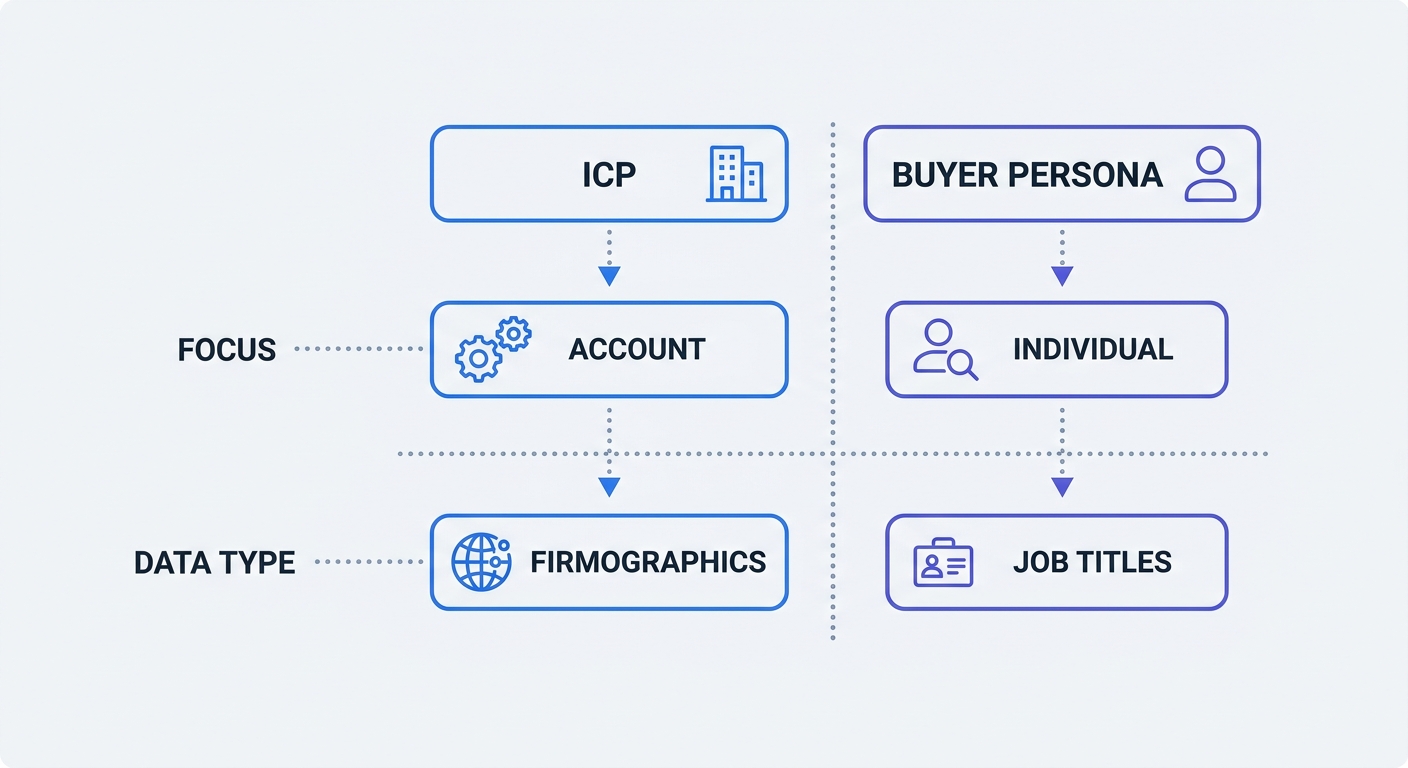
An ICP focuses on the account level. Filter companies using this profile before spending advertising budget to reach them. A buyer persona outlines the individual decision-maker inside that company. Base your messaging and ad copy on this human persona.
| Attribute | Ideal Customer Profile (ICP) | Buyer Persona |
|---|---|---|
| Focus | The entire company or account | The specific human employee |
| Primary Data | Firmographics (revenue, size, industry) | Demographics and Psychographics |
| Application | Account targeting, lead qualification | Content creation, copywriting |
| Output Example | Mid-market SaaS companies in the US | "Marketing Director Mary" |
| Timing | Top of the funnel (who to target) | Middle of the funnel (how to talk to them) |
Build the ICP first. Identify the right companies to target, then create buyer personas for the distinct stakeholders within those accounts. For example, your ICP dictates targeting mid-market healthcare providers, while your persona dictates writing ad copy for the Chief Medical Officer.
The Four Core Components of an ICP
A functional profile requires data points across four categories. Gather data across these four pillars to build a complete targeting model.
1. Firmographics Firmographics represent the foundational business attributes. Filter out companies that lack the budget or structural need for your product using these metrics.
- Annual recurring revenue (ARR)
- Employee headcount
- Industry and vertical
- Geographic location
- Company lifecycle stage (startup, scale-up, enterprise)
2. Technographics Software products require integrations and technical environments. Technographics define the tech stack a company uses. Use tools like BuiltWith or Wappalyzer to scrape this data.
- Primary CRM or database systems
- Hosting providers and infrastructure
- Marketing automation tools
- Competitor products installed
3. Account Demographics This component evaluates the structure of the target audience within the company. B2B purchases involve multiple stakeholders.
- Size of the buying committee
- Internal team structures
- Department budgets
- Decision-making hierarchies
4. Behavioral and Psychographic Patterns Accounts leave data trails based on their actions. Track behavioral triggers that signal an active buying cycle.
- Recent funding rounds
- Leadership changes
- Website engagement patterns
- Content consumption habits
Targeting an ICP using Account-Based Marketing delivers measurable returns. Surveyors at ITSMA found that 87% of B2B marketers report this targeted approach yields a higher ROI than alternative marketing strategies.
The Business Impact of a Defined ICP
Vague targeting creates pipeline inefficiencies. Defining a strict ICP improves downstream metrics like close rates and customer lifetime value. Sales teams receive fewer unqualified leads. Support agents spend less time assisting customers who struggle to use an incompatible tool.
Boosting Conversion Rates and Deal Sizes
Accounts matching your ideal profile require fewer sales touches. These businesses experience the specific pain points your product solves.
Analysts at Forrester found organizations running mature Account-Based Marketing programs based on strict ICPs generate 73% larger average deal sizes. Those same programs drive higher customer retention rates across most B2B industries.
Pipeline velocity increases when targeting fits. Sales teams close deals with fewer meetings because the account possesses the budget and structural need. Eliminate the friction of selling an enterprise solution to a startup lacking capital. Documenting these fit criteria prevents account executives from wasting hours on dead-end pitches.
Lowering Acquisition and Retention Costs
Customer Acquisition Cost (CAC) dominates marketing conversations, yet teams must track Customer Retention Cost (CRC) alongside it. An ideal customer costs less to acquire and less to support post-sale.
Targeting incompatible accounts inflates your CRC. Poor-fit customers submit excess support tickets, demand custom features, and typically churn much faster than ideal accounts. These actions drain company resources and destroy your customer lifetime value.
Define your ICP to filter out these expensive accounts. Forward-thinking companies exclude poor-fit prospects from their pipeline by implementing CRM routing rules. Rejecting bad revenue allows teams to focus internal resources on accounts possessing product-market fit. Build a strict profile to identify companies that cost more money than they provide.
The Shift to Privacy-First Data Collection
Browsers block third-party tracking scripts by default. Regulations restrict unauthorized data sharing. Marketers must adapt their data collection strategies to remain compliant while building accurate profiles.
Moving Away From Third-Party Intent Data
Past marketers purchased lists of behavioral data from third-party brokers. These teams relied on cross-site cookies to track user behavior on external websites under the label of intent data.
This method fails modern compliance standards. Safari and Firefox block third-party cookies by default. Privacy regulations like GDPR and CCPA impose massive fines for tracking users without consent. Purchased intent data carries legal risk and delivers inaccurate information sourced from outdated scraping methods.
Abandon third-party intent data and unverified lead lists. Move tracking strategies to owned channels. Controlling the data quality and the consent mechanisms protects your brand from compliance penalties.
Using Zero-Party and First-Party Data
Modern profiles rely on data collected from your audience. Zero-party data includes information a user submits through a form, survey, or preference center. First-party data includes the behavioral actions a user takes on your website.
Combine these two data sources to map out what is ICP in marketing for your product. Connect a CRM field to your web forms to capture company size during the signup process.
Track how visitors navigate your pricing page. Monitor which blog posts drive the highest volume of account signups. Deploy a consent management platform to gather this first-party data within regulatory guidelines.
Shift targeting efforts from individual leads to buying groups. Advanced marketing teams analyze the collective behavior of multiple stakeholders from a single company. A single employee downloading a whitepaper rarely signals a purchase. Three executives from the same company viewing a pricing page demonstrates strong account-level intent.
How to Create a Data-Driven ICP
Build a functional profile by analyzing hard data. Guesswork leads to failed campaigns. Follow a structured methodology to define the attributes of your best customers.
The Bottom-Up vs. Top-Down Approach
Company stage dictates the profile creation process. Choose the approach matching your available data.
The Bottom-Up Approach (For Established Companies) Established companies possess historical data. Mine your CRM using the bottom-up approach to identify traits shared by retained customers.
- Export CRM Data: Pull a list of all current customers.
- Filter by Lifetime Value: Sort the list by customer lifetime value. Isolate the top 20% of accounts.
- Identify Shared Traits: Analyze this top segment. Look for common firmographics, technographics, and acquisition channels.
- Analyze Churn: Look at your worst-performing accounts. Identify the traits of customers who churned within 90 days.
- Build the Model: Define your ICP using the shared traits of your high-value customers. Exclude the attributes of your high-churn customers.
The Top-Down Approach (For Startups) Startups lack historical data. Hypothesize a market need using the top-down approach and validate it with early users.
- Formulate a Hypothesis: Define the core problem your product solves. Identify the industries positioned to experience this problem.
- Define Minimum Viable Fit: Outline the baseline requirements an account needs to operate your product.
- Launch Targeted Beta Tests: Run small campaigns targeting niches based on your hypothesis. Use LinkedIn ads to isolate specific job titles.
- Validate with Product Usage: Monitor how beta users interact with the tool. Retain the segments displaying high daily active usage. Discard the segments that log in once and abandon the platform.
Implementing Swetrix for Cookie-Free Analytics
Behavioral data validates your profile assumptions. Teams must collect this data without violating user privacy.
Swetrix provides the infrastructure to build your ICP. As an open-source, cookie-free web analytics platform, Swetrix tracks high-converting traffic paths and geolocations without deploying invasive tracking scripts.
Isolate the behaviors signaling a perfect customer through custom event tracking.
- Track Key Conversion Paths: Set up event tracking for target actions. Monitor demo requests, pricing page views, and newsletter signups.
- Analyze Acquisition Channels: Append UTM parameters to your campaigns. Swetrix parses these tags to show which traffic sources deliver the highest-quality accounts.
- Monitor Geographic Trends: Use built-in geolocation reporting to identify regions generating the most product traction.
- Segment by Device and Browser: Analyze the technical preferences of your audience. Factor this technographic data into your targeting strategy if 80% of conversions occur on desktop devices using Chrome.
Operating without cookies avoids the compliance headaches associated with legacy platforms. Map the customer journey and define your target audience using first-party data.
Best Practices for Keeping Your ICP Relevant
Market conditions fluctuate. Competitors launch alternative products. Software features evolve. A static profile becomes obsolete within six months. Treat your ICP as a living system requiring frequent updates.
Layering Quantitative and Qualitative Insights
Numbers dictate what happened. Conversations reveal the reasons behind those actions. Maintain an accurate profile by combining both data types.
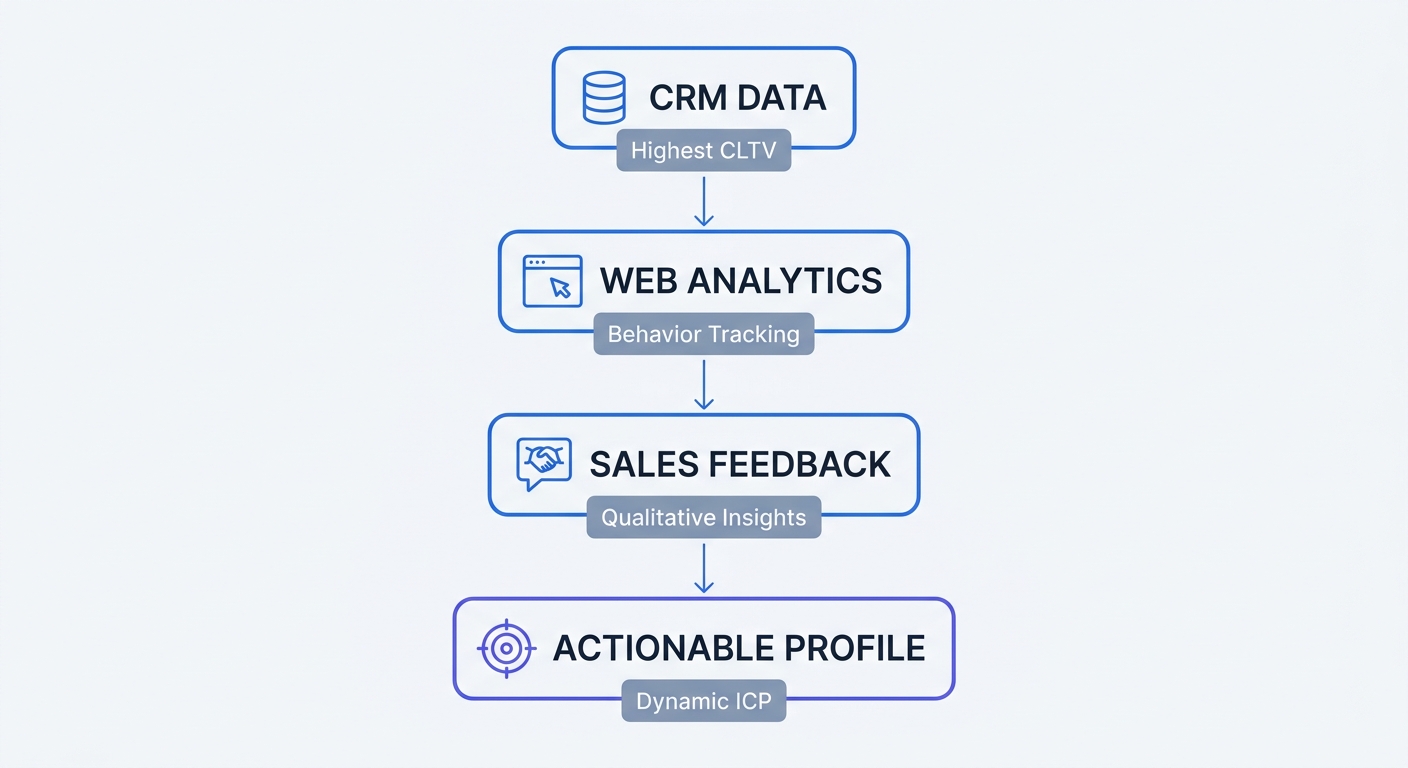
Layer quantitative web analytics with qualitative insights from internal teams. Sales and customer success departments speak to prospects on discovery calls. These employees possess context a dashboard cannot capture.
Schedule a quarterly review meeting with team leads. Ask sales representatives to list common deal-breakers. Require customer success managers to document the friction points new users experience during onboarding. Add specific legacy CRMs to your negative targeting list if sales notes those users consistently reject your product.
Cross-reference qualitative feedback with Swetrix engagement data. Update your documentation when engagement metrics align with human feedback.
Implementing Progressive Profiling
Refining your targeting requires zero-party data. Demanding excess information upfront destroys conversion rates.
Implement progressive profiling to collect data in small increments over multiple sessions. Ask for an email address and a name rather than confronting a new lead with a 10-field form. Prompt the user for their company size on a return visit. Request their software stack requirements two weeks later.
Build dynamic forms using tools like Typeform or Tally. Set conditional logic to ask questions missing from your CRM records.
- First Touch: Name and Email.
- Second Touch (Webinar Signup): Job Title and Company Name.
- Third Touch (Whitepaper Download): Annual Revenue and Primary Challenge.
- Fourth Touch (Demo Request): Current Software Stack and Timeline.
This method protects lead volume while building a detailed picture of your audience. Every piece of progressive data validates or disproves your baseline assumptions.
Review definitions against closed-won and closed-lost data each quarter. Investigate anomalies when win rates drop among a segment of your defined audience. Adjust the firmographic requirements and tighten the behavioral triggers based on these findings. An optimized ICP forces marketing budgets toward the accounts positioned to generate revenue.
Track the behavior of your highest-value visitors today. Swetrix offers an open-source, privacy-focused analytics dashboard to help define ideal customers without using cookies or invading privacy. Sign up for a free trial to build data-driven profiles based on user actions.