- Date
The Best Web Analytics for E-commerce Brands in 2026
Running an e-commerce brand is a balancing act. You need robust data to understand where your customers are coming from and why they are (or aren't) buying. But collecting that data usually involves heavy tracking scripts that slow down your site—and slow sites kill conversion rates.
For a long time, the default solution has been Google Analytics. But for modern e-commerce stores, GA4 is increasingly becoming a liability rather than an asset. From massive discrepancies in revenue reporting due to ad blockers, to complex setups, to aggressive data sampling that obscures reality, store owners are looking for a better way.
If you are tired of analytics tools that slow down your storefront and provide inaccurate sales data, it’s time to look at the alternatives. In this guide, we will explore the critical features e-commerce brands actually need from their analytics stack.
The Problem with Traditional Analytics in E-commerce
When you rely on legacy analytics platforms to track your online store, you run into three major roadblocks:
1. The Speed Trade-off
In e-commerce, milliseconds matter. Amazon famously found that every 100ms of latency cost them 1% in sales. Google Analytics (especially when bundled with Google Tag Manager) requires downloading massive JavaScript payloads (often 70KB+). This bloats your page, increases your First Contentful Paint (FCP), and directly hurts your conversion rate and SEO rankings.
2. The Ad Blocker "Black Hole"
Depending on your target demographic, anywhere from 30% to 50% of your visitors are using ad blockers or privacy-focused browsers like Brave and Safari. Because Google Analytics is an ad-tech product, it is almost universally blocked by these tools. The result? A massive chunk of your traffic—and your revenue—is completely invisible in your dashboard. You might have $10,000 in sales in your Shopify admin, but GA4 only reports $6,000. This data discrepancy makes it impossible to calculate accurate Customer Acquisition Costs (CAC) or Return on Ad Spend (ROAS).
3. The Cookie Banner Drop-off
To comply with GDPR, CCPA, and other privacy laws while using cookie-based trackers like GA4, you must display an intrusive cookie consent banner. When visitors arrive at your store and the first thing they see is a massive popup demanding their data, trust drops. Worse, if a user clicks "Decline," you lose their data entirely, further skewing your analytics.
4. Silent Checkout Failures
Traditional marketing analytics tools tell you who visited your site, but they rarely tell you why they failed to convert from a technical standpoint. If a recent theme update broke your checkout button on mobile Safari, GA4 won't tell you there's a JavaScript error—it will just show a drop in conversions, leaving you to guess what went wrong.
What E-commerce Brands Actually Need from Analytics
To optimize your funnels and grow your revenue, you need an analytics tool built for performance, accuracy, and actionable insights.
- Lightweight Tracking: It should have a minimal footprint that doesn't affect your Core Web Vitals.
- Accurate Revenue Attribution: It needs to track actual sales, regardless of ad blockers.
- Cookieless by Design: It should allow you to legally operate without a consent banner, providing a frictionless shopping experience.
- Deep Funnel Visibility: You need clear visibility into where users drop off between the product page, the cart, and the checkout.
- Marketing Campaign Tracking: Clear, easy-to-read UTM data to see exactly which ads and emails are driving sales.
Why Swetrix is the Best Analytics Tool for E-commerce
Swetrix is an independent, privacy-first web analytics platform that solves the biggest data headaches for e-commerce brands.
Here is how Swetrix helps you track your store's performance accurately without compromising speed or user privacy.
Direct Revenue Tracking (Stripe & Paddle Integration)
Getting accurate financial data in Google Analytics is notoriously difficult. Swetrix solves this with direct, server-side integrations.
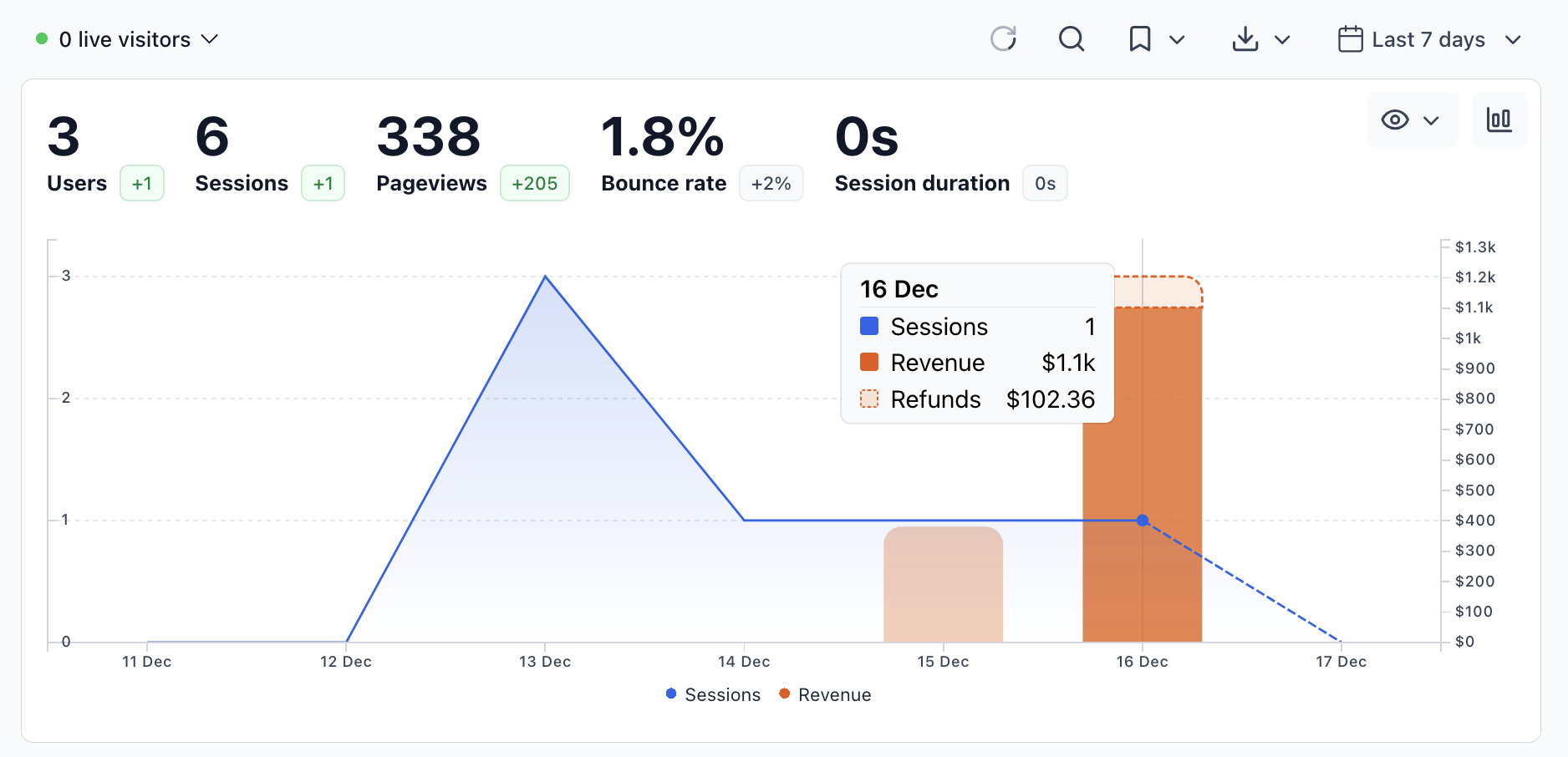
Through our Revenue Tracking feature, you can connect your Stripe or Paddle account directly to your Swetrix project via a read-only API key. Swetrix automatically syncs your transaction data every 30 minutes.
Because this happens server-side, it cannot be stopped by ad blockers. Your traffic dashboard will show your actual, 100% accurate net revenue, alongside your traffic metrics, with refunds stacked visually on the chart. You can even attribute specific purchases back to individual user sessions to calculate Customer Lifetime Value (LTV) and see exactly which traffic sources bring in the highest-paying customers.
Error Tracking for Smooth Checkouts
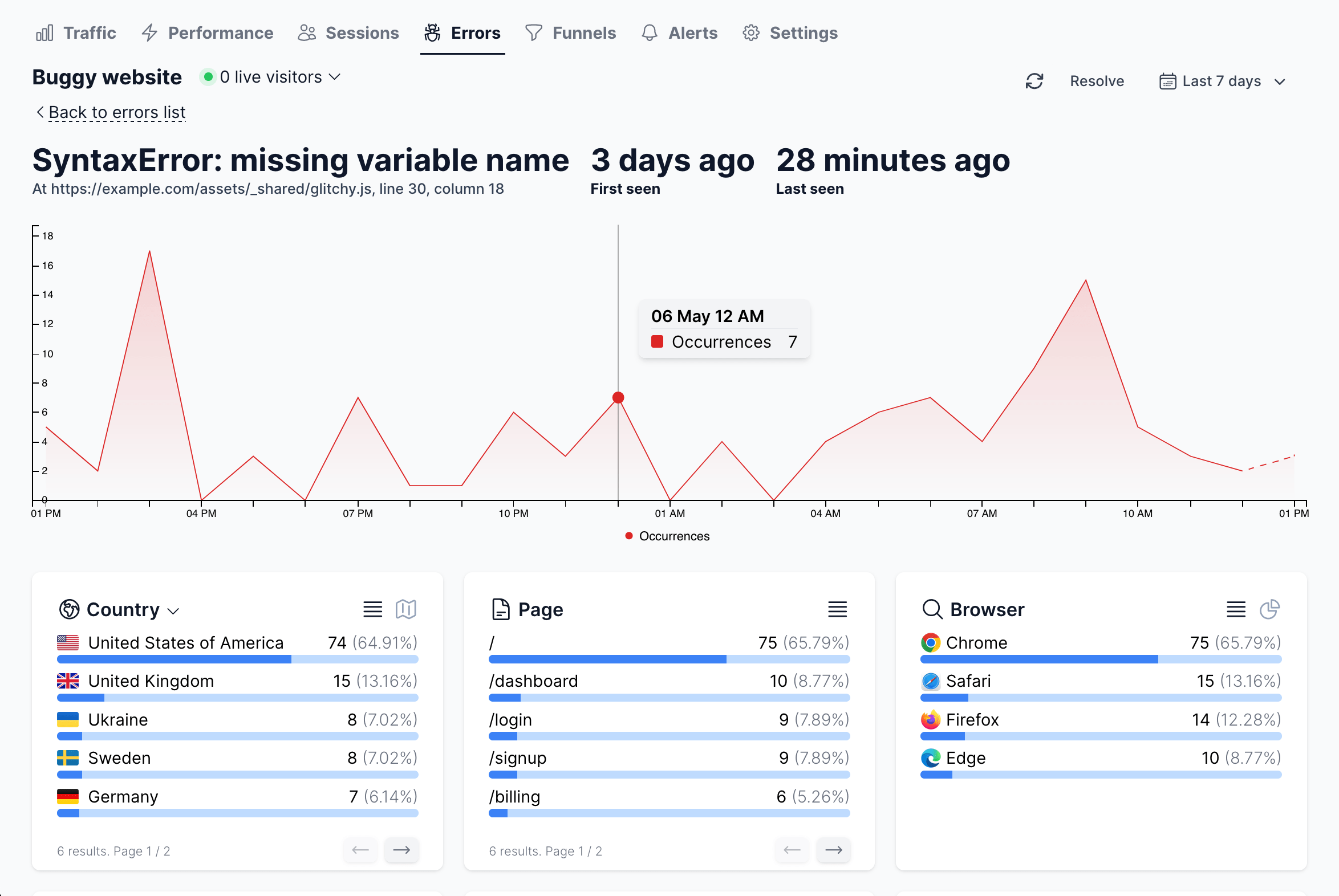
A broken checkout process is an e-commerce brand's worst nightmare. Swetrix bridges the gap between marketing analytics and developer tools by including built-in Error Tracking.
If a third-party plugin conflicts with your theme and breaks the "Add to Cart" button, Swetrix will automatically catch the JavaScript error and alert you. You can see exactly which pages, browsers, and devices are affected, allowing you to fix the issue before you lose thousands in sales.
Campaign & UTM Tracking
E-commerce runs on ads, email newsletters, and affiliate links. Swetrix makes it incredibly easy to track your marketing campaigns using standard UTM parameters (utm_source, utm_medium, utm_campaign, etc.).
Instead of digging through complex GA4 exploration reports, Swetrix displays a clean, dedicated view of your campaigns, so you can see at a glance whether your latest Facebook Ad or Black Friday email blast is actually driving traffic and revenue.
Seamless Integrations with Your Storefront
Whether you run a massive custom storefront or a simple no-code checkout, Swetrix integrates smoothly. We offer dedicated, documented integrations for the most popular e-commerce platforms, including:
- Shopify: Easily add Swetrix to your Liquid theme to track pageviews, product views, add-to-cart events, and completed purchases.
- ThriveCart: Dynamic script loading tailored for ThriveCart checkouts and success pages.
- Squarespace Commerce: Simple code injection that respects Squarespace's native routing.
- WooCommerce & BigCommerce: Works flawlessly out of the box.
Built for Speed
The Swetrix tracking script is incredibly small—under 6 KB. It loads asynchronously, meaning your product images and "Add to Cart" buttons load instantly. Your customers get a blazing-fast shopping experience, and you still get all the data you need.
Cookieless and Ad-Blocker Resilient
Swetrix does not use cookies to track visitors. We use anonymized, privacy-friendly data collection. This means your compliance with regulations like GDPR and CCPA becomes significantly easier.
Even better? You can remove the cookie consent banner from your store entirely. By serving the Swetrix script via a custom domain proxy, you can also legally bypass most ad blockers, recovering the 30-40% of traffic data you've been missing.
Custom Funnels for Checkout Optimization
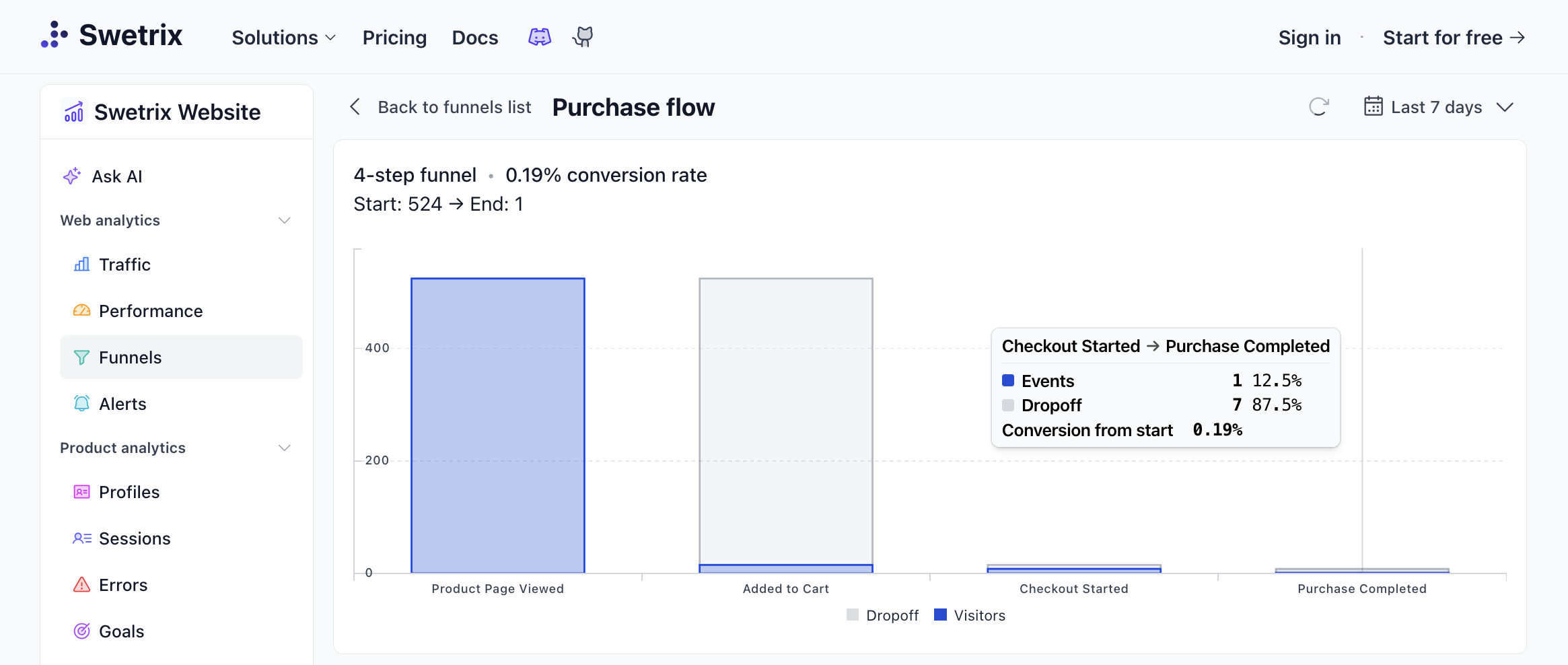
Traffic is useless if it doesn't convert. Swetrix allows you to build custom funnels to visualize the customer journey. You can set up a funnel tracking the exact path: Product Page Viewed -> Added to Cart -> Checkout Started -> Purchase Completed.
When you can see exactly where users are dropping off, you know exactly which page you need to optimize.
Stop Guessing, Start Measuring Accurately
In e-commerce, inaccurate data leads to bad business decisions. If your analytics tool is slowing down your site, missing half your sales data, and forcing you to annoy customers with cookie banners, it is actively costing you money.
Swetrix gives you the lightweight speed your store needs, combined with the server-side revenue accuracy you deserve.
Start your 14-day free trial of Swetrix today and see exactly what is happening in your store.

The web analytics your site deserves.
Tired of bloated dashboards, privacy concerns, and data you can't trust? Switch to Swetrix and get simple, powerful analytics that respects your users.