- Date
Web Analytics vs Product Analytics: Key Differences in 2026
 Andrii Romasiun
A user clicks a link on a tech blog, lands on your homepage, and signs up, forming a complete web analytics story. Once inside the application, that same user clicks 'Create Project', invites three teammates, and logs out without deploying to build a product analytics profile. Historically, companies bought separate software to measure these two phases of the customer journey, installing one script to count incoming traffic and a heavier SDK to map software interactions. That separation creates blind spots, inflates budgets, and triggers regulatory penalties when overlapping tools collect conflicting data. When you evaluate web analytics vs product analytics in 2026, the challenge is merging both into a single, legally compliant data stream.
The Core Difference: Acquisition vs. Behavior
Marketing teams buy traffic, and product teams build features, so the analytics tools designed for these groups reflect entirely different incentives.
Web Analytics Measures Acquisition
Web analytics platforms load a lightweight browser script to log pageviews, traffic sources, referrers, and sessions. The goal is evaluating top-of-funnel visibility and marketing return on investment. If you run a paid social campaign, the platform reads the UTM parameters on incoming links to attribute resulting visits to the correct ad spend.
Because every website requires basic traffic visibility, a report on the global web analytics market projects the sector will reach $7.36 billion this year. Growth in this sector relies on cookieless technologies, as strict privacy laws force you to find a Google Analytics alternative that skips consent banners entirely.
Product Analytics Tracks User Behavior
Instead of counting URL loads, product analytics tools track custom events, map conversion funnels, calculate retention rates, and record session replays to answer questions about feature adoption and user friction. When developers want to know if a new dashboard layout causes users to abandon a configuration flow, they query the database.
Granular behavioral tracking demands heavier data processing, driving rapid growth across the global product analytics market. High costs and technical complexity traditionally restrict these tools to enterprise software companies. Swetrix changes this dynamic by offering an open-source, hybrid solution delivering deep product insights without the enterprise price tag or privacy liabilities of persistent cookies.
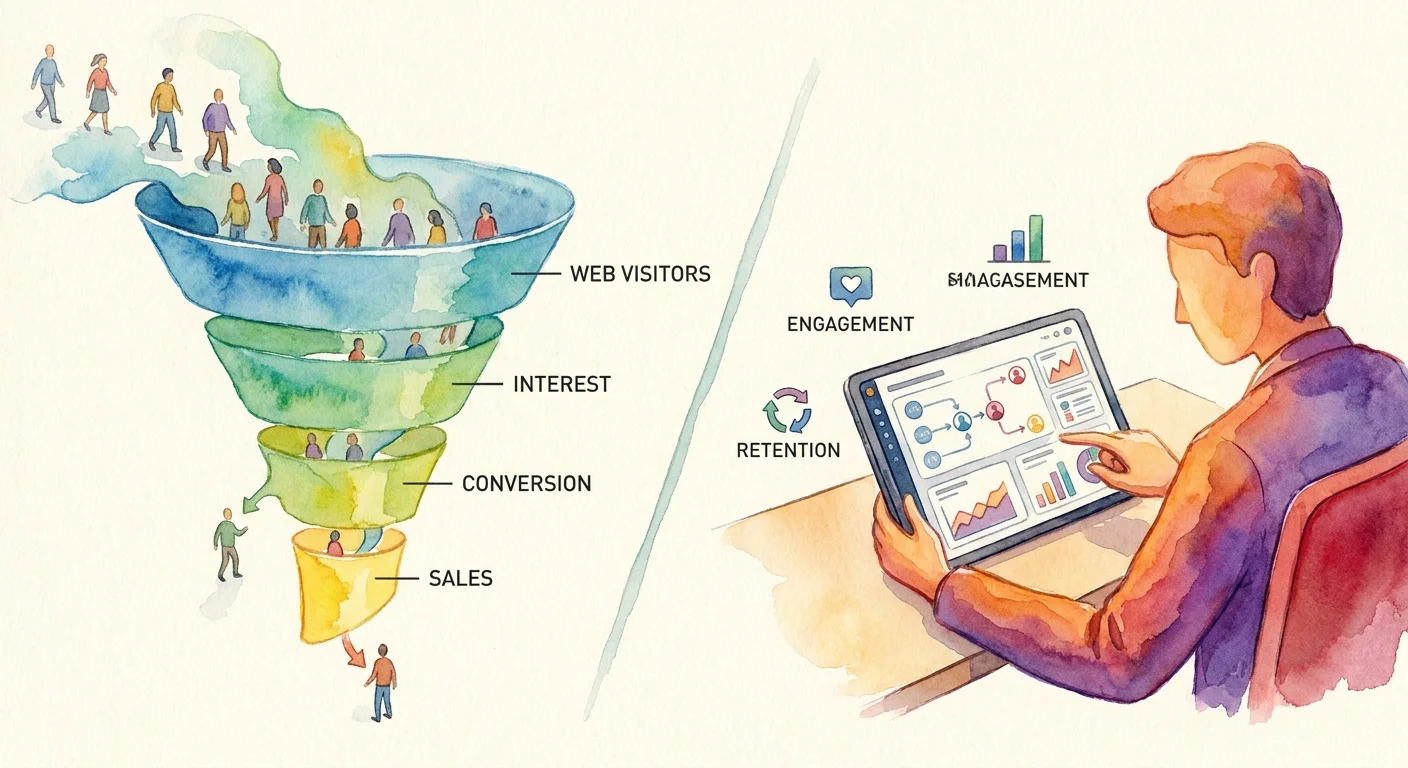
Key Metrics and Use Cases for Finding Data Gaps
Comparing the specific data points each discipline tracks reveals exactly where your current data stack fails.
Measuring Top-of-Funnel Session Visibility
Web platforms focus on aggregated session data like bounce rates, average session duration, and the ratio of new to returning visitors. These numbers show whether your content matches the search intent of incoming traffic.
If your database optimization blog post sees a 90% bounce rate, that traffic holds no value, forcing you to rewrite the introduction or target a different keyword. Web metrics operate on pure volume, logging that a specific browser session generated a pageview without profiling the individual user.
Tracking Feature Adoption and Retention
Product platforms track specific interactions defined in the code, triggering an event payload every time a user clicks a button, submits a form, or encounters a validation error.
These events feed into retention cohorts and funnel visualizations. You can build a funnel starting at 'Signed Up', moving to 'Created Workspace', and ending at 'Invited User'. If 80% drop off before the final step, you know exactly where the onboarding flow breaks down, while session replays add context by recording the exact mouse movements and clicks of users struggling with the interface.
Using Benchmarks to Inform Strategy
Evaluating these metrics requires industry context, as conversion rates vary based on whether your platform tracks unique users or individual sessions. Global e-commerce conversion rates currently range from 1.6% to 3.7% depending on the measurement methodology.
B2B software requires different baselines, with SaaS lead-to-MQL conversion averaging 39%, whereas sectors like construction average 17%. You must configure tracking setups to match specific sales cycles. A SaaS company needs deep product analytics to measure a 14-day free trial, while an e-commerce store relies on web analytics to log a simple checkout event.

The Privacy Compliance Factor Disrupting Measurement
Regulatory pressure continues breaking traditional measurement models, meaning you can no longer deploy heavy tracking scripts and assume the data remains yours to keep.
The 'Reject All' Data Loss Crisis
European Union authorities have issued over €4.5 billion in GDPR fines since 2018, aggressively targeting manipulative cookie banners that hide opt-out mechanisms.
Implementing a legally compliant 'Reject All' button on a consent banner drops opt-in rates by 20% to 30%. In the United States, recent surveys show that nearly 26% of adults always decline optional cookies. When a user clicks 'Reject', legacy platforms like Google Analytics 4 fail silently, erasing that traffic from your reports. This forces you to make budget decisions based on fragmented data missing a quarter of the entire audience.
Bypassing GDPR and Cookie Banners
Consent fatigue alters how users interact with websites, dropping the average EU marketing cookie consent rate to 46%, a baseline that fluctuates by country. If your platform requires cookies to map pathways, you are legally obligated to display a consent banner.
Moving to a cookieless solution eliminates this requirement. Swetrix uses aggregated data, server-side events, and rotating session hashes instead of persistent profiles, securing total traffic visibility without triggering GDPR, CCPA, or PECR consent laws. This lets you remove the banner, improve user experience, and regain missing data.
Performance Penalties of Consent Management
Legal liability represents only one cost of traditional tracking, as third-party Consent Management Platform scripts heavily degrade website performance. Loading a complex banner script frequently adds hundreds of milliseconds to a site's Largest Contentful Paint.
This delay hurts search engine rankings and frustrates users before the page finishes rendering. Evaluating how a website redesign impacts analytics should always include a plan to strip out these heavy third-party CMPs. Swapping to cookieless tracking restores that lost half-second of load time immediately.
Merging Web and Product Data to Trace the Full User Journey
Running isolated tools for marketing and product teams creates disjointed reporting, so the modern data stack combines them.
Dissolving the Hard Line Between Funnels
The boundary between top-of-funnel awareness and bottom-of-funnel usage is fading. A user reads a blog post, clicks a pricing link, signs up, and deploys a test environment within a single ten-minute session.
Splitting data across two platforms prevents you from attributing that product deployment to the original blog post. You need a system carrying initial acquisition source data straight through to the final custom event, giving you a unified view to prove that top-of-funnel campaigns drive concrete product adoption.
Swetrix Merges Web and Product Data
Swetrix combines cookieless web tracking with granular product features, delivering the privacy-first architecture required to bypass consent banners alongside custom events, session replays, and conversion funnels normally restricted to heavy enterprise suites.
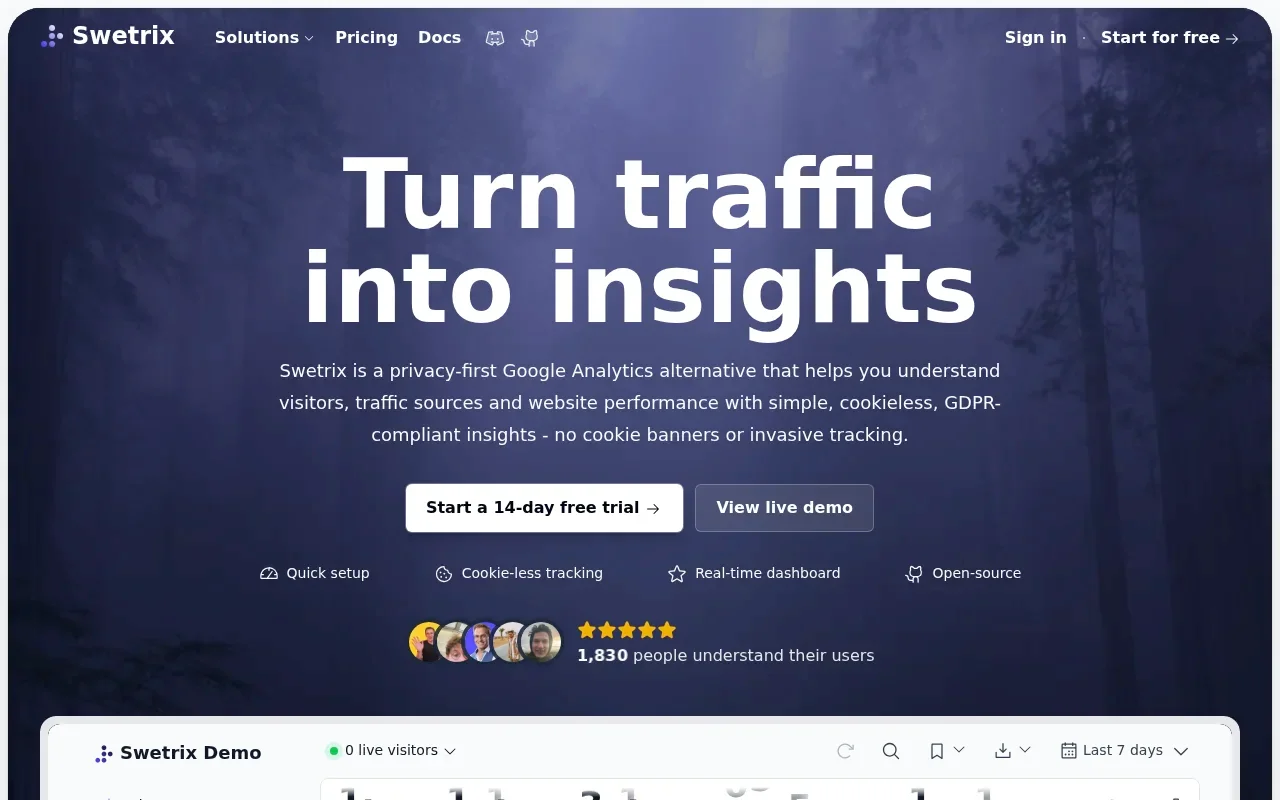
Logging into the dashboard reveals real-time traffic sources and UTM campaign performance. From that same interface, you can build a multi-step conversion funnel based on custom events firing inside your application, eliminating the need to pay for and maintain two separate deployments. This lets you map exactly how inbound traffic translates into concrete software usage in one compliant environment.
Comparing Popular Tools for Each Category
Choosing a platform requires balancing data depth against privacy regulations and budget constraints by evaluating web metrics capability, product analytics depth, cookie banner requirements, and self-hosting availability.
| Platform | Primary Focus | Cookie Banner Required | Session Replays | Self-Hostable |
|---|---|---|---|---|
| Swetrix | Hybrid | No (Cookieless) | Yes | Yes |
| Google Analytics 4 | Web Analytics | Yes | No | No |
| Mixpanel | Product Analytics | Yes | No | No |
| PostHog | Product Analytics | Yes | Yes | Yes |
Traditional Web Analytics Platforms
Google Analytics 4 dominates the legacy market by providing tight integrations with Google Ads and standard traffic reporting.
GA4 faces severe developer pushback and GDPR hurdles, with European data protection authorities repeatedly scrutinizing its data transfer practices. Setting it up compliantly requires complex Consent Mode configurations and mandatory cookie banners. Comparing Swetrix vs Google Analytics highlights a massive difference in data retention. GA4 loses traffic visibility when users reject cookies or run ad-blockers like uBlock Origin, whereas cookieless alternatives bypass these blockers ethically by abandoning persistent user profiling entirely.
Deep Product Analytics Giants
Platforms like Mixpanel and Amplitude offer massive processing power for product behavior, allowing enterprise teams to slice retention cohorts by dozens of variables and run complex predictive models.
This depth carries high implementation costs and heavy compliance burdens. These tools rely on identifying individual users across multiple sessions and devices, storing Personally Identifiable Information that demands strict cookie consent. For smaller teams and B2B startups, the sheer complexity of these platforms creates a steep learning curve that outweighs the benefits of their advanced features.
Hybrid, Privacy-First Alternatives
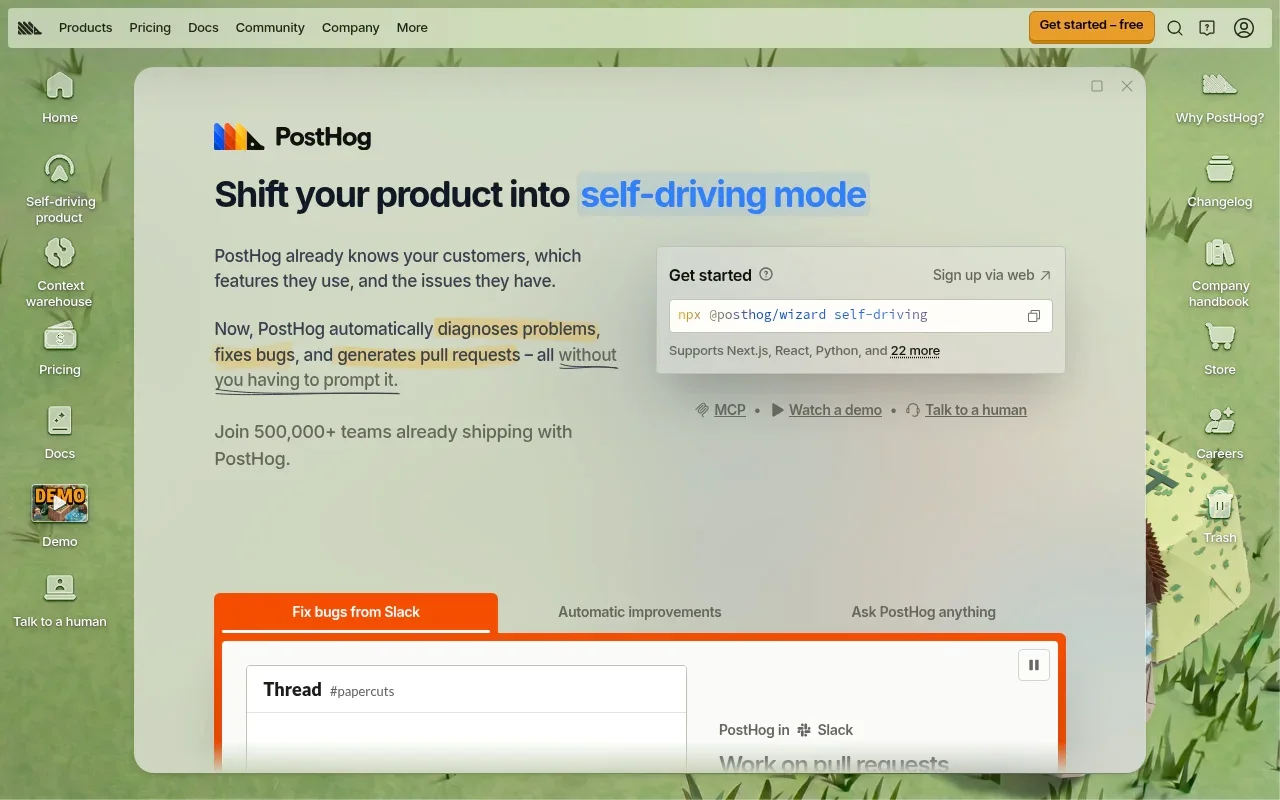
Modern alternatives bridge this gap. Tools like PostHog offer open-source product analytics, but lean heavily toward complex engineering deployments and still require cookie management for cross-session tracking.
Swetrix stands out as an API-first platform that respects open-source values and bypasses tracking blockers natively. You get the session replays and funnels of a product tool without sacrificing the lightweight, banner-free deployment of a modern script.
Massive enterprise software companies with dedicated data science teams should buy a dedicated product analytics giant. Agencies, startups, and content creators looking for actionable insights without the GDPR liability should deploy Swetrix to handle the entire user journey while keeping sites fast and legally compliant.
Best Practices for Implementing Hybrid Tracking
Merging data streams requires careful configuration to map the user journey without violating privacy laws.
Adopting First-Party, Cookieless Tracking
Strip the legacy third-party scripts from your site and replace them with a first-party tracking snippet.
Route the analytics data through a custom domain matching your website, so if your site is example.com, configure the platform to receive data at analytics.example.com. This first-party context prevents browser privacy features like Safari's Intelligent Tracking Prevention from blocking the requests. Because the system uses temporary session hashes instead of persistent cookies, you remove the consent banner from your interface entirely. Check your on-page SEO elements afterward to confirm that removing the CMP script improved core web vitals.
Mapping the Full User Journey Ethically
Design a tracking plan that covers both acquisition and behavior by using standard UTM parameters on all inbound marketing links to populate reports.
Once the user lands on the site, trigger cookieless custom events for major milestones instead of tracking every single click. Define three to five core actions indicating value, and send an event payload when a user submits a lead form, clicks a deployment button, or completes the onboarding flow. Building a conversion funnel in your dashboard using these events shows exactly how many users from a paid social campaign successfully reach the final step of the product setup.
Self-Hosting for Maximum Compliance
Strict enterprise agreements and government contracts prohibit international data transfers, preventing you from sending analytics payloads to servers hosted in foreign jurisdictions.
Solve this by keeping the data entirely in-house. Open-source platforms like Swetrix offer Docker-based self-hosting, allowing you to spin up a container on your own infrastructure, point the tracking script to a private endpoint, and store the resulting database on your own hardware. With 98% of organizations maintaining or increasing their open-source usage, self-hosting guarantees that no third party accesses your behavioral data, bypassing external compliance audits and data transfer laws.
Stop losing traffic data to cookie banners and ad blockers. Swetrix merges the simplicity of cookieless web tracking with the power of custom events, conversion funnels, and session replays. Reclaim your analytics today at Swetrix.com.