- Date
Mastering Web Analytics For Fintech Companies In 2026
 Andrii Romasiun
Regulators dismantled traditional tracking architectures. The 2024 LinkedIn GDPR fine of €310 million set a precedent for processing third-party data without explicit consent. Web analytics for fintech companies demands complete independence from client-side cookies. Consumer trust vanishes the moment an invasive tracking script loads on a wealth management portal.
Swetrix provides a privacy-first platform to measure user behavior without exposing your organization to compliance risks. Relying on outdated collection methods threatens your advertising revenue, site speed, and legal standing.
The New Era of Compliance and Tracking
Financial platforms handle sensitive user wealth profiles. Routing visitor metadata through external advertising networks creates compliance liabilities. Digital gatekeepers enforce these boundaries. Google and Meta tie ad account access to strict privacy standards. An unauthorized third-party tracker firing on a landing page triggers immediate campaign suspension.
Why Traditional Trackers Fail Fintechs
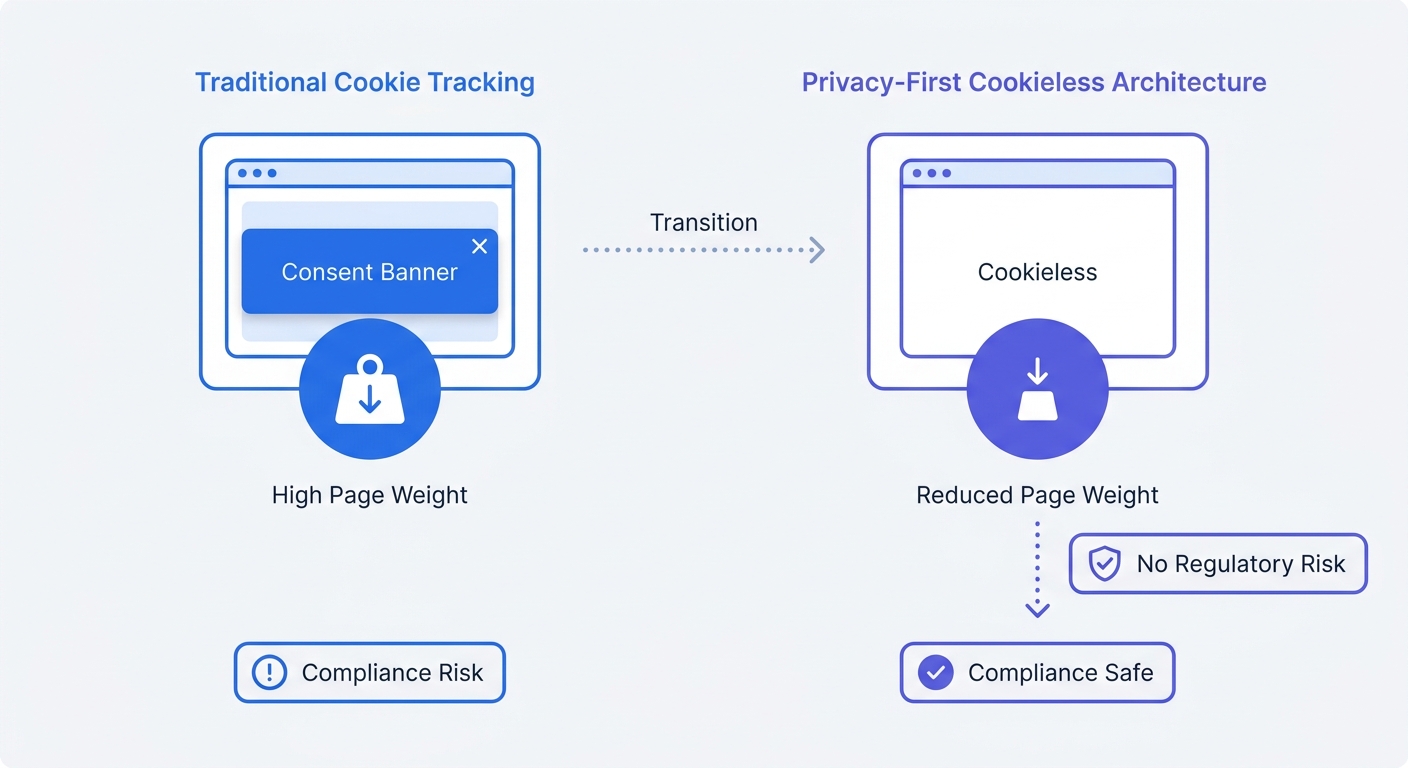
Legacy analytics platforms collect IP addresses, device identifiers, and cross-site browsing histories. This widespread data harvesting triggers mandatory cookie consent banners under global privacy laws.
Consent banners interrupt the user journey. Visitors face a wall of legal text before seeing your value proposition. Many users hit the reject button or leave the site altogether. This creates blind spots in your traffic data. Marketing teams lose visibility into source attribution, preventing accurate calculations of customer acquisition costs for new financial products.
The Cookieless Analytics Advantage
Replacing tracking cookies with an anonymized measurement framework restores data visibility. Cookieless analytics platforms track sessions via encrypted hashes. The system registers pageviews, referrers, and events without storing personal identifiers.
Bypassing cookie collection eliminates the need for consent banners in most jurisdictions. The initial website interaction accelerates. Visitors consume your financial messaging the moment the page loads. Your marketing dashboard populates with accurate traffic data because users cannot opt out of non-existent cookies.
Action steps for auditing your current stack:
- Open your browser developer tools in an incognito window.
- Navigate to the Network tab and load your primary landing page.
- Filter the network requests for
google-analyticsorfacebook. - Document every third-party cookie firing before the user interacts with a consent banner.
- Rip out non-compliant scripts and deploy a Google Analytics alternative that respects user privacy by default.
Fintech Conversion Benchmarks You Must Know
Evaluating your marketing performance requires context. Industry benchmarks place the average financial website time on page at 54 seconds. Visitors decide to trust your wealth management or trading platform in under a minute.
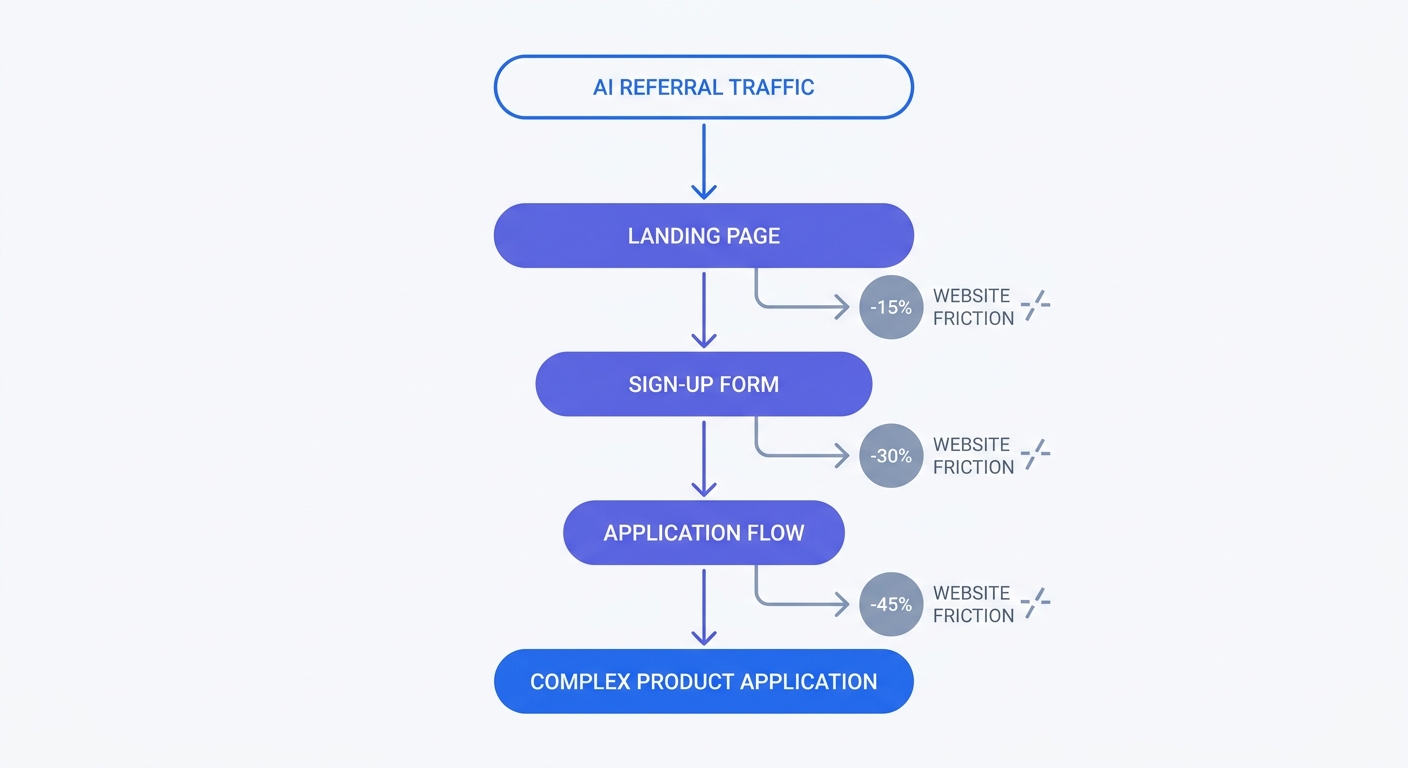
Consumer finance landing pages convert traffic at 6.35%, though this rate varies widely depending on the specific product like insurance or mortgages. Buyers of complex B2B financial software behave differently. High-friction enterprise products average significantly lower conversion rates. Set baseline expectations using these distinct product categories.
Mobile Traffic vs. Desktop Conversions
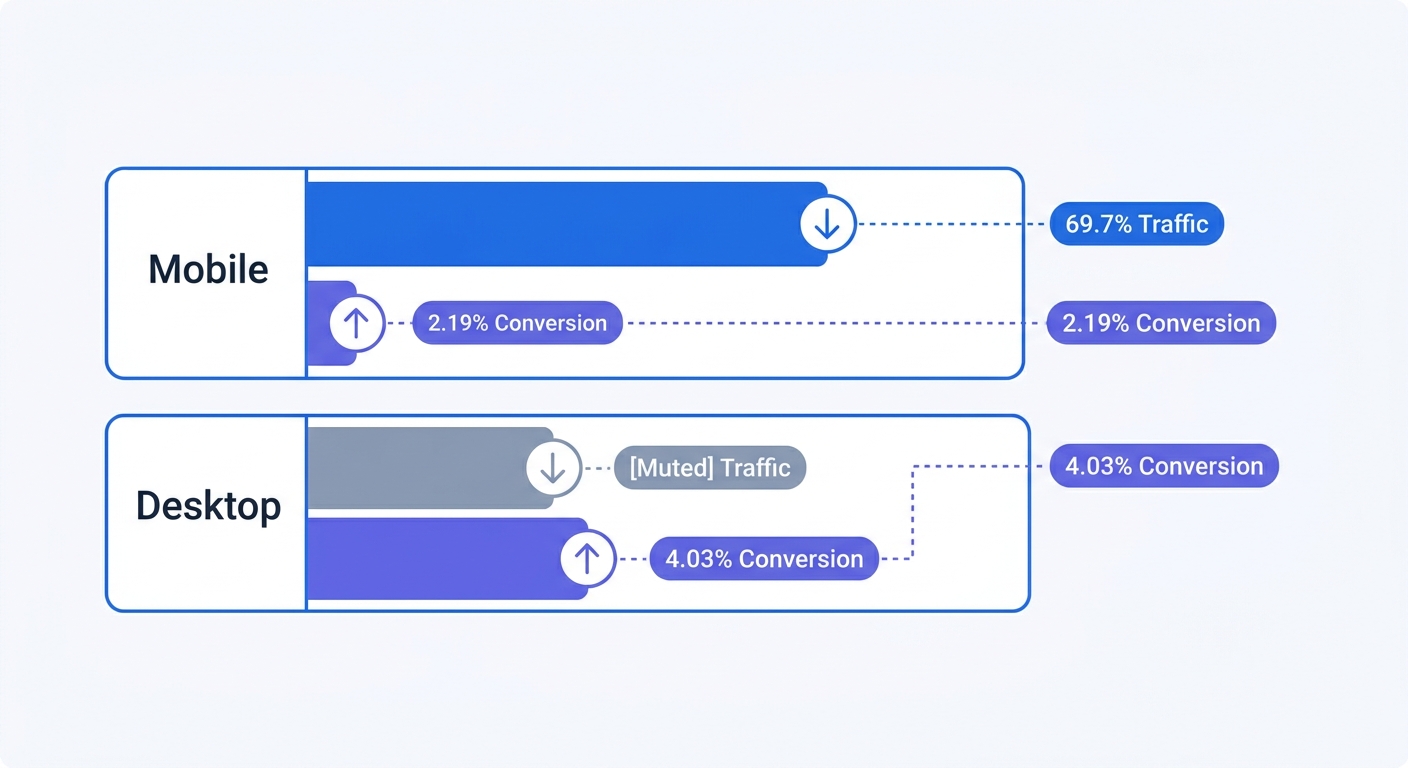
Traffic source dictates user behavior. Mobile devices drive 69.7% of all website visits across industries, though this share varies depending on the specific financial niche. This volume fails to translate into proportional revenue.
Phone visits globally lag with a 2.19% conversion rate, while desktop users convert at 4.03%. The disparity points to severe friction in mobile application flows. Ten-field forms frustrate smartphone users. That same application feels manageable with a physical keyboard.
| Metric | Mobile | Desktop |
|---|---|---|
| Traffic Share | 69.7% | 30.3% |
| Conversion Rate | 2.19% | 4.03% |
| Primary Friction | Data entry | Screen layout |
Why Content Complexity Builds Trust
E-commerce marketers simplify copy to a middle-school reading level. Stripping out jargon boosts sales for consumer goods. Financial services break this rule.
More complex language can improve fintech conversions. Consumers expect precision when handling money. Analysts at Unbounce found that financial services is the only industry where more complex language can actually help conversions. Regulatory text, specific fee structures, and detailed compliance explanations signal security to the prospective client.
Audit your landing pages this week. Identify areas where marketing language replaced technical specifications. Restore the exact fee breakdowns. Add regulatory badges near primary call-to-action buttons to align with buyer expectations instead of treating them like impulse shoppers.
Eliminating Friction from Application Flows
Every extra second of load time bleeds revenue, as forty percent of all online visits contain avoidable user friction. Slow server responses, broken form validation, and layout shifts derail high-intent buyers.
Identifying Bottlenecks and Dropped Sessions
A broken user interface causes "rage clicks." Users tap a non-responsive button multiple times in frustration. This behavior pattern correlates with session abandonment.
Multi-step loan applications hide these bottlenecks. A user completes the income declaration but abandons the flow at the identity verification upload. Standard pageview tracking misses this nuance. Analytics dashboards show traffic hitting the start page and the success page, while the middle steps remain undocumented.
Deploy custom event tracking to map the exact drop-off points. Assign a specific tracker to each form field.
// Example Swetrix custom event for an application flow
swetrix.track({
  ev: "application_step_completed",
  meta: {
    step: "identity_verification",
    user_type: "b2b_merchant",
  },
});
Review your custom events dashboard every Monday. Isolate the form stage causing the highest abandonment. A 40% drop-off at the document upload stage points directly to a technical failure. Redesign that specific interaction.
How Lightweight Analytics Accelerate UX
Heavy JavaScript files kill performance. Traditional analytics tools load multiple scripts to parse cookies, track cross-domain activity, and build advertising profiles. This bloated architecture blocks the main thread. Websites freeze while browsers process the tracking code and communicate with external servers.
Swetrix utilizes a lightweight tracking script. The payload size stays under a few kilobytes. It loads asynchronously without blocking visual rendering. Financial applications load faster, letting users interact with buttons the moment they appear on screen.
Run your site through a performance testing tool and note the total JavaScript execution time. Swap your legacy tracker for a lightweight alternative. Your Core Web Vitals will improve in the next report.
The Security Imperative of Self-Hosted Analytics
Financial institutions demand absolute control over infrastructure. Using cloud analytics platforms requires administrators to transmit visitor data to external servers. This data transfer introduces third-party vendor risk.
Self-hosting analytics keeps proprietary data within your private network. Administrators dictate the server location, database security, and backup frequency. Compliance teams approve the architecture because no data leaves the corporate firewall.
Open-Source Code Guarantees Transparency
Proprietary analytics tools operate as black boxes. Security teams cannot inspect the source code processing your traffic.
Open-source solutions remove this opacity. Engineering teams audit the exact code running on the platform. Vulnerabilities surface quickly to the global developer community.
Host Swetrix on your own infrastructure. Pull the official Docker images. Connect a PostgreSQL database. Configure your network firewall to restrict external access. This setup satisfies strict security requirements while delivering instant traffic insights.
Future-Proofing Acquisition and Attribution
Search behavior shifted in 2026. Users ask AI assistants for financial advice instead of scrolling through ten blue links. Referral traffic from AI assistants to financial sites is growing rapidly as search habits evolve.
These AI assistants pre-qualify the user by answering initial research questions before passing them to your site. This traffic converts at a significantly higher rate than standard search engine visitors.
Structuring Campaign Links
Without cookies, marketers lose the ability to track users across different domains. UTM parameters bridge this attribution gap. Every marketing link must carry campaign data directly in the URL string.
Standardize your tracking taxonomy. Establish strict naming rules for sources and mediums. Build a centralized spreadsheet for all campaign links. Use a UTM generator to prevent formatting errors.
When running a sponsorship in a financial newsletter, format the link to capture the exact placement.
https://yourfintech.com/signup?utm_source=morning_brew&utm_medium=email&utm_campaign=q3_b2b_promo
Analytics software extracts these parameters on the landing page. The system then credits the email campaign with the resulting conversion.
Shifting to AI Probabilistic Attribution
Marketers abandon client-side trackers because privacy browsers block them by default. Relying on deterministic, cookie-based attribution creates reporting deficits. Direct traffic numbers inflate as organic search and paid social lose their tracking tags.
Probabilistic modeling replaces the need for individual user tracking. Modern systems analyze aggregate traffic patterns, timestamps, and server-side conversion data. Analysts map the correlation between a surge in ad spend and a spike in sign-ups.
Link your payment gateway to your analytics setup. Send a server-side event when a transaction clears. Combine this first-party data with probabilistic models to measure marketing ROI. Organizations gain accurate campaign attribution without compromising a single user's privacy.
Upgrading your web analytics protects your business from regulatory fines and improves your conversion rates. Stop slowing down application flows with bloated tracking scripts. Build trust with users by respecting their data. Try the Swetrix Cloud 14-day free trial to experience lightweight, open-source web analytics designed for modern privacy standards. Pricing for high-volume sites starts at $19/mo for 100,000 events.