- Date
The Guide to Simple Website Analytics for Small Business
 Andrii Romasiun
Over 70 percent of small businesses have a website, yet many operators cannot tell you what those visitors do once they land. You run paid campaigns, print QR codes on flyers, and post links on social media, but your reporting dashboard stays empty when people click through. This happens because legacy tracking tools rely on outdated technology that modern web browsers block by default. To capture this traffic without needing a master's degree to read the reports, choosing simple website analytics for small business solves the gap. Swetrix provides a streamlined, cookie-free platform that delivers the exact metrics required to make profitable decisions without compromising user privacy.
The Analytics Dilemma for Small Business Owners
High Website Traffic but Low Visibility
Most U.S. small businesses run an active website to generate leads and sales, with B2B sites frequently drawing between 1,000 and 10,000 monthly visitors. These visits cost money to acquire through search engine optimization, content creation, and paid advertisements. Because digital consumption dropped significantly last year while the cost per digital visit increased by nearly 10 percent, businesses pay more for traffic that spends less time reading their content. Knowing which pages keep visitors engaged and which ones drive them away prevents you from throwing marketing dollars at broken landing pages. When you lack accurate traffic data, the disconnect between money spent and visibility gained forces you to guess which channels work. Consequently, you might pause a profitable Facebook ad campaign because the analytics tool failed to record the resulting conversions.
The Problem with Legacy Analytics like GA4
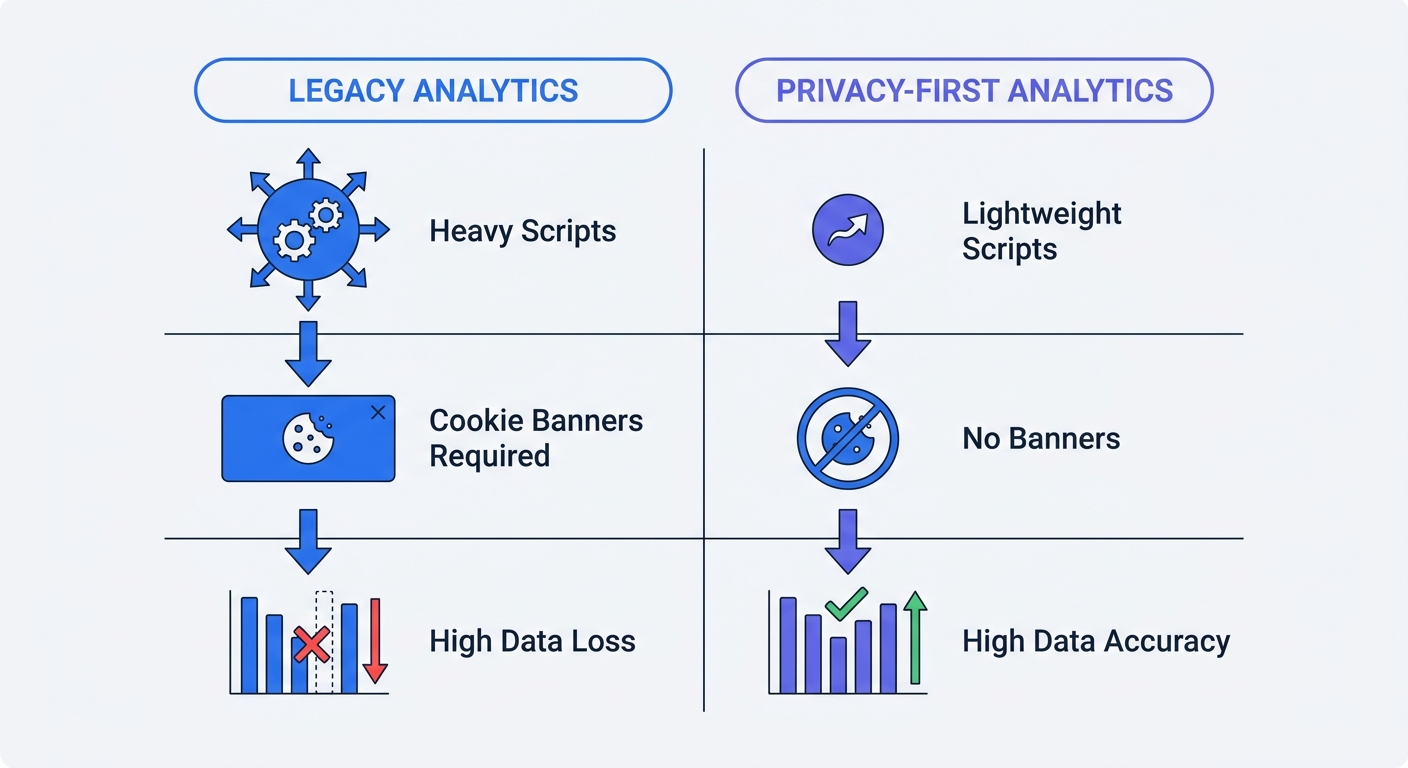
Google Analytics 4 presents a massive hurdle for non-technical teams because opening the dashboard reveals layers of complex event configurations instead of a straightforward daily traffic report. Finding a basic visitor count requires clicking through three different exploration menus and applying custom date filters. Local service businesses and niche online stores do not have the time to debug tracking configurations every week. Furthermore, GA4 relies on tracking cookies, meaning visits vanish from your reports when users enable ad blockers or strict browser privacy settings. A standard GA4 setup often misses up to half your audience. Google also applies a feature called data thresholding, which intentionally hides rows of data when visitor counts fall below a certain number, forcing you to make budget decisions based on fragmented information. Simple website analytics for small business replaces this bloat with clear, accurate totals on a single screen.
The Shift to a Privacy-First, Cookieless Web
The End of Third-Party Cookies
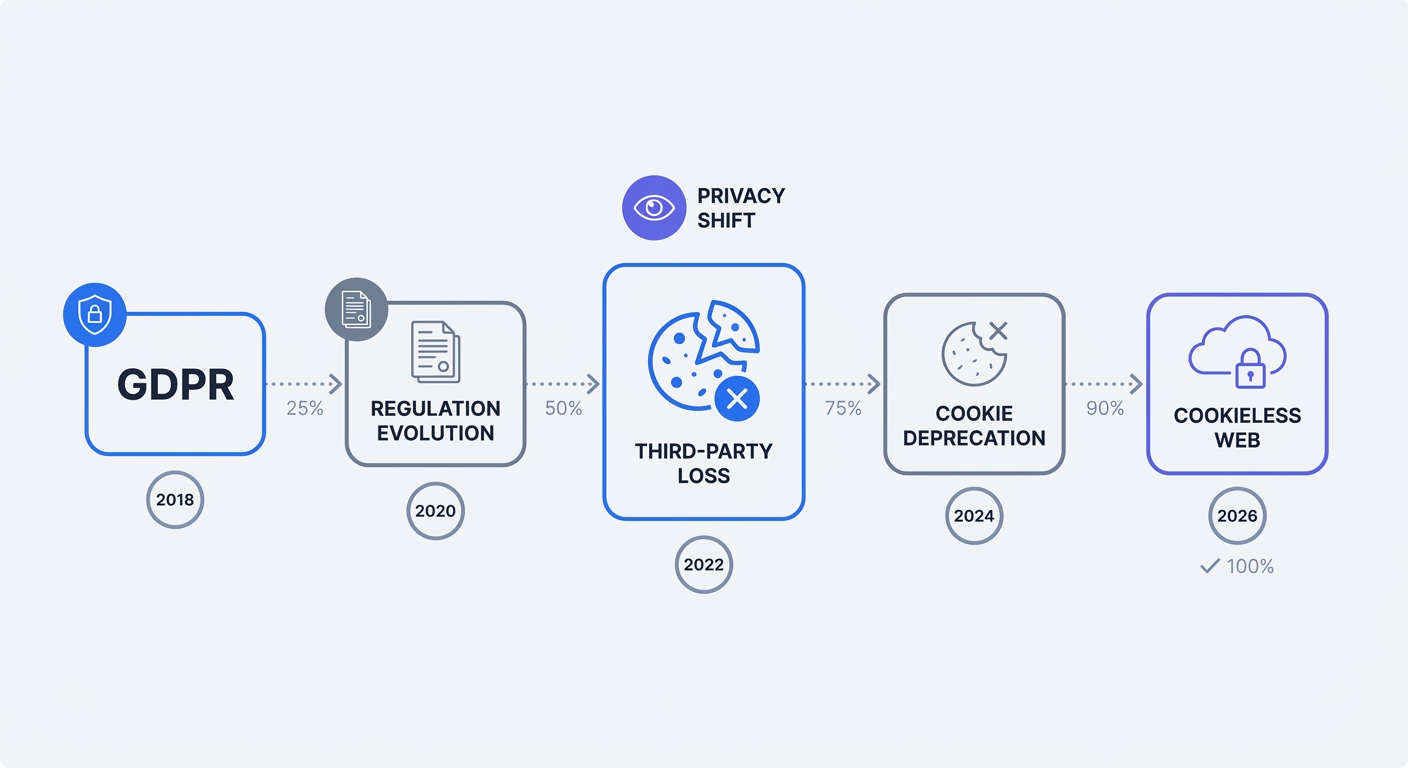
The internet operates differently than it did five years ago because Apple Safari, Mozilla Firefox, and Google Chrome systematically restrict cookie-based tracking by default. Legacy platforms attach a unique identifier to every visitor and follow them across the web to build behavioral profiles, but modern browsers block these scripts at the network level to protect user privacy. If your analytics platform depends on cookies to count visitors, you operate blind. Since the technology that powered digital marketing for the last two decades no longer functions reliably, businesses must adapt their tracking infrastructure to match how browsers process data today.
Avoiding Costly GDPR and Privacy Fines
Regulators enforce data privacy through massive financial penalties, with global GDPR fines surpassing $8 billion by early 2026. Authorities no longer evaluate compliance by checking if a site displays a cookie banner, but instead audit the underlying data supply chains to see where user information goes and who accesses it. Moving to a privacy-first, cookie-free tool like Swetrix bypasses these regulations. Because the platform collects no personal data and offers an EU-hosted cloud, you drop the legal liability and can eliminate the intrusive consent banners that block your content and slow down your site.
Actionable Metrics: Practicing Data Minimization
Tracking What Matters
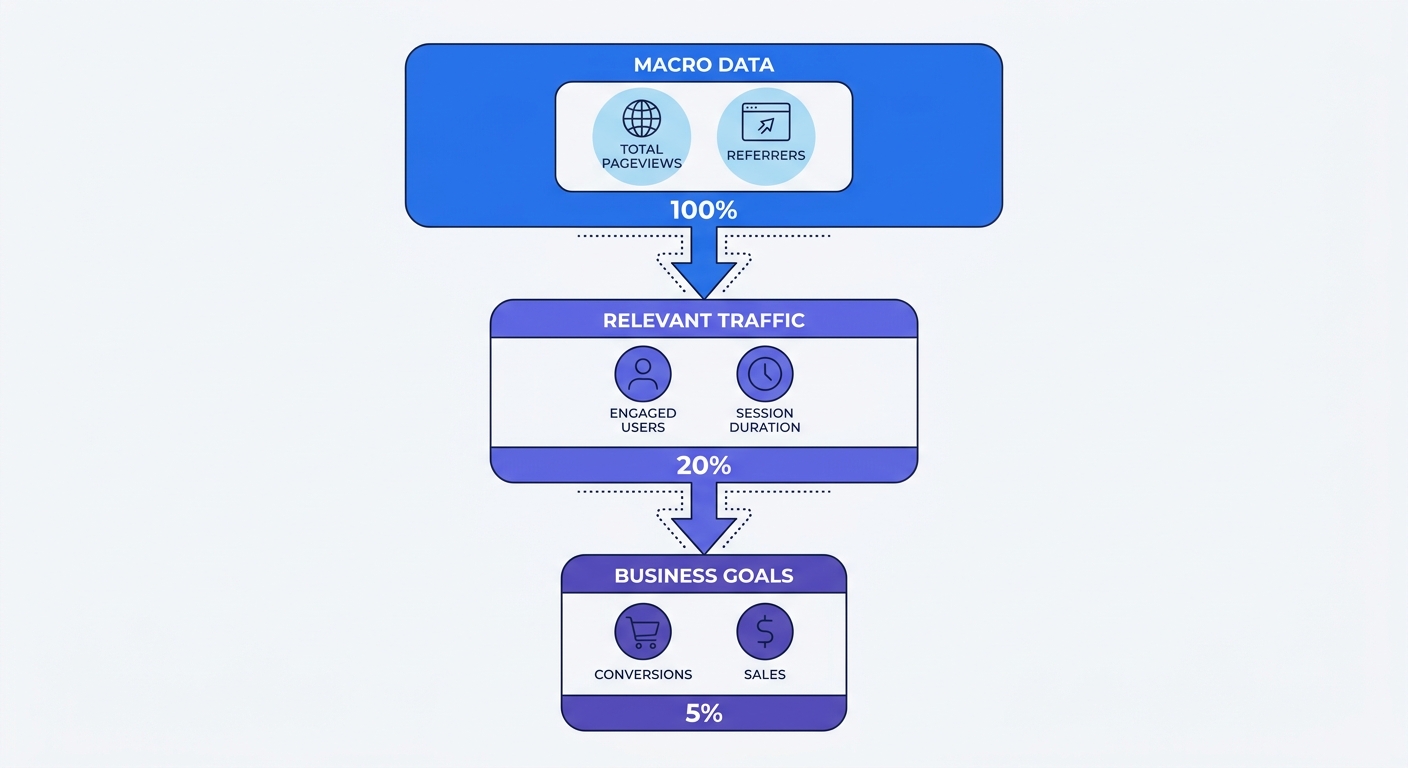
Data minimization means collecting only the information required for a specific business purpose. Businesses do not need to track individual mouse movements or record IP addresses to run a profitable marketing campaign. Using Swetrix, you can track macro metrics instead, monitoring total pageviews to gauge overall volume and checking top referrers to see which channels drive traffic. Setting up custom conversion events for specific goals provides clear performance indicators. For example, a plumbing business can track phone number clicks by adding a short snippet to a contact button, while a software company might track trial signups and demo requests using Swetrix's intuitive custom event dashboard.
Benchmarking Your Website Performance
Compare your site against standard benchmarks to identify technical problems. While a cross-industry average bounce rate hovers around 37 percent, this metric varies widely between long-form content hubs and e-commerce storefronts. If a main landing page shows an unusually high bounce rate, visitors either misunderstand the offer or the page renders poorly. Swetrix includes built-in performance monitoring and error tracking, allowing you to see if technical glitches or slow load times are causing visitors to leave before they convert. Fixing these issues before spending more on marketing ensures a higher return on investment.
Choosing Simple Website Analytics for Small Business
Swetrix: The Premier Privacy-First Solution
The easiest way to measure performance is to deploy a platform built specifically for data minimization. Swetrix serves as the ideal simple website analytics for small business because it operates without cookies, allowing you to capture closer to 100 percent of your traffic natively as privacy-friendly scripts bypass standard ad blockers. Unlike basic alternatives, Swetrix offers a complete suite of professional tools including real-time shared dashboards, advanced campaign/UTM tracking, and integrated website performance monitoring. Whether you choose the EU-hosted cloud for 100% GDPR compliance or prefer to use the open-source version for self-hosting on your own servers, you get enterprise-grade insights with a setup process that takes less than five minutes.
Evaluating Lightweight Alternatives
While other privacy-focused tools like Plausible and Fathom Analytics provide basic traffic counts, Swetrix goes further by integrating robust error tracking and performance metrics directly into the core dashboard. If a Javascript error breaks your "Buy Now" button, Swetrix alerts you, whereas basic tools would simply show a drop in conversions without explaining why.
| Feature | Swetrix | GA4 | Plausible / Fathom |
|---|---|---|---|
| Cookie-Free Tracking | Yes | No | Yes |
| Captures Ad-Block Traffic | Yes | No | Yes |
| Open Source & Self-Hostable | Yes | No | Varies |
| Real-Time Shared Dashboards | Yes | Delayed | Yes |
| Performance & Error Tracking | Built-in | Requires 3rd party | No |
| Data Residency | EU-Hosted Cloud | US-Based | Varies |
If you need to map revenue to specific marketing channels, Swetrix handles UTM parameters with a dedicated interface while maintaining strict user anonymity. This delivers the attribution features of an enterprise tool without the complexity or privacy risks.
Implementation Tips for Maximum Site Speed
Deploying Lightweight Analytics Scripts
Heavy analytics scripts slow down website performance, frustrating visitors and hurting search engine rankings. Because Google uses Core Web Vitals to measure site speed, bloated tag managers frequently ruin these scores. Swetrix uses a lightweight script weighing only a few kilobytes, which ensures pages render quickly and bounce rates drop. Pasting a single line of code into the <head> of your website documents initiates tracking instantly, eliminating the need to configure complex data streams or wait 24 hours for reports to populate.
Exploring Server-Side Tracking
Browser-based tracking sometimes fails when aggressive network firewalls block third-party domains. Because Swetrix supports custom domain configurations, you can route analytics requests through a controlled subdomain. Ad blockers treat analytics.yourdomain.com as a first-party resource, ensuring your conversion data stays intact while honoring browser privacy settings. This allows businesses to recover lost signals natively without compromising the user experience.
Structuring Marketing Campaigns with UTM Parameters
Standardizing Campaign Tags
Simple website analytics for small business works best when the system knows where traffic originates. Because businesses run ads on multiple platforms, UTM parameters act as digital nametags for incoming links. Appending a string like ?utm_source=newsletter&utm_medium=email&utm_campaign=spring_promo to your URLs allows Swetrix to read these tags and automatically group the visits in your dashboard. Checking the "Campaigns" tab reveals exactly how many people clicked through from a specific email and how many of those visitors reached your goal pages.
Using the Swetrix UTM Generator
Creating UTM links manually leads to typos, which can fragment your data. Using a standardized tool like the Swetrix UTM Generator ensures your links are structured correctly every time. Establish a clear naming convention—such as using all lowercase letters and hyphens instead of spaces—to keep your reports clean. Consistent tagging through Swetrix ensures you know exactly which marketing efforts generate a return on investment, allowing you to scale profitable campaigns and cut wasteful spending.
Stop losing data to ad blockers and confusing reports by implementing a system that protects visitor privacy while delivering clear visibility into website traffic. Sign up for a 14-day free trial of Swetrix today to start tracking marketing campaigns and website performance accurately in under five minutes.