- Date
How To Prepare For Third Party Cookie Deprecation
 Andrii Romasiun
Google Chrome controls 67 percent of the global browser market. When Google alters its tracking parameters, advertisers lose access to massive audience segments. To prepare for third party cookie deprecation, modern marketing teams must abandon legacy scripts. Transition to privacy-first analytics before user-choice models erase your data visibility. Relying on cross-site trackers guarantees broken reporting. Proactive website owners mitigate this risk by adopting cookieless platforms like Swetrix. We provide traffic measurement without invading user privacy.
The Current State of Third-Party Cookies
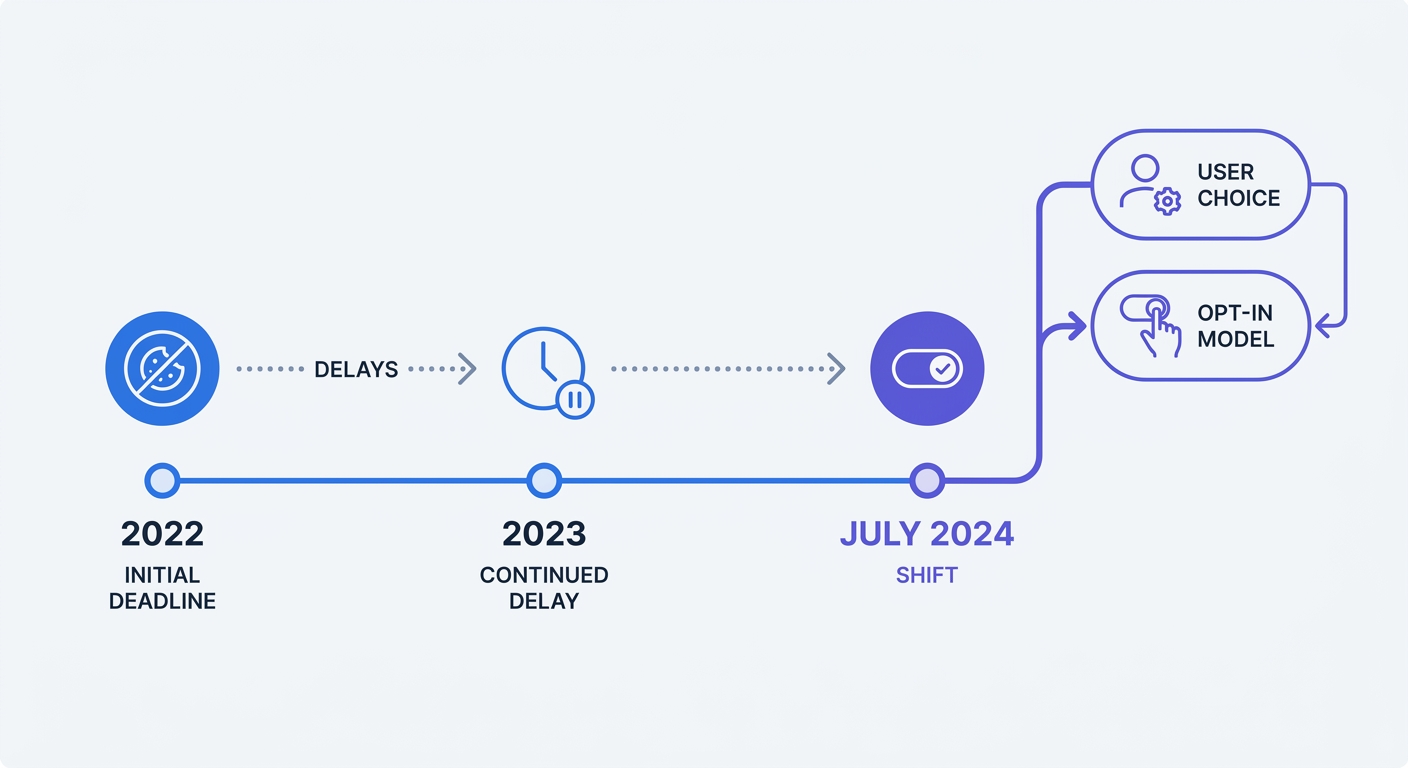
Regulatory bodies shifted the timeline for cookie removal. The U.K. Competition and Markets Authority forced Google to abandon its mandatory phase-out plan in July 2024. Chrome now uses a user-level prompt. Visitors decide whether to accept or reject cross-site tracking.
This policy mimics the App Tracking Transparency framework on Apple devices. Explicit opt-in prompts decimate tracking consent. Industry projections put browser-level opt-in rates under 10 percent for retail and media publishers, though site-level consent ranges between 42 and 47 percent depending on industry trust. Operating with user permission requires marketers to build new attribution models to fill the resulting data void.
Treat the environment as cookieless today. Firefox and Safari block these trackers by default. Chrome users will reject them at scale. Audit your current tag manager to identify which scripts require these persistent identifiers.
The Impact on Your Digital Marketing Strategy
Traditional behavioral retargeting collapses without third-party cookies. Ad networks use these tiny text files to follow users from a news article to a shopping site. Advertising servers read the cookie and display a targeted product.
Marketers lose the ability to map user journeys using multi-touch attribution models. A visitor clicks a banner ad on Monday. They return through an organic search on Thursday to purchase. The cookie connects the two sessions. Without it, analytics platforms record two separate visitors.
Examine your Time Lag reports. Calculate the average number of days between the first site visit and the final purchase. If your sales cycle exceeds seven days, third-party cookie loss will destroy your attribution accuracy. Apple deletes cookies after seven days through Safari's Intelligent Tracking Prevention. Google Chrome users will reject these trackers upon entry, leaving gaps in long-term sales data.
Inventory the campaigns, audiences, and attribution reports that depend on third-party cookies. Test their behaviour with third-party cookies blocked so you can identify measurement gaps before changing your marketing setup.
Open your primary advertising platform. Next, audit the active campaigns to identify ad groups that depend on cross-site retargeting audiences. Shift budget away from campaigns showing declining match rates. Media buyers must reallocate those funds to top-of-funnel acquisition tactics.
Monitor your frequency capping. Ad networks use cookies to limit banner exposure. Without cross-site identifiers, frequency caps fail. A single user might see your ad twenty times in one afternoon. This causes ad fatigue and wastes budget. Set strict daily spend limits on display networks to mitigate runaway frequency issues.
First-Party Data Strategies to Adopt Now
Data ownership outlasts tracking workarounds. Collect information direct from your audience. First-party data includes purchase history, website interactions, and support ticket logs. Zero-party data comes from deliberate user submissions.
Build interactive elements to capture this information. For example, design a return on investment calculator for your pricing page. Prompt users to enter their email address to receive the custom PDF report. Marketers can also host industry webinars requiring registration. Offer a discount code in exchange for a newsletter subscription. Visitors trade their contact details for immediate value.
Implement post-purchase surveys to capture self-reported attribution. Add a text field to your order confirmation page asking buyers how they discovered your brand. This qualitative feedback provides ground-truth data to compare against your analytics dashboard.
Segment your email lists based on interaction data. Tag subscribers who open three consecutive newsletters. Send this engaged segment exclusive product offers. Using this approach means relying on internal engagement metrics instead of rented audience lists.
Centralize these records. Many enterprise retail and SaaS brands use a Customer Data Platform to stitch together CRM profiles, email marketing clicks, and payment gateway transactions.
Export your scattered customer lists and upload them into a unified identity graph. Connect your backend systems using a database integration. This architecture creates a single source of truth. Backend engineers bypass browser privacy settings by maintaining this internal database.
Understanding the Technical Divide: Deterministic vs. Probabilistic Models
Marketers spent a decade depending on deterministic tracking. Advertising teams used tracking pixels to identify specific devices. These platforms logged conversions and attributed revenue to specific clicks.
Marketers must transition to probabilistic modeling to combat signal loss. Data scientists configure algorithms to analyze aggregated data and estimate conversion paths. Marketing mix modeling evaluates overall spend against total revenue shifts.
Teams must adjust their performance expectations. Stop demanding row-level attribution for every sale. Analysts should focus on platform-wide metrics like Customer Acquisition Cost and Lifetime Value. Input your total sales and marketing spend into an LTV calculator to project long-term customer profitability.
Deploy UTM parameters on all inbound links. Append ?utm_source=newsletter&utm_medium=email to your broadcast links. Webmasters parse these tags on page load to capture traffic source data without relying on cross-site trackers. Run your campaign URLs through a UTM generator to enforce consistent naming conventions.
Build parameter frameworks for internal tracking. Append custom tags to internal banner clicks. This structure maps the journey from the homepage banner to the checkout screen using clean URL parameters.
Implementing Cookieless Tracking to Prepare For Third Party Cookie Deprecation
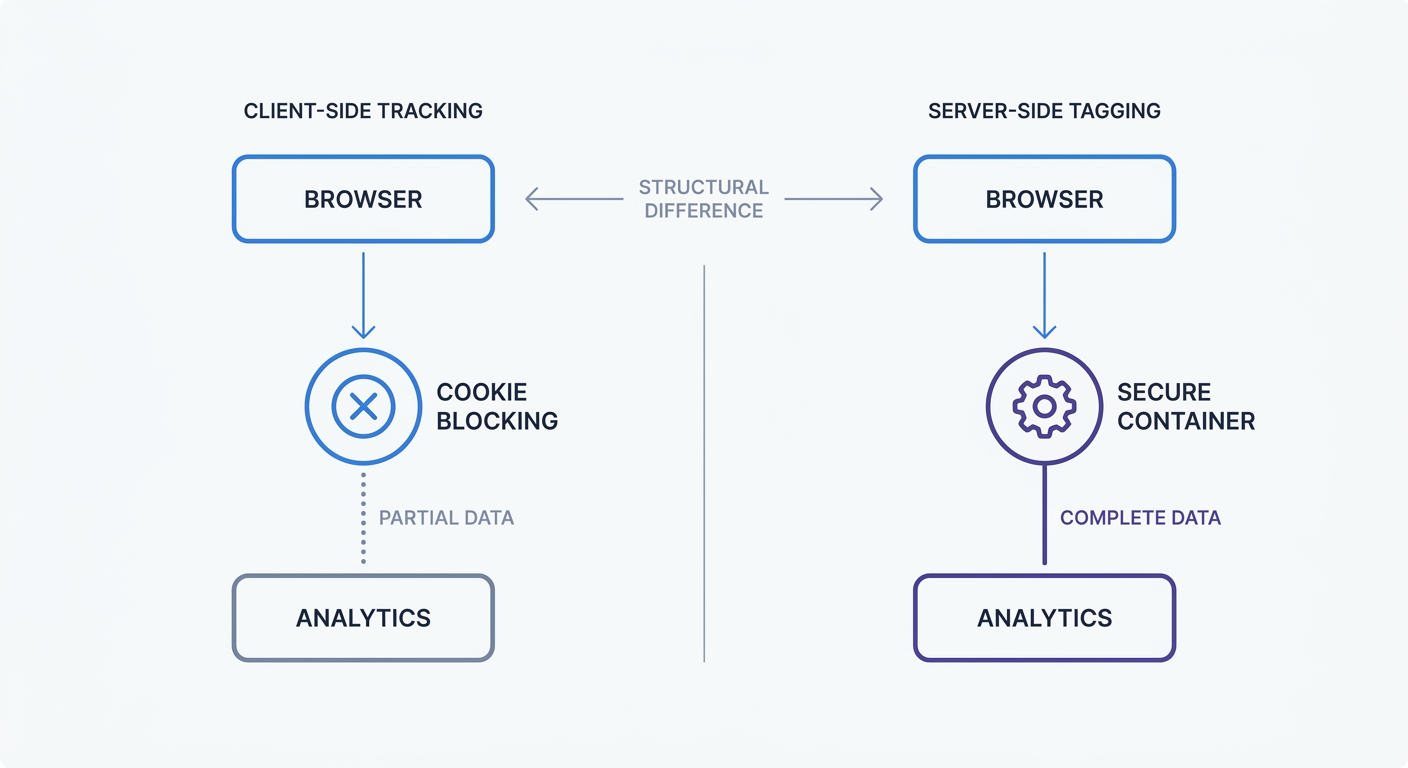
Developers inject bloated scripts via legacy analytics tools. These installations mandate complex consent banners. The extra code degrades page speed scores. Browsers block the execution when visitors click "reject all."
Administrators solve these structural problems by implementing cookieless tracking. Swetrix measures traffic utilizing anonymized session hashes. We process IP addresses and user agents into a temporary string. This hash resets every 24 hours. You measure unique visitors and session duration without storing personal identifiers.
Remove your legacy tracking pixels and delete the GDPR consent banner. Because Swetrix functions without persistent trackers, website owners bypass the legal requirement for consent popups. Page load times decrease. The Swetrix script size stays under 3 KB, while traditional tags exceed 45 KB.
Monitor the impact on site performance. Google rewards fast loading times with higher search rankings. Use performance monitoring dashboards to track load metrics across different geographical regions.
Server-Side Tagging Configuration
Browsers execute client-side tags. Users install ad blockers to intercept and kill these requests. Engineers shift the execution environment to a secure cloud container using server-side tagging.
Marketers route data through a custom subdomain. The user connects with your server. The backend infrastructure processes the event and forwards specific parameters to external vendors. System administrators shield data collection from browser extensions using this configuration.
Set up a proxy server. Configure your domain records to point an analytics subdomain to your tagging container. Domain administrators create a CNAME record mapping metrics.yourdomain.com to the tracking server. Filter the outgoing data stream to strip out sensitive information before sending the payload to advertising platforms.
Isolate distinct environments. Create separate tracking containers for staging and production. Analysts test new event tags in the staging environment to prevent corrupting the live data pool.
The Legal and Compliance Benefits of Abandoning Cookies
Global privacy bodies issue massive fines for non-compliant tracking. The General Data Protection Regulation requires website owners to obtain explicit consent before storing non-essential information on a user device.
Website visitors experience frustration with consent banners. Complex configuration toggles drive users to abandon sites. Marketers remove this friction by migrating to cookieless analytics.
Reduce your legal liability. Companies limit their exposure to data breaches through anonymized data collection. Collecting zero personal identifiers leaves hackers with nothing to steal during a security incident. Evaluate your current data minimization practices to align your setup with modern privacy laws.
Next Steps: Your Transition Checklist to Prepare For Third Party Cookie Deprecation
Replace obsolete tracking methods using a structured process. Follow these specific steps to secure your measurement pipeline.
Map Your Pixel Inventory Open Chrome developer tools on your homepage. Navigate to the Network tab and filter for third-party requests. Document every external tracking script loading on your site. Analysts should categorize the list into three columns: Essential, Advertising, and Analytics. Delete any script providing zero business value.
Audit Consent Coverage Test your current cookie banner. Decline all tracking options, refresh the page, and check the Network tab again. Website owners violate privacy laws when rogue scripts fire before consent. These violations expose your business to regulatory fines. Check your Tag Manager configuration by inspecting the firing triggers for every tag. Ensure the "Requires Additional Consent" option remains active for advertising pixels.
Deploy Contextual Advertising Target the page content instead of the user history. Build a list of 50 high-intent keywords related to your product. Run search ads targeting those phrases. Advertisers see higher conversion rates utilizing search intent compared to behavioral profiling. Prospects searching "open source web analytics" demonstrate immediate need. Purchase ad inventory on niche industry publications. Media buyers promote project management tools by buying space on a remote work blog.
Transition to Server-Side APIs Configure the Facebook Conversions API and Google Ads API. Developers bypass browser restrictions using these server-to-server connections. You send conversion events from your backend database to the ad platform. Marketers restore signal accuracy without touching the user browser.
Implement Privacy-First Analytics Create an account with a privacy-focused platform. Install the lightweight script. Compare the data volumes against your legacy tool. Analysts define the traffic hidden by ad blockers and consent rejections by measuring this gap.
Stop losing data to browser privacy features. Implement Swetrix to capture precise traffic metrics without violating user privacy. We built an open-source, cookie-free platform and host it in the EU. Pricing starts at $19 per month for 100,000 events. Start your 14-day free trial to see the cookieless difference.