- Date
Guide To Measuring SEO Performance With Web Analytics
 Andrii Romasiun
Organic search drives the majority of website traffic, but standard analytics tools miss a large portion of it. When visitors reject a cookie banner, legacy tracking scripts drop their sessions entirely, which makes your traffic look flat and conversions artificially low. Measuring SEO performance with web analytics requires a system like Swetrix that captures every visitor without relying on invasive tracking. By switching to Swetrix, a privacy-focused platform that is fully GDPR-compliant and EU-hosted, you capture 100% of your search traffic legally, giving you the accurate data needed to calculate your true search engine return on investment.
The New Search Environment
Why Organic Search Continues to Dominate
Search engines drive 53% of all website visits, though this share can exceed 76% in B2B sectors. Despite industry fears about artificial intelligence eliminating the traditional search engine results page, organic traffic remains resilient. Top US websites saw a 2.5% year-over-year decline in search visits recently, showing that users consistently click through to authoritative content. Mobile devices host over 62% of web traffic, prompting users to execute quick searches for immediate answers. This shifting behavior alters how search engines deliver information, demanding a corresponding update to your tracking methods.
The Impact of Zero-Click Searches and AI
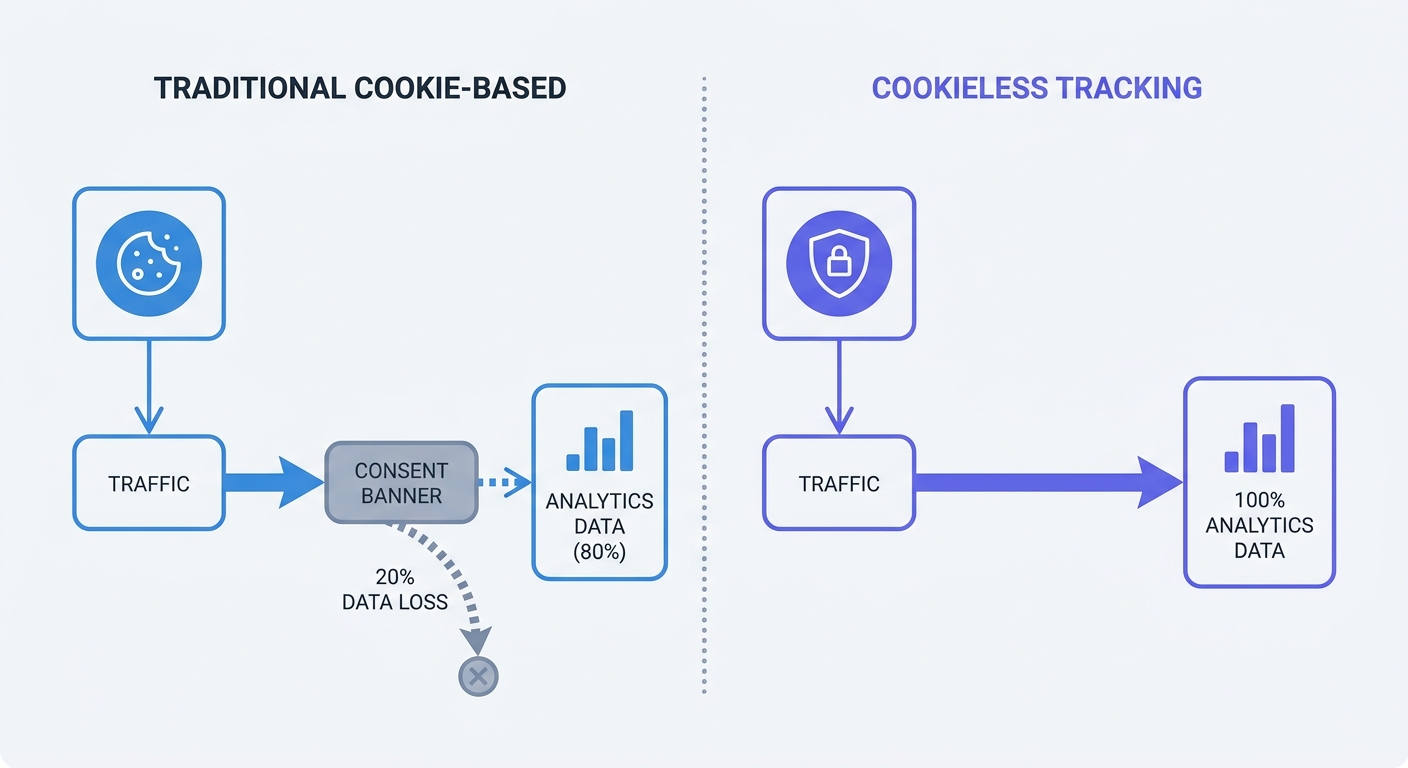
Zero-click searches account for 60% of all Google queries, climbing to 77% on mobile devices. Users receive their answers directly from the search snippet and leave without clicking a link. Google's AI Overviews accelerate this trend by appearing in about 30% of search results, causing a 35% drop in click-through rates for traditional organic listings. Fewer clicks mean the visitors who arrive on your site hold higher intent, yet traditional web analytics lose an average of 20% of this valuable data due to cookie consent banners. When a user declines tracking, platforms like Google Analytics drop the session entirely. This drops your recorded traffic numbers and hides the baseline performance of your campaigns. Using Swetrix allows you to bypass this consent-based data loss because it is inherently cookie-free. If your current server log traffic shows a gap of more than 15% against your analytics dashboard, your measurement system is failing.
Tracking SEO Metrics That Matter Today
Shifting Focus to High-Intent Engagement
Raw traffic volume tells an incomplete story. Because zero-click searches filter out users seeking quick definitions, the visitors who click through to your site expect substantive content. Measure their satisfaction directly through engagement metrics rather than session counts alone. Track the average time on page for your organic landing pages, keeping in mind that while the cross-industry benchmark sits around 52 seconds, B2B websites average closer to 82 seconds. If a visitor lands on a 2,000-word article and leaves in 12 seconds, your title tag likely mismatched their search intent. Monitor your bounce rate alongside time on page via your real-time dashboard. Organic search averages a 46.9% bounce rate—though informational content typically ranges from 65% to 90%—so numbers higher than your specific industry baseline suggest your load speed or initial formatting fails to hold attention. High engagement metrics reflect content quality and signal to search engines that your page satisfies the query.
Tracking SEO ROI and Conversions
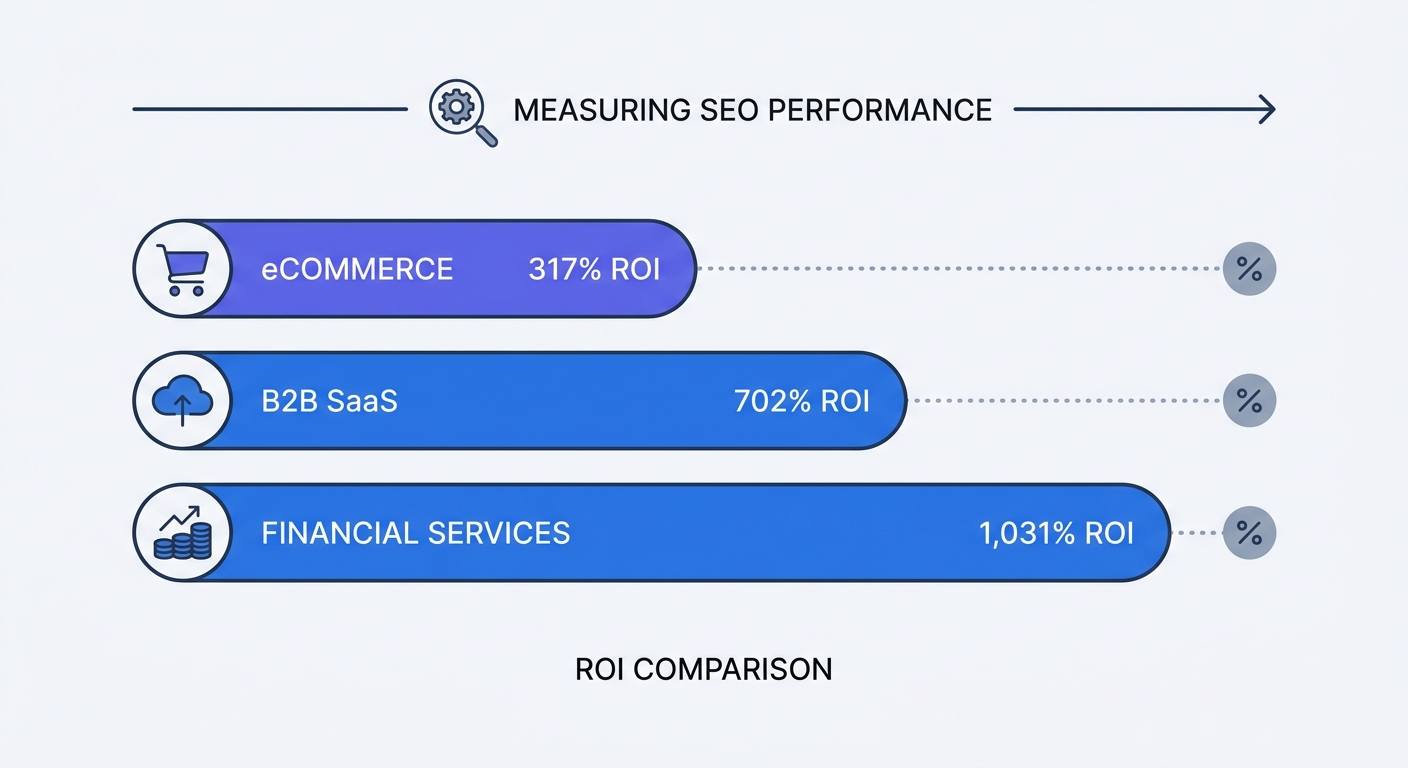
Organic search requires heavy investment in content and technical optimization, demanding strict tracking of its financial return. SEO leads convert at an average 14.6% close rate—though this varies by sector—compared to 1.7% for outbound marketing efforts. Financial services companies see up to a 1,031% ROI from SEO with a nine-month break-even period, whereas B2B SaaS companies average 702% and eCommerce sites sit around 317%. Proving these numbers to stakeholders becomes impossible if your analytics platform drops a fifth of your conversion data. Swetrix allows you to configure custom events to prioritize channel-specific conversion rates by grouping traffic sources to isolate organic search. Map those sessions against primary conversion events like form submissions or purchases to see the complete picture of your marketing budget's performance.
Mapping the User Flow from Search
Visitors rarely convert on the exact blog post they land on. They read an informational article, click an internal link to a product page, check your pricing, and sign up. Tracking this multi-step path requires robust user flow analytics to map the complete journey. Set up conversion funnels in Swetrix starting with your highest-traffic SEO landing pages to identify where users drop off. If 80% of search visitors abandon the site after reading the initial article, your content lacks a compelling call to action. Adjust the internal linking structure on those specific pages to guide visitors toward a defined conversion event.
Managing the Privacy Analytics Shift
The GDPR Compliance Challenge
Data privacy laws like GDPR, CCPA, and PECR strictly regulate how you track website visitors. Placing persistent identifiers on a user's device requires explicit consent, meaning you must present a cookie banner and wait for the user to click "Accept" before most legacy scripts fire. When users reject or ignore the prompt, their session data vanishes. This legal requirement artificially skews your SEO traffic and conversion metrics, causing a campaign that generated 50 sales to display only 35 in your dashboard. These skewed numbers make a profitable strategy look like a failure, yet attempting to bypass consent banners with traditional cookies exposes your business to regulatory fines.
The Cookieless Analytics Advantage
Switching tracking methodologies fixes the consent data gap. Privacy-first platforms like Swetrix track website interactions without personal identifiers, cross-site tracking, or device fingerprinting. Collecting anonymous, aggregated data eliminates the legal requirement for a cookie banner entirely. Swetrix uses a lightweight script to capture 100% of your organic search traffic legally. Every session, pageview, and referral registers in the dashboard without requiring a user to accept tracking. This approach restores visibility over SEO campaigns while maintaining strict compliance. You can migrate from legacy platforms to Swetrix, update tracking tags, and remove the banner blocking your users to see your real traffic volume immediately.
Server-Side Tracking vs. Client Scripts
Moving traditional cookie-based analytics to the server side bypasses browser-level ad blockers, but it introduces heavy technical complexity. Engineering teams must provision dedicated servers, maintain data pipelines, and manage consent states if the system transmits personal data. Client-side cookieless scripts from Swetrix offer a far more efficient alternative by hashing data at the edge and never storing persistent identifiers. Because Swetrix is open-source, you even have the option of self-hosting your analytics for absolute data sovereignty. A privacy-first script runs in the browser without triggering tracking blockers, delivering the accuracy of server-side data collection without the infrastructure overhead.
Advanced Tracking Strategies for Modern SEO
Segregating AI Referral Traffic
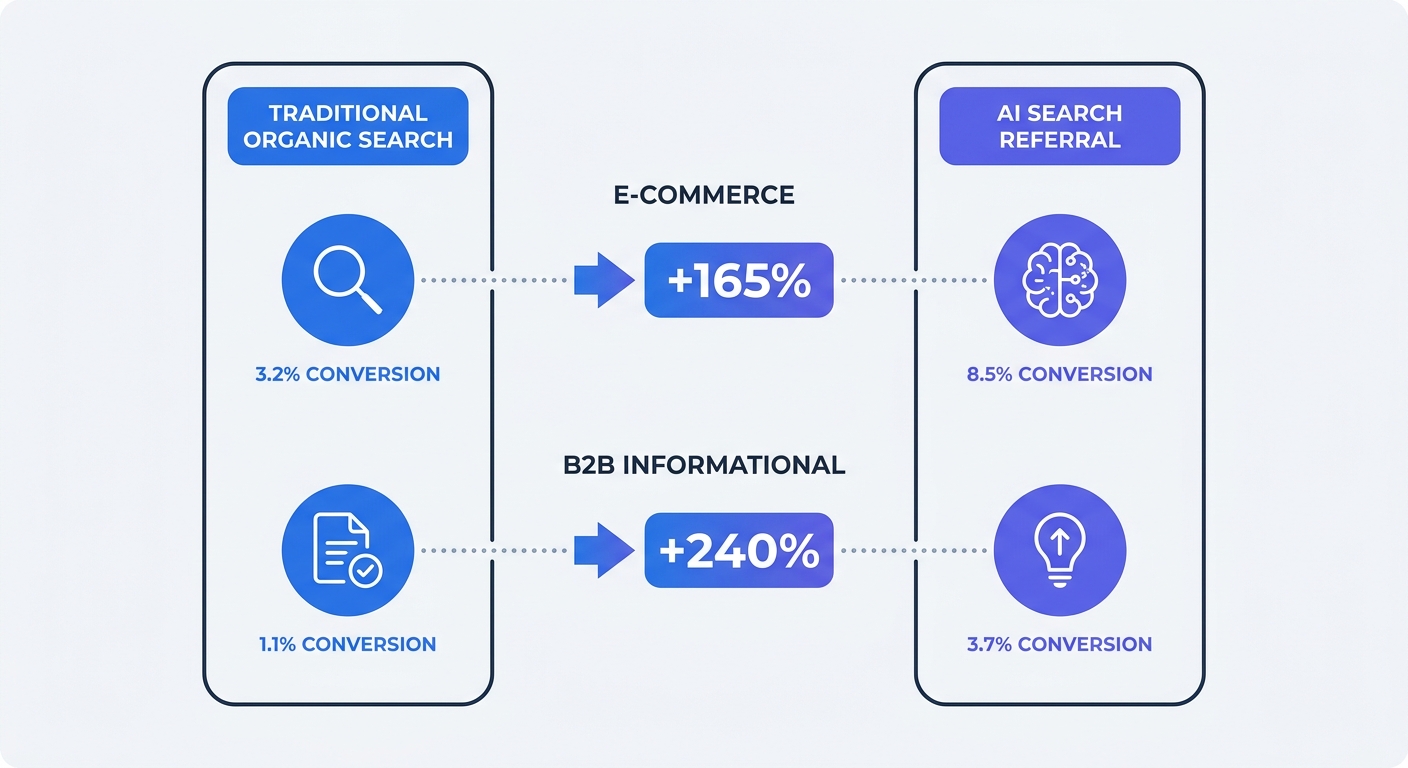
Generative AI tools function as search engines, but their traffic behaves differently than standard Google clicks. Users query tools like ChatGPT, Perplexity, and Claude for specific answers, generating high-intent referral traffic when those platforms cite your website as a source. AI search referrals drive lower total volume but convert at high rates. For e-commerce, AI search traffic converts 31% better than standard non-branded organic search, while B2B AI referrals convert at up to 4.4 times the rate of traditional search clicks. Lumping this traffic into general organic or referral buckets obscures its true value. Set up distinct referring domain filters in Swetrix to isolate sources like chatgpt.com, perplexity.ai, and claude.ai. Tracking these domains separately reveals how often AI engines cite your content and how well those targeted visitors convert.
Filtering Brand vs. Non-Brand Traffic
Visitors searching for your exact company name already know who you are and possess high conversion intent before they reach the search results. Conversely, visitors running informational queries do not know your brand yet. Mixing these two cohorts artificially inflates the perceived performance of your informational content using branded traffic success. Build separate analytics segments for branded and non-branded traffic to solve this reporting error. Exclude your homepage and any landing pages ranking for branded terms from your informational content reports. Isolating these queries proves how well your blog posts and resource guides acquire net-new customers.
Tracking Backlinks with UTM Parameters
Off-page SEO relies on acquiring backlinks, but measuring the direct traffic from those links causes reporting inconsistencies. If a partner site links to you, the traffic might show up as a generic referral or get stripped of origin data entirely and categorized as direct traffic. Take control of your inbound tracking by requesting partners use UTM parameters when linking to your campaigns or guest posts. Append specific source and medium tags to the destination URL, and use the Swetrix UTM generator to ensure your naming conventions remain consistent. When those tagged URLs drive traffic to your site, your Swetrix dashboard automatically categorizes the visits, calculating the exact ROI of your link-building efforts.
Catching Technical SEO Issues with Error Tracking
Search engine crawlers abandon your site if they encounter broken scripts or fatal errors, meaning a blank page or a broken interactive element stops indexing and lowers your rankings. Deploy website error tracking alongside your standard analytics to catch these roadblocks immediately. When a JavaScript error occurs on a high-value landing page, Swetrix logs the specific fault, the browser type, and the exact URL. Review these logs weekly and fix technical errors before Googlebot returns to crawl the affected pages.
Improving Core Web Vitals with Better Analytics
The Link Between Analytics Scripts and Site Speed
Heavy tracking scripts slow down your website because traditional analytics platforms like Google Analytics require large JavaScript payloads that block the main thread. This delay prevents users from interacting with your page, and adding the code required to render a third-party cookie consent banner causes your page speed to plummet further. Slow load times frustrate visitors, driving up your bounce rate and dropping your average time on page. Search engines log this poor engagement, while the technical drag directly lowers your Core Web Vitals scores.
Boosting Rankings Through Optimization
Google uses Core Web Vitals as a direct ranking factor, so slowing down your site with heavy tracking actively harms the SEO performance you want to measure. Replacing bloated legacy systems with Swetrix fixes this technical drag. The Swetrix analytics script weighs only a few kilobytes and loads asynchronously, preventing it from blocking your content during rendering. Removing heavy tracking payloads and deleting the cookie consent banner speeds up your site, elevating your Core Web Vitals and supporting higher search rankings. Run a page speed test on your highest-traffic landing pages to record your First Contentful Paint and Interaction to Next Paint scores. Swap your legacy script for Swetrix, remove the consent prompt, and run the test again to measure the performance jump.
Monitoring Real User Performance Metrics
Lab data from speed testing tools only reveals partial performance metrics. Because a page might load in one second on a fiber connection but take six seconds on a 3G mobile network, tracking how pages load for real users on variable connections provides actionable data. Use the Swetrix performance monitoring dashboard to track actual load times across different devices and geographic regions, filtering this data specifically for your organic search landing pages. If a targeted blog post loads slowly for mobile users, compress the image assets, defer non-critical CSS files, and monitor your dashboard to verify the resulting drop in bounce rate.
Accurate SEO measurement requires complete data. Relying on cookies surrenders up to a fifth of your traffic visibility to consent banners and ad blockers. Shifting to the Swetrix privacy-first tracking model captures every visitor, measures accurate engagement, and isolates high-converting AI referrals, all while speeding up your website to improve search rankings. Start a 14-day free trial of Swetrix to measure your SEO performance with complete cookieless accuracy. Plans start at just $19 per month for 100,000 events, delivering enterprise-grade insights and shared dashboards without data collection blind spots.