- Date
How To Track Offline Marketing Campaigns Accurately
 Andrii Romasiun
A commuter scans a QR code on a subway poster, browses your site on their phone, and closes the tab. Two days later, they search your brand name on a laptop and make a purchase. Both interactions drove the sale, but because standard analytics defaults to last-click attribution, the search engine takes all the credit. This leaves the subway poster looking like a waste of budget.
Learning exactly how to track offline marketing campaigns stops this data loss. You connect physical touchpoints to digital revenue using specific URL parameters, custom domains, and dedicated phone numbers. Bringing that data into a privacy-focused analytics platform like Swetrix prevents offline traffic from showing up as unexplained spikes in your direct visitor reports.
Why Tracking Offline Marketing Is Necessary
Physical media is pulling budget away from purely digital channels, with U.S. brands investing $37 billion in direct mail advertising in 2024. Eighty-two percent of marketing executives scaled those budgets even higher through 2025. This reinvestment happens because digital customer acquisition costs keep climbing as ad networks saturate and algorithm updates slash organic reach.
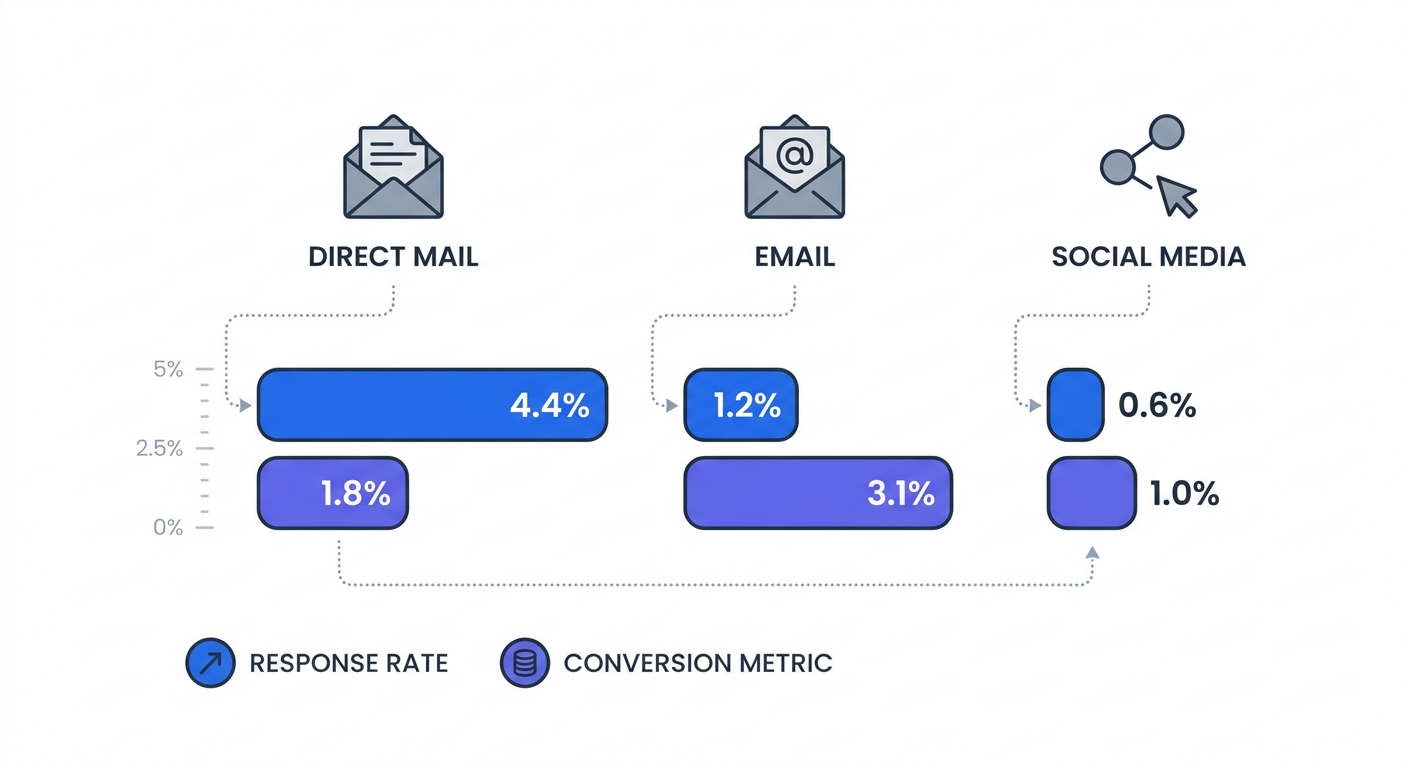
Print and physical media bypass digital spam filters, which is why direct mail generates an average response rate between 2.7% and 4.4% across various industries. This dwarfs the standard 0.12% response rate for email campaigns, though email performance varies significantly by industry and list type. Healthcare and financial services see the highest physical engagement, often breaking the 4% mark because tangible mail carries built-in authority.
The problem arises when physical campaigns generate digital traffic that goes untracked. If you mail 50,000 postcards with a plain homepage URL, the resulting visits blend into your organic and direct traffic buckets, leading you to conclude the mailer failed. After cutting the offline budget, digital conversions dry up a month later because the underlying demand disappeared. Hybrid campaigns require strict tracking mechanics to prove their return on investment.
Top Methods for Tracking Physical Media
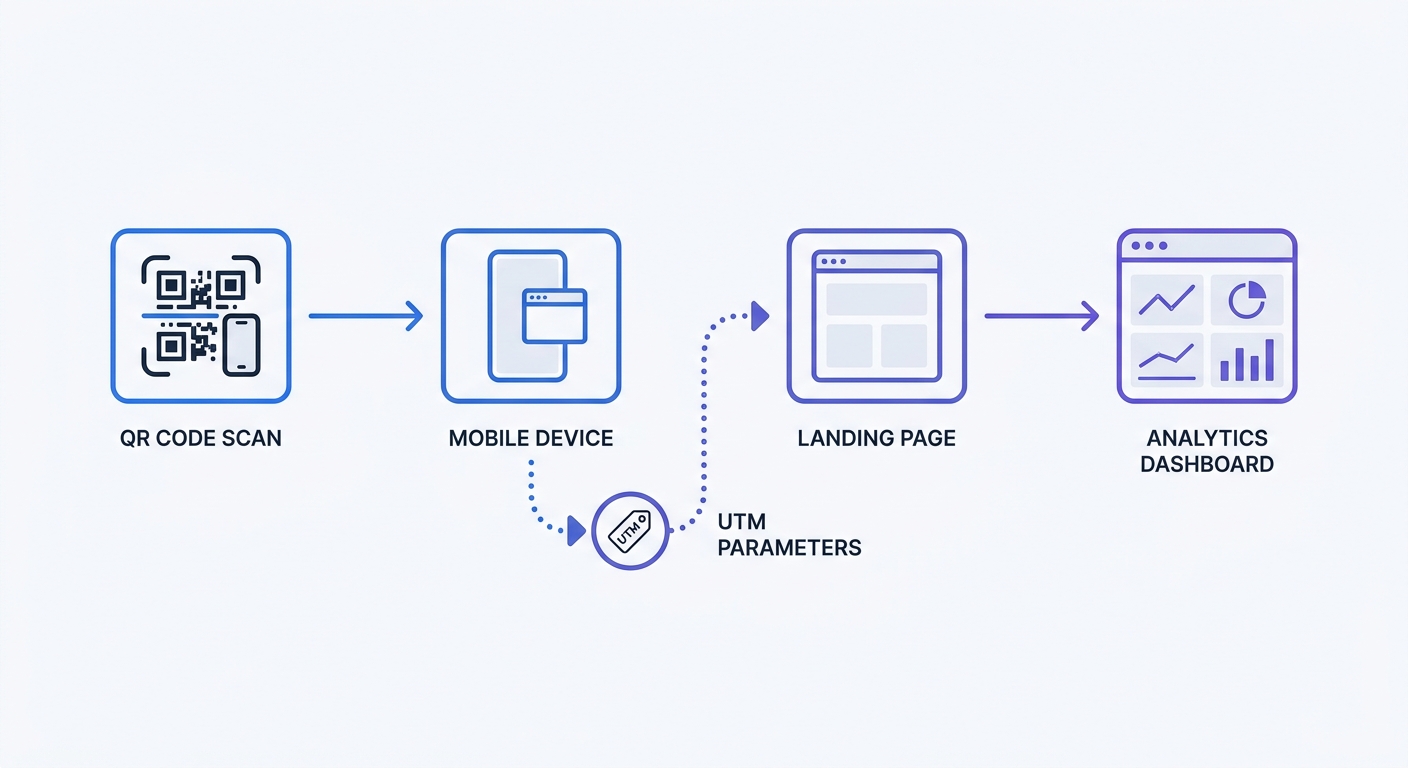
Every tracking method relies on intercepting the user before they hit your main website. To achieve this, you apply a unique identifier to the physical asset, capture the scan, and pass that data to your analytics dashboard.
Deploying QR Codes with UTM Parameters
QR codes act as the bridge between paper and pixel. Instead of pointing the code at a plain homepage, you embed a URL loaded with Urchin Tracking Module (UTM) parameters.
Construct your offline URLs with three mandatory tags:
- utm_source: The physical medium (e.g.,
direct_mail,subway_poster,conference_flyer). - utm_medium: The action or format (e.g.,
qr_scan). - utm_campaign: The specific initiative (e.g.,
spring_catalog_2026).
Your final URL looks like this:
https://yourdomain.com/landing?utm_source=direct_mail&utm_medium=qr_scan&utm_campaign=spring_catalog_2026
Use a tool like the Swetrix UTM Generator to standardize naming conventions before pasting the link into design software. Consistent casing matters, as analytics platforms read Direct_Mail and direct_mail as two different traffic sources and will split the data into fragmented rows.
When designing the physical asset, set the QR error correction level to at least 25% (Level Q) to ensure the code remains scannable even if the mailer gets scratched in transit. Size the code to a minimum of 1 inch by 1 inch on printed materials. Anything smaller forces the user to hover their phone lens repeatedly, which increases the bounce rate before the scan registers.
Generate an SVG or high-resolution PNG using a static generator rather than a dynamic one that routes traffic through a third-party tracking domain. Third-party redirects often trigger mobile ad blockers, stripping the UTM tags before the user reaches your site. Printing a static code guarantees that when the phone camera processes the square, the platform logs the exact source.
Utilizing Vanity URLs for Radio and Billboards
Since drivers cannot safely scan a QR code at 65 miles per hour and podcast listeners cannot click an audio file, you must deploy vanity URLs for non-scannable mediums.
A vanity URL is a short, memorable domain or slug that forwards users to a tagged destination, such as telling listeners of a sponsored local radio show to visit yourdomain.com/radio.
Setting up a 301 server-side redirect for that slug ensures that when someone types it into their browser, your server immediately sends them to the hidden destination:
https://yourdomain.com/offer?utm_source=local_radio&utm_medium=audio&utm_campaign=morning_show
To execute this technically without developer support, use your domain registrar's native forwarding rules or a content management system. If the site runs on WordPress, the Redirection plugin handles this process by letting you enter the source URL and the target URL before selecting "301 Permanent Redirect."
Handling the redirect at the server level guarantees the UTM parameters load in the user's address bar so the analytics platform reads the tags and assigns the visit to the radio campaign. Avoid using client-side JavaScript redirects for this step, as slow mobile connections often drop client-side scripts and strip the attribution data entirely.
Exclusive Promo Codes and Call Tracking
Users sometimes bypass tracking mechanics entirely by seeing a billboard, remembering the brand name, and searching for it on Google later that night.
Tie the physical asset to the final conversion by printing exclusive promo codes on the material. If a checkout applies the code "BILLBOARD20", you attribute that revenue to the physical ad regardless of how the user eventually navigated to the site. This mechanic works well for retail and e-commerce brands where discounts drive immediate action, provided you calculate profit margins ahead of time to ensure the tracking discount does not erase the campaign's net revenue.
For service-based businesses, replace the URL with a dedicated phone number provisioned by call tracking software that forwards to the main office line. Assigning unique phone numbers gives you granular data down to the specific creative asset, meaning if you run two different billboard designs, you must lease two separate local numbers.
In many service industries, phone inquiries originating from offline assets convert at roughly 40%, outpacing the standard conversion rate of web forms, which typically averages around 2%. The call tracking software records the timestamp, caller ID, and call duration, injecting that data directly into a CRM. Reviewing the average call length gauges campaign quality. A high volume of calls lasting under thirty seconds indicates confusing ad copy, whereas calls stretching past three minutes signal high-intent buyers ready for a sales consultation.
| Tracking Method | Best Used For | Setup Requirement | Data Capture Point |
|---|---|---|---|
| QR Codes + UTMs | Print ads, mailers, flyers | Static QR generator, UTM builder | Page load |
| Vanity URLs | Radio, podcasts, billboards | 301 server redirects | Page load |
| Promo Codes | E-commerce, retail catalogs | Cart/checkout system | Transaction |
| Call Tracking | B2B, healthcare, home services | Virtual VoIP numbers | Phone connection |
Privacy Laws and Web Analytics
Capturing offline traffic introduces strict regulatory requirements. The moment a user scans a physical code and lands on a website, the analytics infrastructure dictates whether the session maintains legal compliance.
How GDPR Applies to Offline Data Collection
The General Data Protection Regulation (GDPR) and the California Consumer Privacy Act (CCPA) apply to the digital footprint of physical campaigns. If a billboard prompts someone to visit a website that immediately collects their IP address or sets a tracking cookie, the campaign falls under regulatory jurisdiction.
Compliance failures carry financial penalties, with U.S. states assessing an estimated $3.425 billion in consumer privacy-related fines in 2025. Marketers mistakenly believe the initial offline interaction exempts the resulting web session from digital privacy mandates, but the destination page must comply with local laws the second it loads.
The Cookieless Analytics Advantage with Swetrix
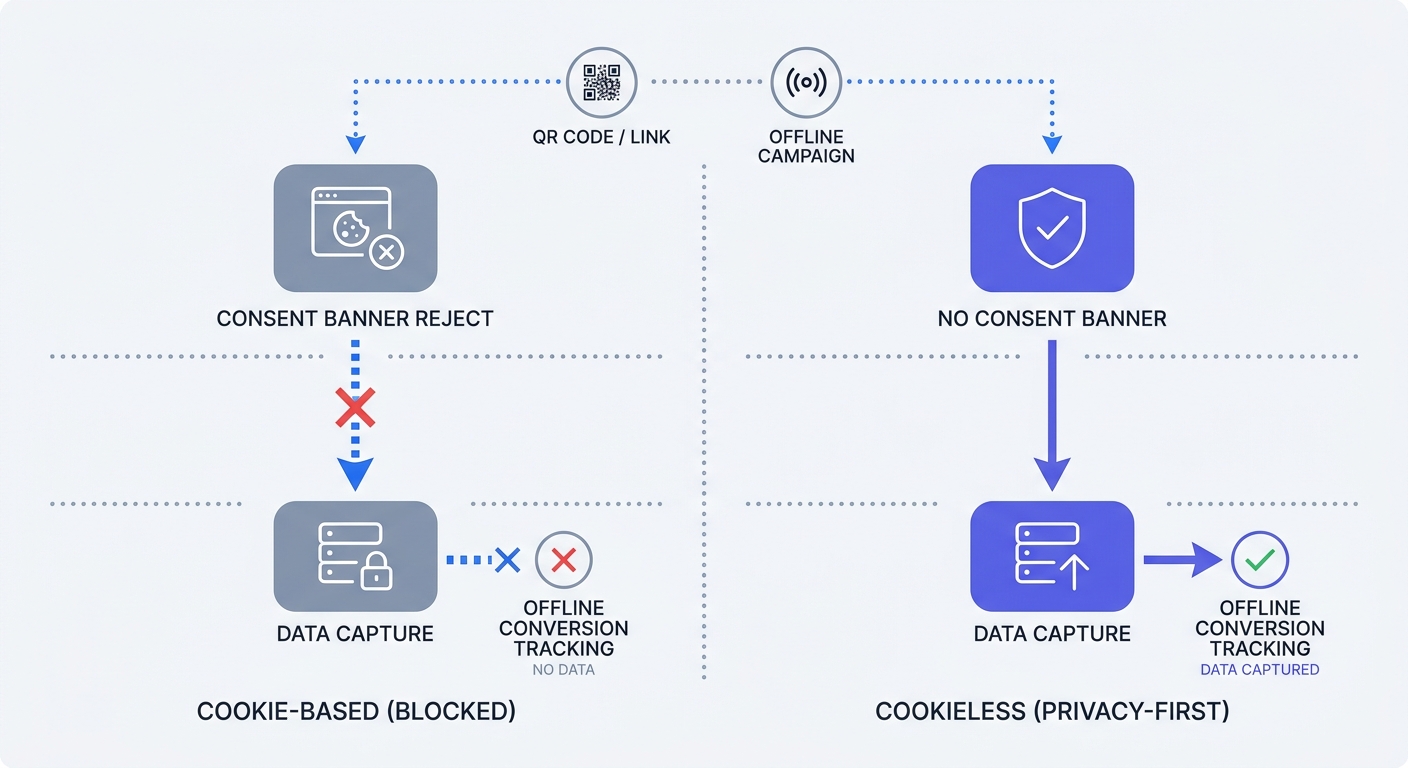
Traditional analytics platforms rely on invasive third-party cookies to identify returning visitors, which cannot be legally deployed under European privacy laws and US state regulations until the user explicitly clicks "Accept" on a consent banner.
This creates a severe bottleneck for offline tracking because a user scanning a postcard's QR code lands on the site and hits a cookie wall blocking the content. Most users abandon the page immediately out of frustration. If they ignore the banner or click "Decline," legacy analytics platforms drop the session entirely, meaning the visit happens and UTM parameters load, but the data never reaches the dashboard.
Swetrix eliminates this failure point because the privacy-focused, cookie-free web analytics platform does not store personal identifiers. When a user scan an offline code, Swetrix logs the UTM parameters, the page view, and the referral source using anonymized, rotating hashes.
Dropping no cookies removes the need to display an intrusive consent banner. The user experiences a frictionless landing page while the system legally captures 100% of the offline campaign data. This retains the ability to track exactly which mailer drove the conversion without compromising user trust or violating international privacy frameworks.
Analyzing Omnichannel ROI and Scaling
Once the tracking mechanics are in place and data flows into the dashboard, the final step requires connecting isolated channel performance into a unified revenue model.
Maximizing the Omnichannel Lift
Physical media performs best when it triggers a digital sequence, and treating direct mail and digital advertising as separate silos leaves predictable revenue on the table. Studies from the USPS indicate that adding a digital follow-up increases overall ROI by 20% to 40% compared to using standalone mail.
Use an analytics platform to build custom events around offline landing pages so that if a user arrives via a QR scan but does not purchase, the system tags that session. Pushing those segmented audiences into an email onboarding sequence or a privacy-compliant digital retargeting loop allows the initial offline touchpoint to build trust while cheaper digital follow-ups close the sale.
Marketing Mix Modeling (MMM) for Broad Campaigns
Direct tracking mechanics catch the majority of physical interactions, but one-to-one attribution eventually breaks at scale. Launching a national television commercial or a massive transit takeover in three major cities results in thousands of users bypassing vanity URLs and searching the brand name directly on Google.
Marketing Mix Modeling (MMM) accounts for this spillover by analyzing geographic and temporal data instead of tracking individual clicks. To execute this, designate a target market, like Chicago, and saturate it with offline ads while holding back in a demographically similar market, like Houston.
If the Houston and Chicago markets historically generate 1,000 organic visits per week, launching a transit ad campaign exclusively in Chicago provides a clear baseline. During the campaign month, Houston traffic might hold steady at 1,000 visits while Chicago spikes to 1,400 visits, even if the system only captures 100 direct QR scans from the transit posters.
The direct tracking attributes 100 visits, but the MMM analysis reveals an additional 300 untracked visits caused by the campaign's broad visibility. Applying the standard website conversion rate to those 400 total visits calculates the true return on the physical ad spend. Combining strict UTM tracking for direct responders with MMM for the broader audience secures a complete view of campaign performance.
Stop treating offline marketing as unmeasurable brand awareness, and instead ensure every print ad, billboard, and mailer feeds directly into the digital attribution pipeline. Create static QR codes, configure vanity redirects, and start measuring the physical world with the same precision applied to digital ads. Try Swetrix on a 14-day free trial today to capture 100% of offline-to-online traffic without invasive cookies or compliance-breaking consent banners.