- Date
How To Track Dynamic Link Clicks Effectively
 Andrii Romasiun
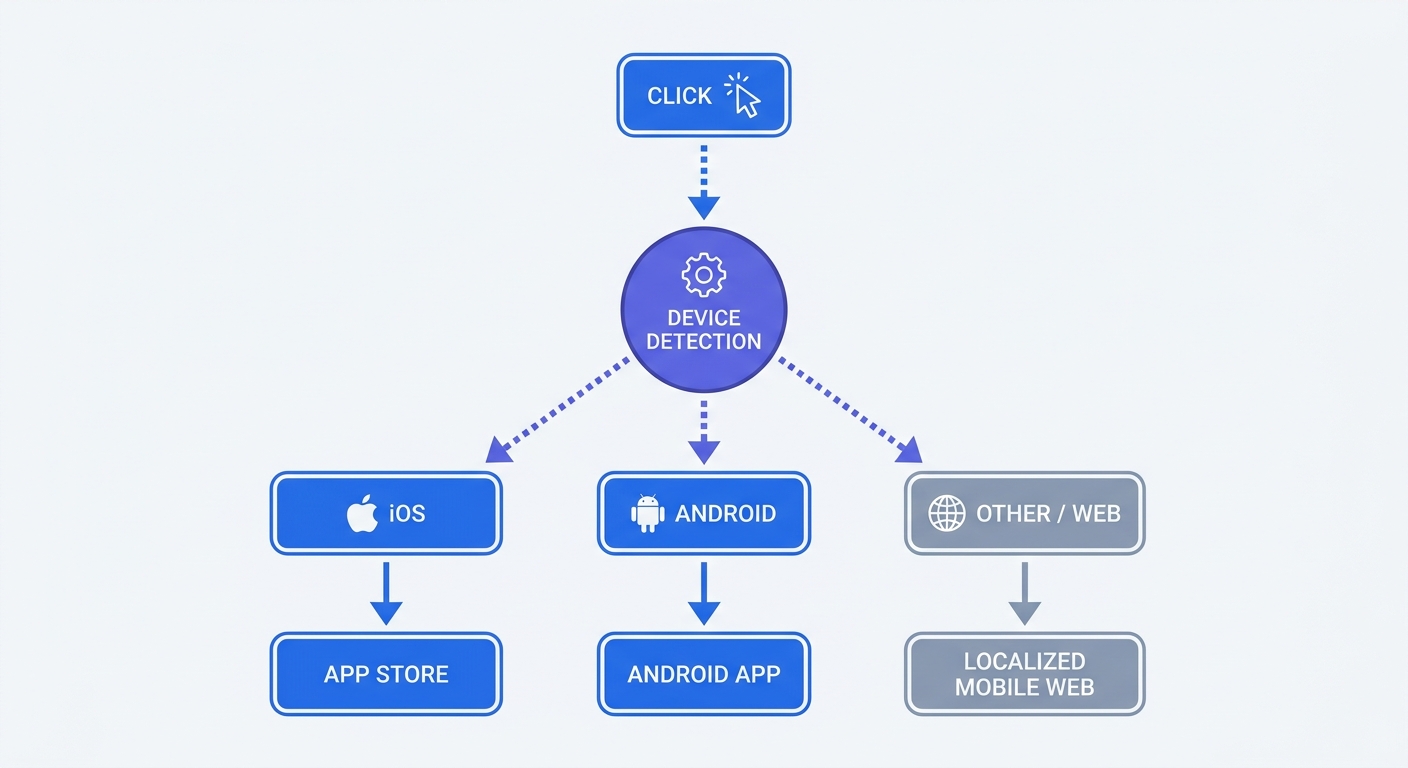
A user taps a promotional link on their iPhone, and the routing engine checks their device, detects iOS, verifies if your app is installed, and drops them onto the correct in-app product page. A desktop user clicking that exact same link lands on your web store. Standard analytics scripts break when traffic splits across multiple operating environments, requiring specialized infrastructure to track dynamic link clicks.
Traditional URLs point every visitor to the exact same destination, but dynamic links evaluate device type, operating system, and geography to route users to optimized endpoints. Tracking these redirects requires a system that captures the click before the routing engine scatters the traffic. Swetrix provides the cookieless analytics framework necessary to measure this routing without losing data to blocked scripts.
The Evolution of Dynamic Link Routing
Routing logic transformed digital marketing by removing friction from the mobile user journey. Instead of forcing a phone user to navigate a clumsy desktop site, dynamic links automatically push them toward native applications where conversion rates are higher.
What Makes Dynamic Links Different
Static URLs carry users directly to a server, relying on responsive web design to handle the visual presentation, whereas dynamic links insert an intermediary step. The visitor hits a routing server first, which reads the user agent data, processes predefined rules, and issues a server-side redirect.
This intermediary hop creates an attribution gap because traditional analytics platforms wait for the final web page to load before firing a tracking script. If the dynamic link sends the user to the iOS App Store instead of your website, your standard web analytics tag never loads, and the click disappears from your traffic reports.
Surviving the Firebase Shutdown
Google officially shut down Firebase Dynamic Links on August 25, 2025, breaking millions of legacy redirects embedded in QR codes, email templates, and SMS campaigns. Migrating to a new routing API is now a mandatory engineering task.
To separate the routing mechanism from the tracking mechanism, export your existing mapping data containing your short links and import this file into a modern routing provider. Dedicated link platforms handle the complex device redirects while your analytics platform logs the attribution data. Next, update the DNS records for your custom domains to point to the new servers and verify your configuration files to confirm the domain association remains valid.
How to Track Dynamic Link Clicks Securely
Regulatory changes force you to rethink data collection methods, as relying on legacy tracking models guarantees incomplete datasets and exposes your organization to compliance penalties.
Eliminating Third-Party Cookies
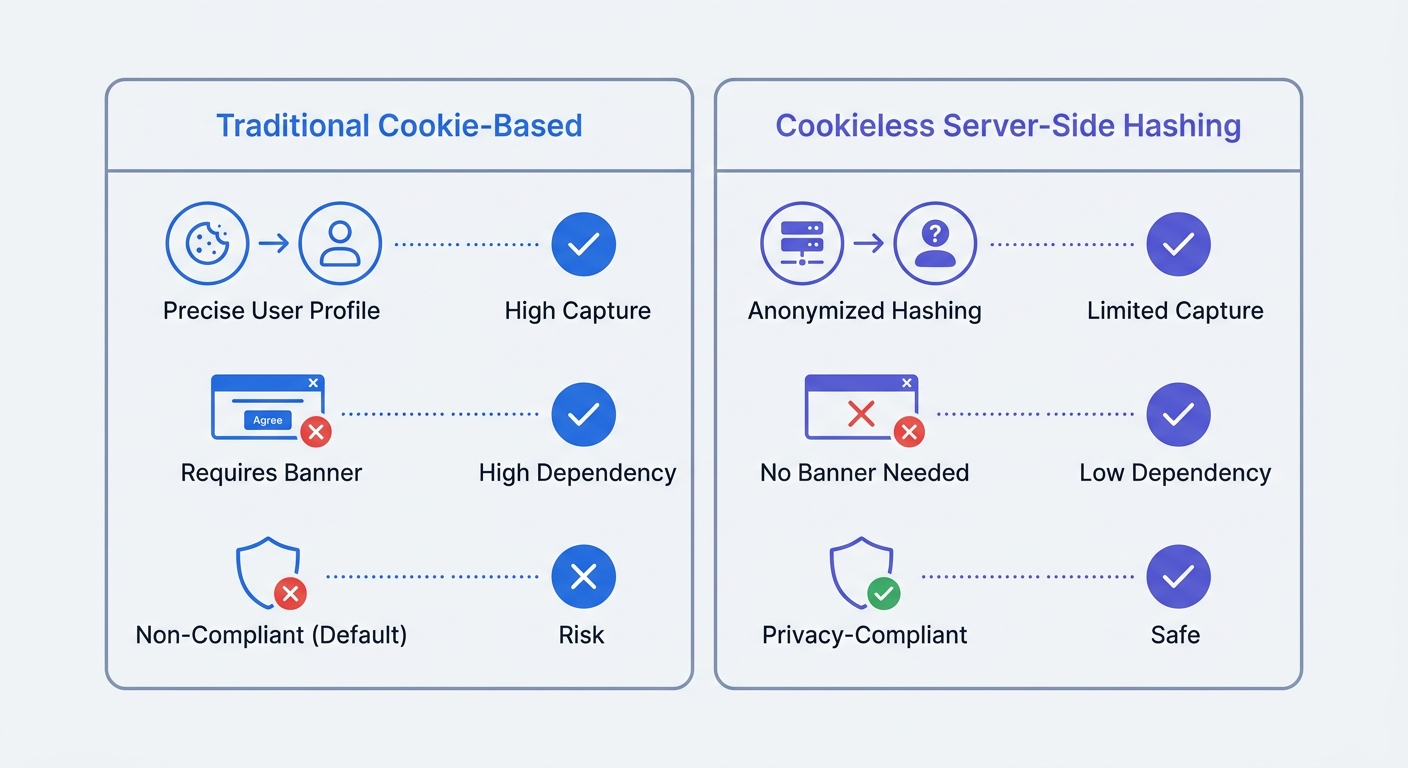
Traditional tracking drops a cookie in the browser to record the visit, but when privacy laws mandate explicit consent, users frequently decline the prompt. The browser blocks the tracking script from loading, causing your analytics dashboard to register a massive drop-off even though conversions continue occurring in your database.
Because aggressive consent banners block traditional scripts, you lose visibility into expensive campaigns. Bypassing this problem requires moving away from client-side storage. Cookieless tracking platforms operate without placing tracking files on the user's hard drive, allowing you to measure link performance without interrupting the journey with a consent prompt.
Utilizing Server-Side Hashing
Privacy-first platforms process visits without storing raw personal data. Swetrix tracks dynamic link clicks through a secure server-side method where the server captures the incoming IP address upon link activation, combines it with your unique Project ID, and adds a rotating dynamic salt.
This combination runs through a cryptographic hash function to generate an anonymous visitor string, and the platform discards the original IP address. Because the generated hash acts as a temporary identifier that resets daily, you capture accurate click volumes and unique visitor metrics legally.
| Tracking Architecture | Data Storage Location | Consent Banner Required | Cross-Device Accuracy |
|---|---|---|---|
| Third-Party Cookies | Client browser | Yes | Low (Blockers) |
| UTM Parameters Only | URL string | No | Medium (Stripping) |
| Server-Side Hashing | Temporary server RAM | No | High (Server-side) |
Best Practices for Link Privacy and Engagement
Generating routing URLs introduces specific privacy risks when misconfigured. Many platforms encourage aggressive tracking setups that directly violate international data protection laws.
Never Inject Personally Identifiable Information
You might attempt to track individual users by appending data directly to the URL structure, but structuring a link as ?email=john@company.com violates GDPR and CCPA regulations. Intermediate servers, internet service provider logs, and local browser histories record full URLs in plain text, meaning broadcasting user identity through a query string exposes your organization to data breaches.
Replace plain text emails with randomized subscriber IDs. Assign a unique alphanumeric string to each contact in your CRM and append that token to the dynamic link so the URL looks like ?sub_id=8f92a1b when it arrives in the user's inbox. After the click fires, your backend securely maps the token back to the user record behind your firewall, maintaining individual attribution without transmitting personal data across the public internet.
Using Branded Custom Domains
Generic shorteners damage brand trust because users hesitate to tap a random alphanumeric string in an SMS message or social media bio. Replacing these default domains with your own branded short link reinforces security and signals legitimacy.
Deploying branded domains directly impacts campaign performance. Using custom link domains instead of generic shorteners increases click-through rates by up to 39% on average, though exact engagement ranges vary significantly depending on your specific industry and audience. Configure a short subdomain specifically for your marketing routes, such as go.yourbrand.com, and map it to your routing provider's IP address.
Configure Intelligent Fallbacks
Mobile operating systems frequently fail to parse deep links correctly. For example, a user clicks an Instagram bio link, but the restricted in-app browser blocks the direct jump to your native app store, leaving them on a blank screen or a 404 error page if you lack a configured fallback.
Set up a secondary web destination for every dynamic route. If the primary operating system mechanism fails, the link engine redirects the user to a mobile-optimized web landing page. Display an "Open in App" smart banner on this page to preserve the conversion opportunity, ensuring the user retains control of the navigation while your tracking script fires normally.
Top Platforms for Link Management and Analytics
Modern digital architecture splits attribution into two distinct layers: dedicated routing tools manage the physical redirection of the user, while specialized analytics platforms capture the behavioral data.
Swetrix for Cookieless Event Tracking
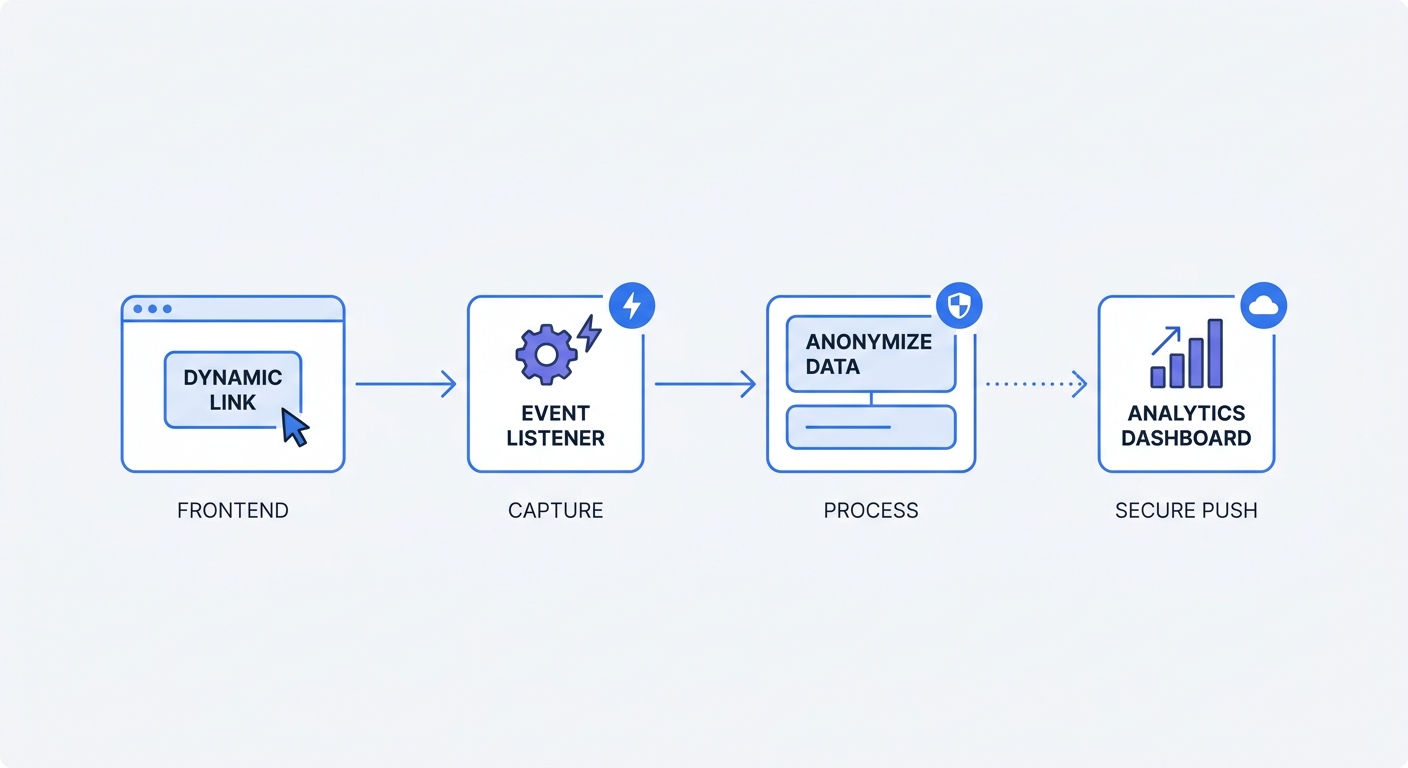
Measuring web-side dynamic link behavior requires a custom event architecture, which Swetrix handles natively without triggering intrusive tracking prompts. You map specific button clicks or URL parameter redirects to a privacy-friendly custom event and use frontend event listeners to push structured data directly to your dashboard.
document.getElementById("promo-link").addEventListener("click", function () {
  swetrix.track({
    ev: "dynamic_link_click",
    meta: {
      campaign: "q3_launch",
      destination: "app_store",
      device_type: "ios",
    },
  });
});
This code executes the moment the user clicks the outbound link. The analytics platform logs the interaction, attributes it to the correct campaign, and ignores personally identifiable information, giving you real-time visibility into which links drive the most volume before the traffic leaves your domain.
Mobile Routing Alternatives
Since the Firebase sunset, the routing ecosystem consolidated around dedicated mobile measurement platforms like Airbridge, AppsFlyer, Ulinkly, and URLR that handle device detection and app store redirection. You configure the branching logic within their interfaces, and once the user lands back on your web properties, you rely on your primary web analytics tool to analyze on-site behavior and conversion funnels.
Mobile browsers frequently strip UTM tracking parameters during the jump from a browser to a native app store, meaning a downloaded app opens with no memory of its source. Pass the UTM string through a deferred deep link to prevent data loss. The routing engine holds the parameters in temporary server storage until the user opens the application for the first time, at which point the app pings the server, retrieves the initial UTM data, and sends a conversion event back to your database.
Optimizing Multi-Channel Campaign Attribution
Connecting isolated marketing channels provides a complete view of your customer acquisition cost, and dynamic link infrastructure bridges the gap between digital attribution tools and real-world marketing assets.
Connecting Offline and Top-of-Funnel Channels
Printed materials and physical campaigns create major attribution blind spots because a billboard displaying a standard web address generates direct traffic that cannot be traced back to the physical asset. Replacing that text with a dynamic QR code connects offline intent to digital measurement.
When the user scans the code with their camera, the routing engine logs the scan, identifies the billboard location, and drops the user into the appropriate app flow. Firing a custom event upon scan completion allows your analytics platform to attribute downstream revenue accurately, meaning you no longer rely entirely on search volume correlation to justify your physical marketing budgets.
A static QR code encodes its destination directly, so changing that destination usually requires a new printed code. A dynamic QR code uses a redirect URL, allowing its operator to change the final destination without reprinting the code. Keep control of that redirect and test it after every update.
Personalization and Engagement Metrics
Dynamic links allow for one-to-one messaging at scale, which is especially useful for SMS marketing that relies on limited character counts and high-impact calls to action. Injecting customized link previews into text messages drives measurable engagement. Every recipient receives a link tailored to their specific customer segment or geographic region, and the routing engine ensures they land on a localized checkout page with correct language and currency formatting. Apply UTM tags to each regional variation to ensure your analytics dashboard cleanly separates the traffic sources by geographic performance.
Tracking dynamic link clicks requires modern infrastructure that respects user privacy while delivering accurate attribution data. Start measuring your marketing routes without relying on third-party cookies or intrusive consent banners. Sign up for a 14-day free trial of Swetrix today to build your privacy-first analytics dashboard.