- Date
Top Privacy-Focused Advertising Alternatives For Modern Marketers
 Andrii Romasiun
The digital marketing sector operates under strict privacy mandates in 2026. Marketers spent years preparing for Google to replace third-party cookies with its Privacy Sandbox. Google reversed course and shut down those APIs in late 2025 due to regulatory pressure and low adoption. Finding new ways to reach buyers requires adopting privacy-focused advertising alternatives.
Consumers reject surveillance marketing. Data shows 75 percent of retail shoppers refuse to purchase from organizations they do not trust with their data. Browser tracking restrictions can limit cross-site measurement. Test the browsers your customers use to understand which parts of your tracking setup still work. When users reject consent banners, legacy analytics platforms go blind.
Replacing invasive trackers with privacy-focused advertising alternatives builds trust and restores visibility. Teams can target specific audiences, capture preferences, and track return on investment without stalking users across the web.
The Shift Away From Traditional Ad Tracking
Users expect control over personal information. Loading three dozen third-party scripts to serve one targeted banner ad violates that expectation.
Data privacy compliance requires immediate action. The cost of non-compliance averages $9.4 million per incident, while organizations achieve an average 1.6x return on privacy investments.
Identify Tracking Vulnerabilities
Map the tracking scripts active on the target domain to begin. Marketing teams inherit bloated tech stacks filled with legacy behavioral pixels. Identify these liabilities before removing them.
Audit the current ad stack:
- Open the website in a Google Chrome incognito window.
- Right-click the page and select Inspect to open Developer Tools.
- Click the Network tab.
- Refresh the page and type
method:GETin the filter bar. - Review the domains loading scripts alongside the primary URL.
Find every domain associated with a behavioral advertising network. Meta pixels, TikTok trackers, and legacy retargeting tags rely on third-party data collection. Document these platforms to reallocate the budget into privacy-focused advertising alternatives.
Contextual Advertising: AI-Powered Placements
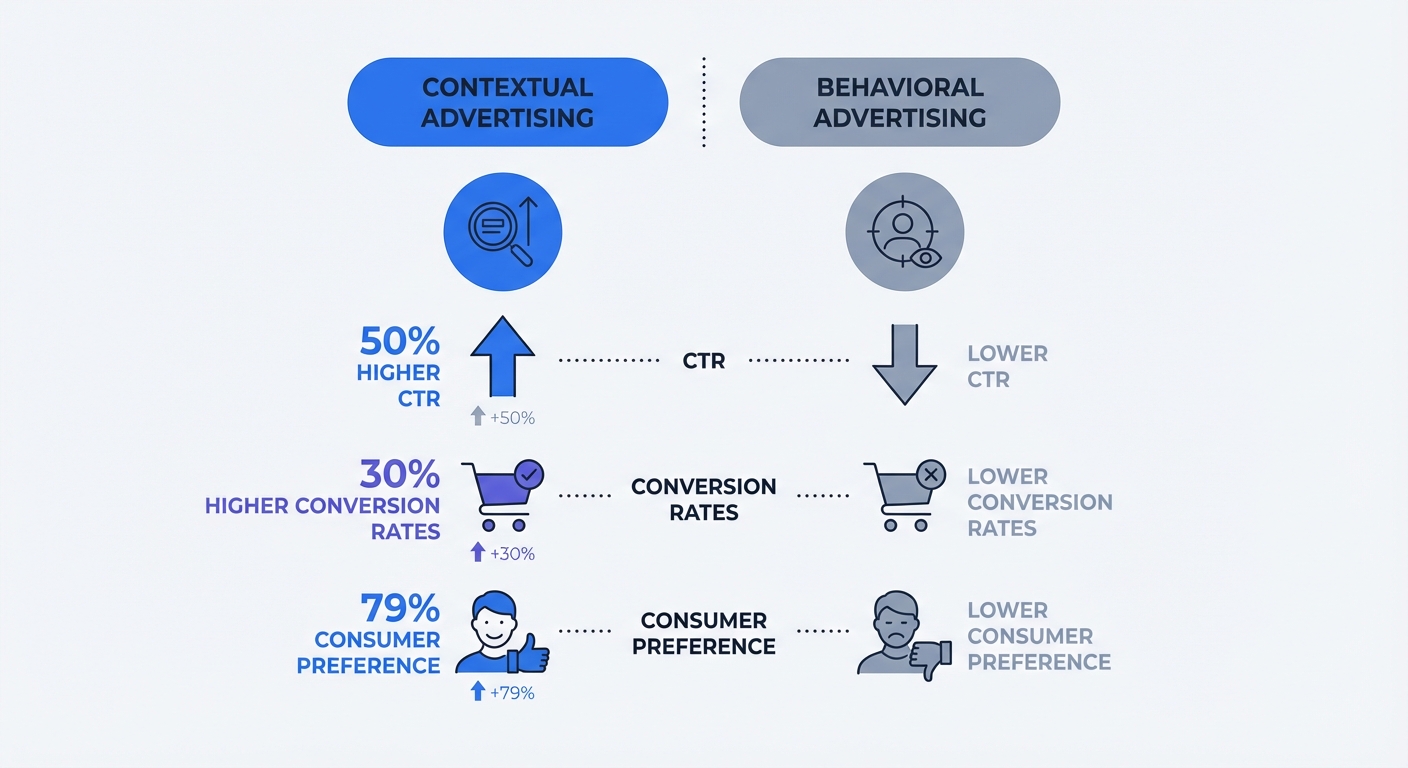
Behavioral profiling follows a user from a news website to a recipe blog to a social media feed. Contextual advertising places messages next to relevant content regardless of the viewer. Promoting running shoes on a marathon training blog demonstrates this concept.
Semantic Targeting vs Behavioral Profiling
Legacy contextual targeting relied on basic keyword matching. This caused brand safety issues. An airline ad might appear next to a news story about a plane crash because both pages contained the keyword "flight."
Modern contextual advertising uses artificial intelligence for semantic analysis. Algorithms analyze the page, determine sentiment, and categorize the underlying theme. Ads appear when the page content matches the product context and maintains a positive sentiment.
Contextual advertising gives you a way to choose relevant placements without relying on a visitor’s browsing history across unrelated websites.
Contextual placements align an ad with the content someone is reading. A camping guide can be a relevant place to advertise a tent without building a cross-site profile. Compare click-through rates, conversions, and acquisition costs in your own campaigns before deciding whether contextual targeting performs better.
Launch a Contextual Campaign
Industry data shows 78 percent of advertisers plan to increase contextual targeting budgets this year. Brands transition ad spend using programmatic networks specializing in semantic placement.
| Metric | Behavioral Advertising | Contextual Advertising |
|---|---|---|
| Targeting Basis | Past user history | Current page content |
| Privacy Risk | High | Low |
| Consent Required | Yes | No |
| Ad Relevance | Disconnected from current task | Aligned with current reading |
Shift budgets away from behavioral retargeting networks.
- Open a programmatic Demand Side Platform.
- Create a new campaign dedicated to contextual placements.
- Define target context categories using semantic themes rather than exact-match keywords.
- Add negative sentiment exclusions to protect brand reputation.
- Compare the cost-per-acquisition against legacy behavioral campaigns after 14 days.
Zero-Party Data: Transparent Value Exchanges
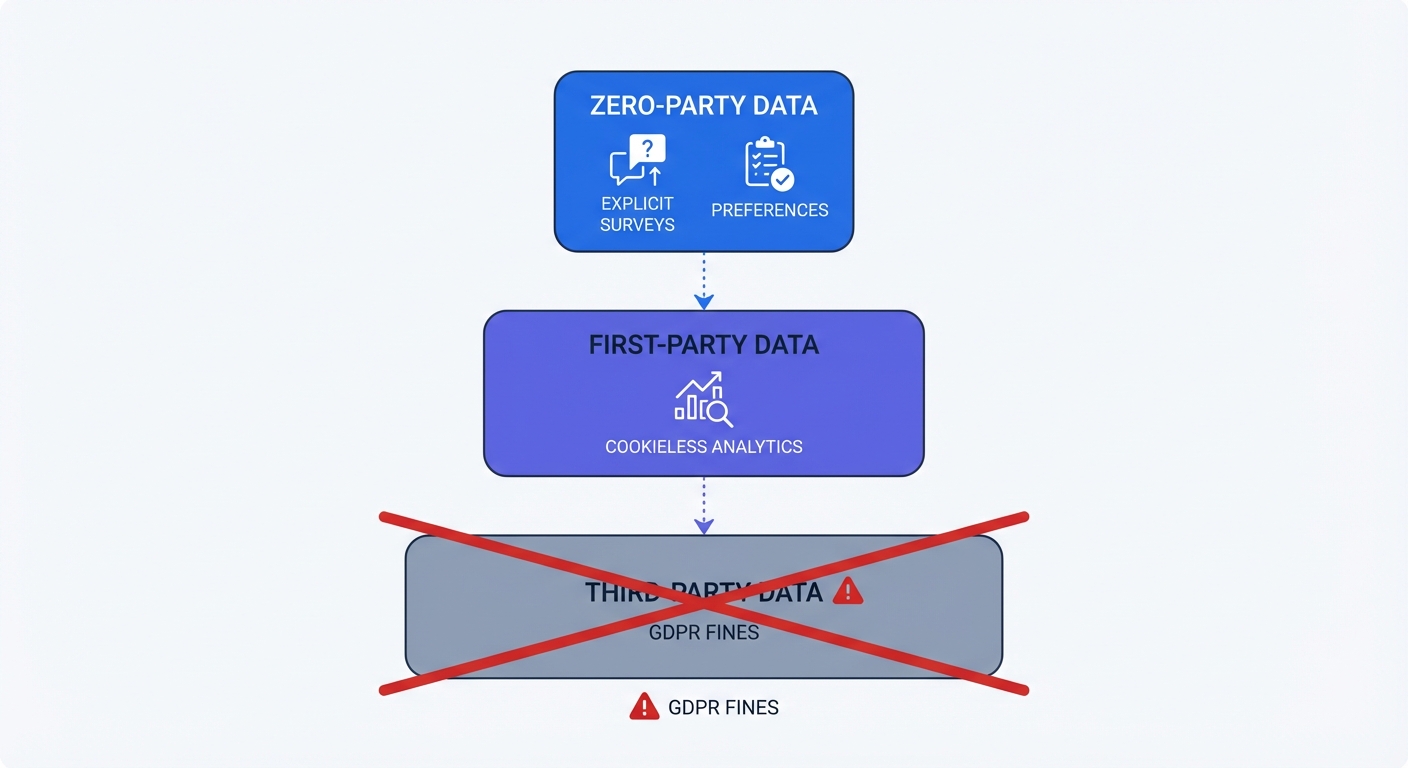
Marketers categorize data by acquisition method. Data brokers and tracking networks supply third-party data. First-party data derives from direct observations, like user actions logged in a web analytics dashboard.
Zero-party data represents information a customer shares by choice. Customers state their preferences. Marketers bypass the need to guess user intent.
Collecting Data Through Interactive Experiences
Offering a transparent value exchange facilitates zero-party data collection. Users share pain points, preferences, and timelines in exchange for immediate value. This replaces stealth data harvesting with direct communication.
Interactive product quizzes provide a reliable collection method for eCommerce brands. Consider a visitor landing on a skincare website. Presenting a short quiz gathers data without tracking clicks to infer skin type. The brand asks visitors to identify skin concerns and daily routines. Completing the questions unlocks a 10 percent discount.
This format turns casual traffic into engaged buyers. By guiding consumers to the right products, interactive eCommerce quizzes consistently outperform standard site navigation. For comparison, the standard eCommerce conversion average sits between 2 and 4 percent, though this benchmark varies significantly by industry and device type.
Build a preference center:
- Select a zero-party data platform like Typeform or Octane AI.
- Draft three questions that segment the audience by their biggest pain point.
- Map the quiz answers to custom properties in the email marketing software.
- Create an automated email flow recommending specific products based on the submitted answers.
- Add the quiz to the homepage navigation and promote it via organic social channels.
Brands own this data long-term. Privacy regulations do not penalize organizations for using information a customer handed over willingly. Read more about protecting this data in official GDPR compliance documentation.
Data Clean Rooms for Brand Collaboration
Enterprise marketers require massive datasets to scale operations. Buying lists of targeted users from third-party data brokers introduces massive financial risk under modern privacy laws. Data clean rooms offer a secure alternative for audience expansion.
Securely Matching First-Party Data
A data clean room allows two brands to combine first-party data for mutual benefit. The technology uses cryptographic hashing to protect individual privacy. Neither brand sees the other organization's raw customer list.
Consider a partnership between a national airline and a luxury hotel chain targeting travelers. The airline uploads a hashed list of recent buyers into the clean room, and the hotel uploads its own hashed list. Algorithms analyze the encrypted text and identify the overlap. The output tells the hotel how many of its loyalty members booked a flight. The hotel builds a targeted offer for those overlapping users without seeing the airline's customer data.
Start a data partnership:
- Research clean room platforms like Decentriq or Snowflake.
- Identify non-competing brands sharing the target demographic.
- Pitch a co-marketing campaign based on clean room insights.
- Upload hashed customer lists to the secure environment.
- Extract the aggregated insights to build lookalike audiences for contextual ad campaigns.
Measuring ROI Without Invasive Cookies
Implementing privacy-focused advertising alternatives requires replacing invasive tracking software.
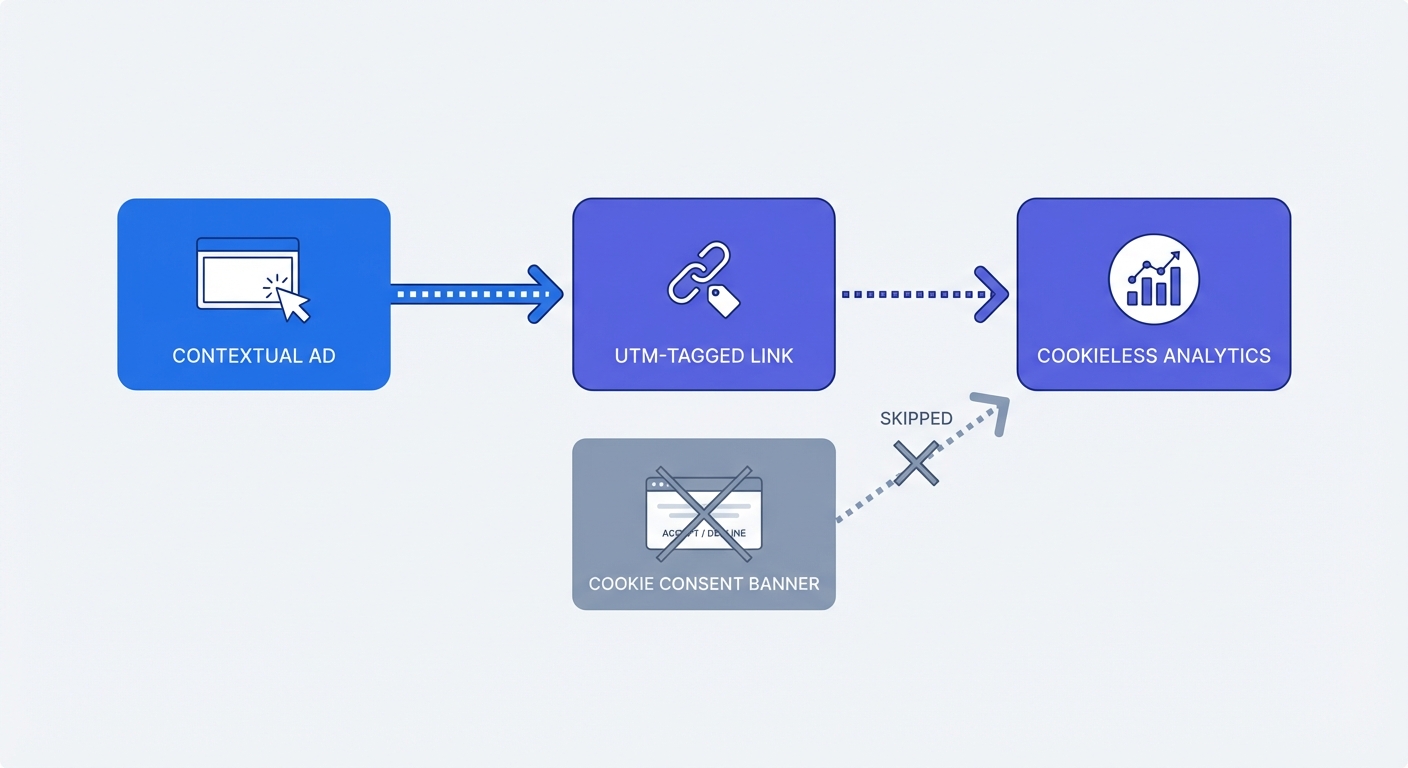
Marketers often shift to contextual ads and zero-party data collection while pointing those campaigns to landing pages embedded with legacy analytics tags. Users hit the page, see the cookie banner, and select "reject." The marketing team loses all attribution data.
The Analytics Disconnect
Measuring privacy-first marketing requires abandoning surveillance-first analytics. Platforms relying on user fingerprinting or third-party cookies produce fractured datasets.
Cookie banners create blind spots. Depending on regional laws, 60 percent of website visitors reject optional cookies (Usercentrics Cookie Consent Report, 2023). Legacy analytics dashboards underreport traffic and misattribute conversions. Marketing teams spend money on contextual ads, but flawed reporting makes the campaigns look unsuccessful because tracking scripts fail to fire.
Cookieless Tracking With Swetrix
Tracking campaign performance, page views, and conversions works without dropping cookies.
Swetrix offers a Google Analytics alternative designed for privacy compliance. Hashing mechanisms anonymize user IPs upon collection. Because Swetrix operates without cookies or personal data storage, websites bypass the need for consent banners.
This implementation restores complete visibility into web traffic. Every click from a contextual ad registers in the dashboard.
Teams trace ad clicks to conversions using UTM parameters. A UTM parameter consists of a text snippet added to the end of a URL. This string carries traffic source data into the analytics platform.
Tag every campaign link:
- Open a UTM Generator tool.
- Input the landing page URL.
- Define the source (e.g., programmatic_network).
- Define the medium (e.g., contextual_banner).
- Define the campaign name (e.g., spring_launch).
- Copy the generated link and use it in the ad setup.
When a user clicks the ad, Swetrix reads the UTM parameters on page load. The dashboard files that session under the correct campaign. If the user completes a purchase, the system attributes the conversion event to the contextual ad. Marketers calculate return on investment without tracking specific identities.
Advanced setups route this data through private infrastructure. Implementing server-side tracking sends event data from the server to Swetrix. This bypasses browser-level ad blockers and ensures precise data accuracy.
Adopting privacy-focused advertising alternatives demands modifying how teams target ads, request data, and measure success. Drop legacy tools, clean up the tech stack, and run campaigns prioritizing user respect.
Ready to measure marketing ROI without invasive cookies? Start a 14-day free trial of Swetrix and build a GDPR-compliant analytics dashboard.