- Date
Umami vs Plausible: Which Open-Source Analytics Tool is Better?
If you are committed to open-source software and privacy-first web analytics, Umami and Plausible are likely at the top of your list. Both tools share a very similar philosophy: they allow you to self-host the software, they don't use cookies, and they offer clean, fast dashboards.
But if they are so similar, how do you choose? And is there a tool that offers the same open-source ethos but with more horsepower?
In this post, we'll break down the differences between Umami and Plausible, and introduce Swetrix, a platform that takes open-source analytics to the next level.
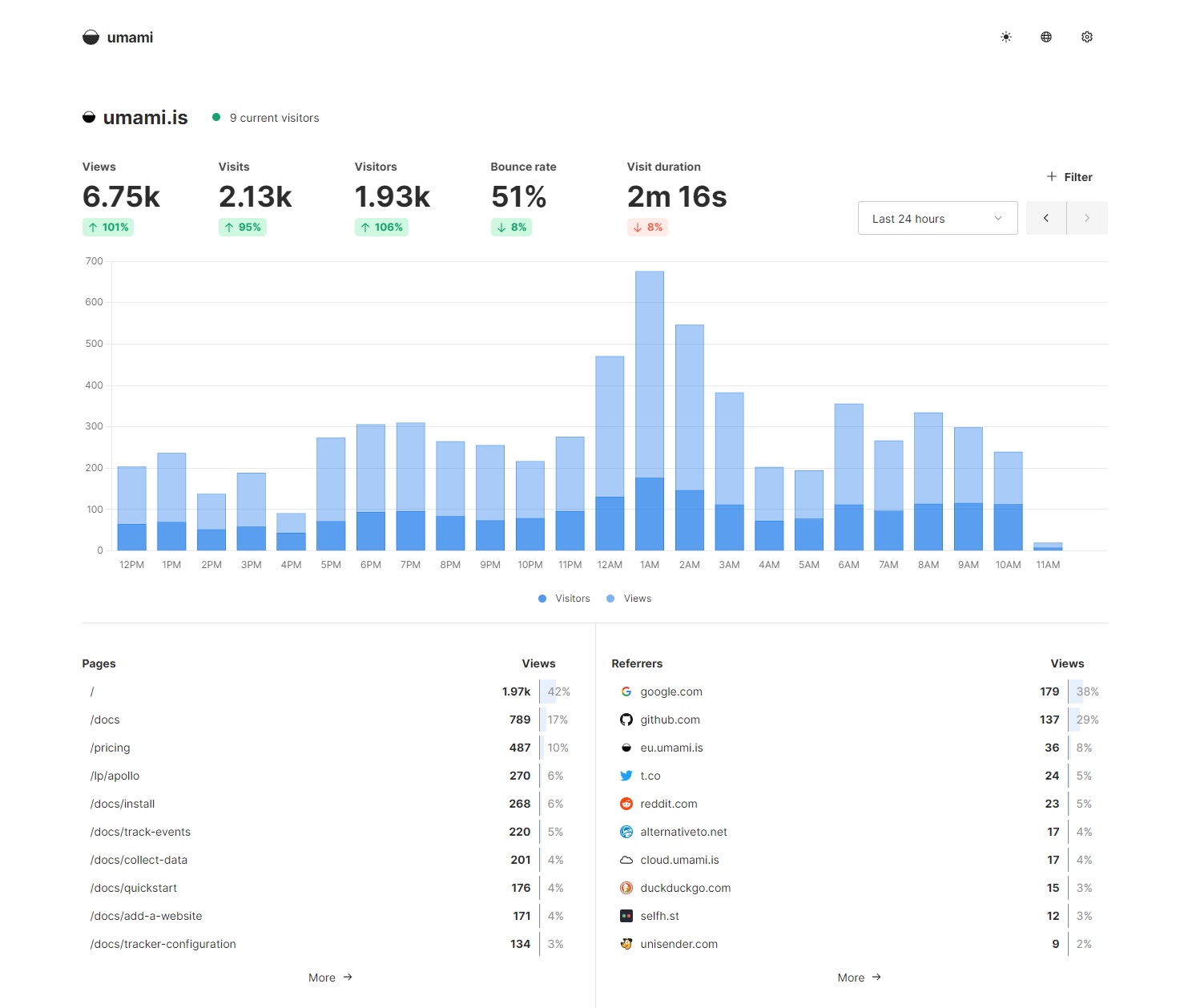
Umami Overview
Umami is a beautifully designed, lightweight analytics tool. It focuses heavily on being easy to deploy and offering a distraction-free experience for tracking basic website traffic.
Strengths:
- Completely Open-Source: Very easy to self-host with a great developer community.
- Beautiful UI: Offers one of the cleanest, most minimalist dashboards available.
- Multi-Site Tracking: Easy to track multiple distinct websites from a single self-hosted instance.
Cons:
- Strictly Basic Analytics: Very limited feature set - it primarily just counts visitors and pageviews.
- No Email Reports: Lacks automated email reporting to keep you updated without logging in.
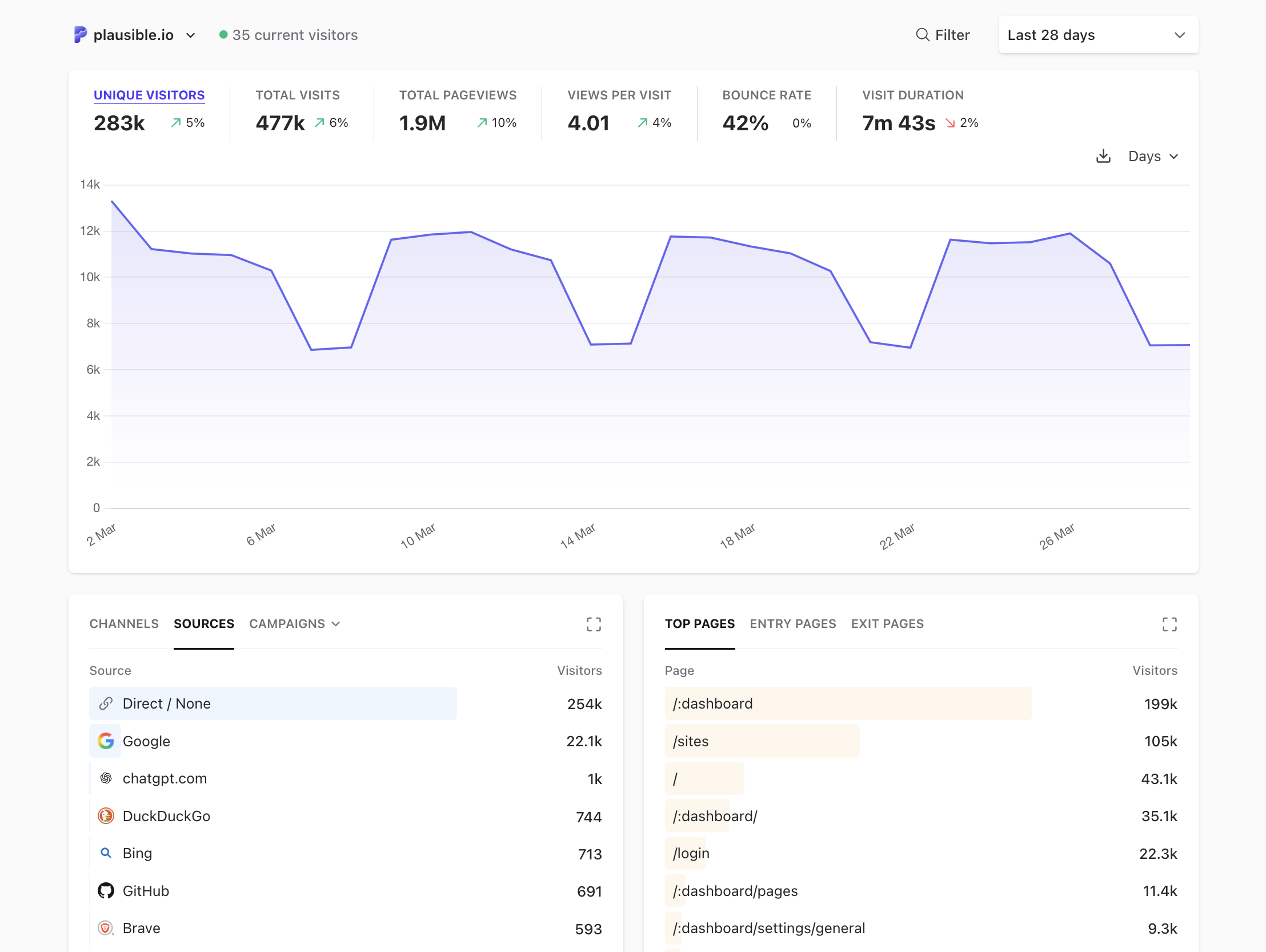
Plausible Overview
Plausible is slightly more mature in the privacy-analytics space than Umami. It provides a highly intuitive single-page dashboard but adds in helpful marketing tools like goal tracking, basic funnels, and UTM campaign filtering.
Strengths:
- Conversion Focused: Built-in support for UTM campaigns, custom events, and funnels.
- Lightweight: Tiny script size ensures your website stays fast.
- Strong Privacy: Excellent bot filtering and adblocker bypassing techniques.
Cons:
- No Technical Observability: Misses out on tracking page load speeds or JavaScript errors.
- Limited Growth Features: Doesn't support A/B testing, feature flags, or revenue analytics natively.
The Head-to-Head Feature Comparison
Here is a comprehensive look at how Umami, Plausible, and Swetrix compare in terms of raw features.
| Feature | Umami | Plausible |  Swetrix Swetrix |
|---|---|---|---|
| Core Features | |||
| Real-time Analytics | |||
| Custom Events | |||
| Page views | |||
| Live visitors count | |||
| UTM Tracking | |||
| Device stats (browser, OS, type) | |||
| Email Reports | |||
| Geolocation data | Basic | Basic | Full |
| Advanced Features | |||
| Performance Monitoring (Web Vitals) | |||
| User Flow Analysis | |||
| Error Tracking | |||
| Alerts / Notifications | |||
| Geolocation map visualisation | |||
| Funnels | |||
| Segments | |||
| Multiple Domains per Site | |||
| Growth & Product | |||
| AI Chat | |||
| Goals | |||
| Experiments (A/B tests) | |||
| Feature flags | |||
| User Profiles | |||
| Revenue analytics | |||
| CAPTCHA | |||
| Security & Access | |||
| Bot filtering | |||
| Two-Factor Authentication (2FA) | |||
| Role-based Access Control | |||
| Shared Dashboards | |||
| Organisations (Teams) | |||
| Privacy & Compliance | |||
| Cookie-less Tracking | |||
| Open Source | |||
| Self-hostable | |||
| EU data residency | |||
| Technical specifications | |||
| Script size | <3 KB | 6 KB | 6 KB |
| API access | |||
| Bypass adblockers | |||
| Pricing & Support | |||
| Entry price | $20 | $19.00 | $19.00 |
| Customer support | |||

Where Both Tools Fall Short
Umami and Plausible are excellent choices if your goal is simply to set and forget a visitor counter on a personal blog. However, if you are running a serious project, an agency, or a SaaS, they both lack critical features.
1. No Proactive Error Tracking
If you push a code update that breaks your website, neither Umami nor Plausible will tell you. You will only notice a silent drop in traffic or conversions.
2. Missing User Context
Both tools provide flat lists of data. They cannot visualize how users navigate your site. Without User Flow Diagrams, it is incredibly difficult to see where users get confused or drop off before completing a purchase.
3. Limited Growth Capabilities
If you want to run an A/B test to see which headline converts better, or if you need to track revenue metrics alongside your traffic, Umami and Plausible force you to buy and integrate completely separate software.
The Most Powerful Alternative: Swetrix
If you love the open-source, privacy-first philosophy of Umami and Plausible but need the power of a complete observability platform, Swetrix is the definitive winner.
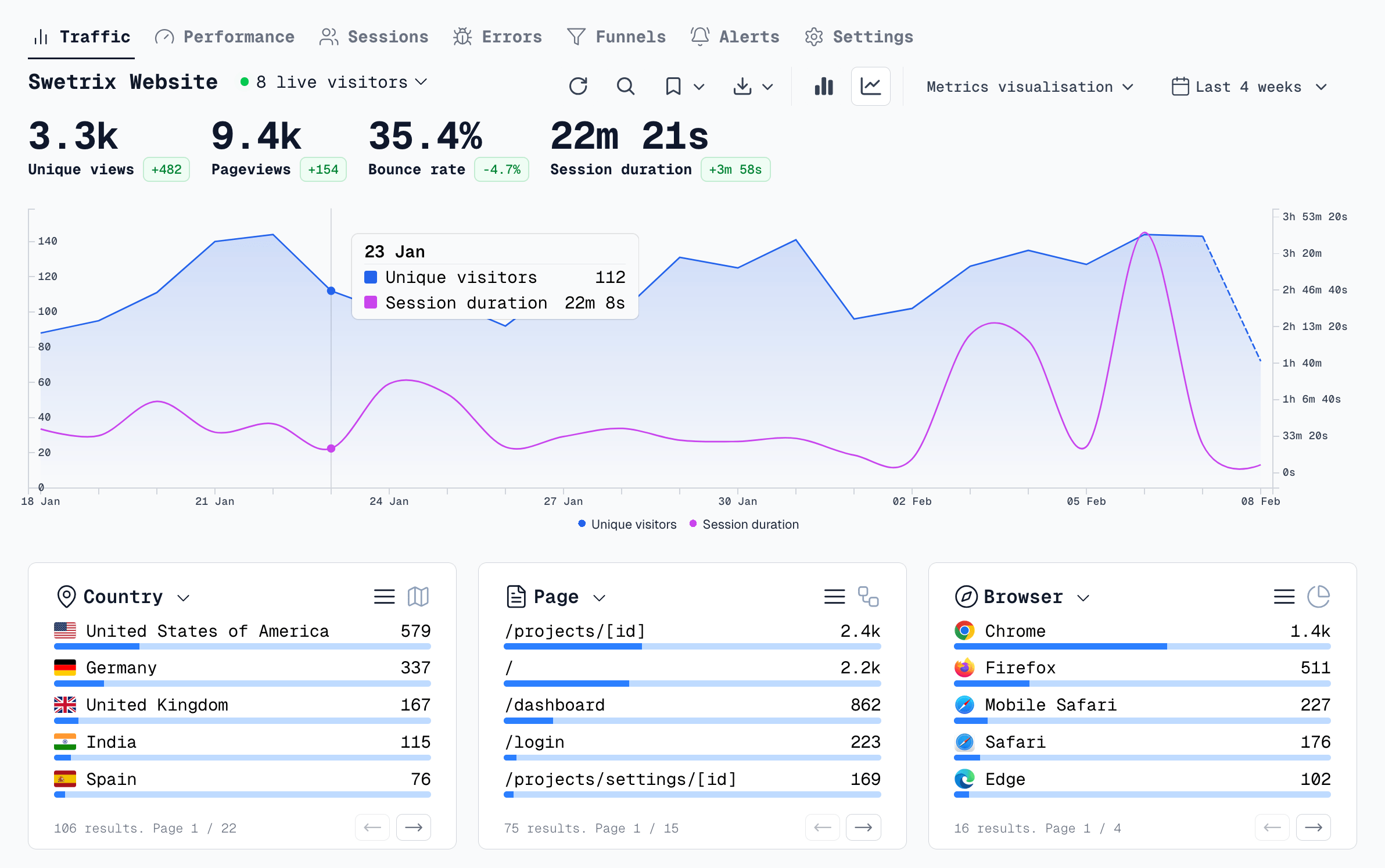
Here is why Swetrix outperforms both:
- Total Observability: Swetrix includes built-in Performance Monitoring (Core Web Vitals) and JavaScript Error Tracking. You don't just see traffic; you ensure the traffic is having a bug-free, fast experience.
- Deep Visual Insights: Understand your audience instantly with interactive geolocation maps and detailed User Flow diagrams.
- Proactive Alerts: Swetrix can ping you via Slack, Telegram, or Discord the moment traffic spikes or an error rate increases.
- Built-in Growth Tools: Stop paying for extra tools. Swetrix includes A/B testing, Feature Flags, and an AI Chat assistant built right in.
- Truly Open Source: Just like Umami and Plausible, Swetrix is fully open-source and ready for you to self-host.
Get the depth of enterprise analytics without sacrificing your open-source ideals.
The web analytics your site deserves.
Tired of bloated dashboards, privacy concerns, and data you can't trust? Switch to Swetrix and get simple, powerful analytics that respects your users.