- Date
Umami vs Fathom Analytics: A Detailed Comparison
If you're looking for a privacy-first analytics alternative, you've likely come across Umami and Fathom Analytics. Both are highly respected tools designed to protect user privacy while giving you the core traffic insights you need. They both ditch cookies, comply with GDPR, and offer lightweight tracking scripts.
But which one is right for your project? And more importantly, are they your only good options?
In this post, we'll break down the differences between Umami and Fathom, and then show you why Swetrix might actually be the better choice for businesses looking for deeper insights without sacrificing privacy.
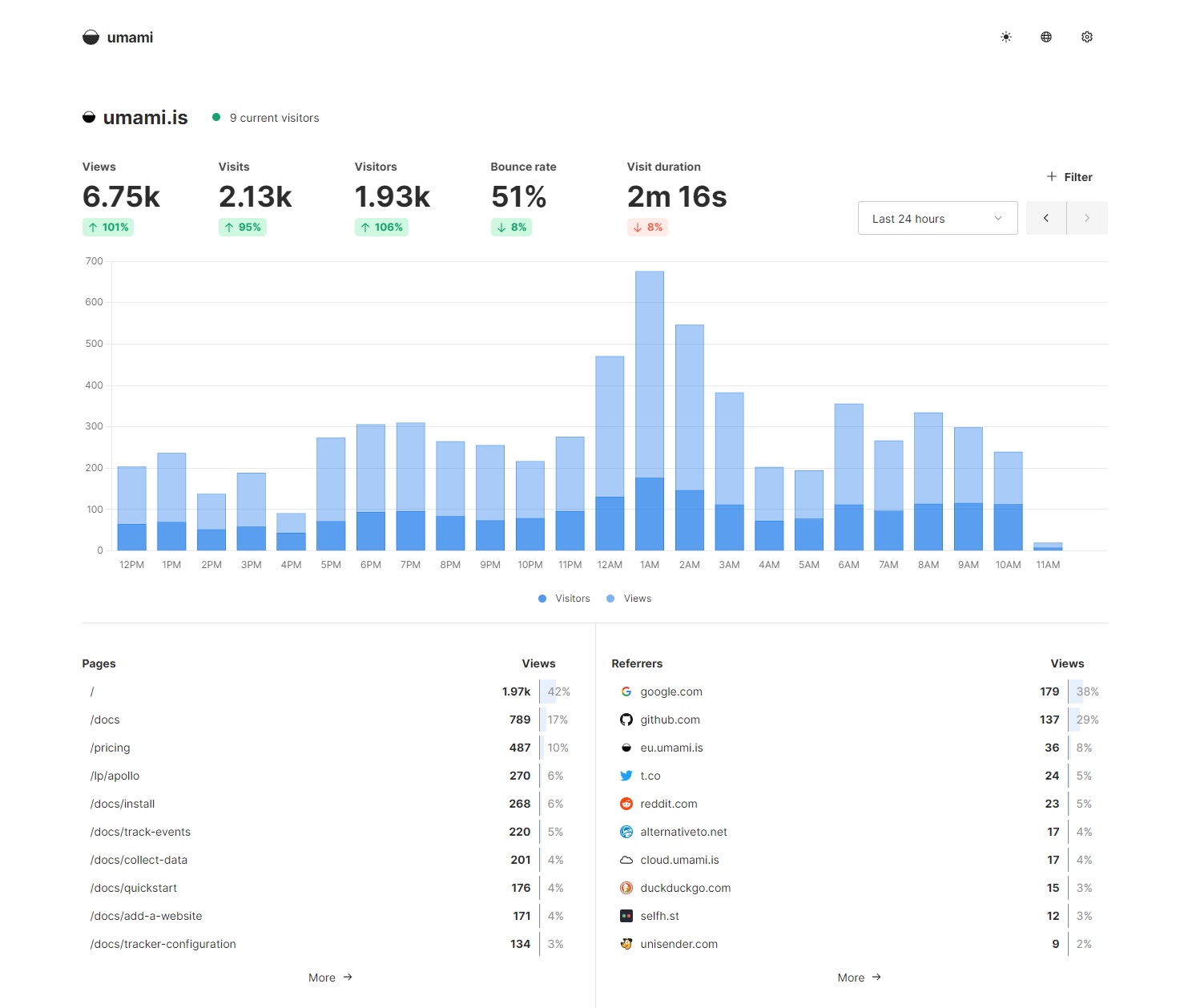
Umami Overview
Umami is a beautifully designed, lightweight analytics tool. It focuses heavily on being easy to deploy and offering a distraction-free experience for tracking basic website traffic. It is heavily favored by developers and privacy advocates who want transparency.
Strengths:
- Fully Open-Source: You can inspect the code or host it yourself easily.
- Beautiful UI: Offers one of the cleanest, most minimalist dashboards available.
- Basic Conversion Tracking: Supports simple funnels and goal tracking.
Cons:
- Limited Technical Insights: No performance monitoring or error tracking natively available.
- No Email Reports: Lacks automated email reporting to keep you updated without logging in.
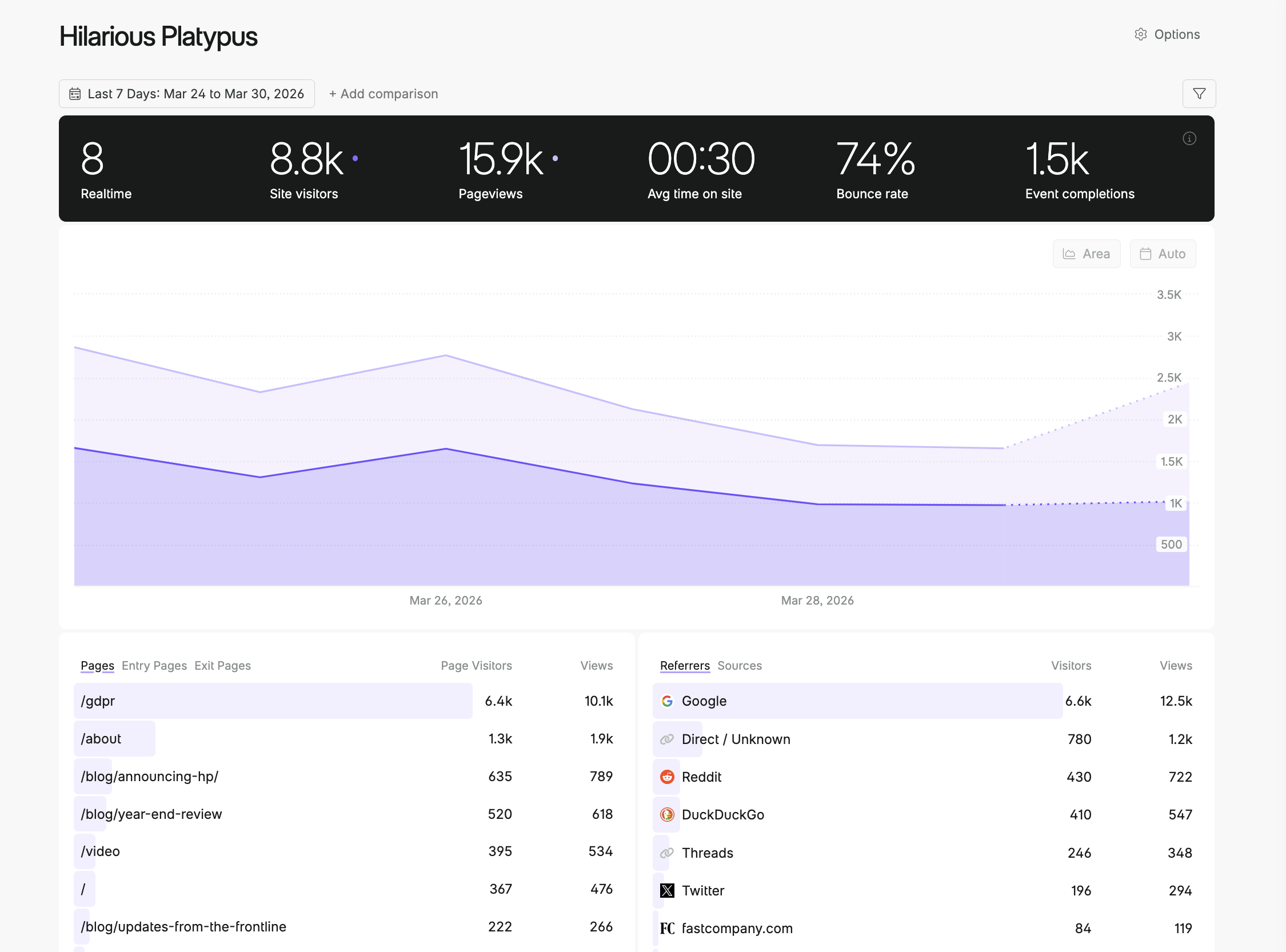
Fathom Analytics Overview
Fathom was one of the pioneers of the privacy-focused analytics movement. It prides itself on being simple, reliable, and highly scalable. Fathom places a strong emphasis on bypassing ad-blockers using clever custom domain routing, ensuring you capture more accurate data than standard tracking scripts.
Strengths:
- Adblocker Bypass: Built-in tools to capture traffic that normally gets blocked.
- Multi-site Friendly: You can track up to 50 domains on their base plan.
- Extremely Fast: The dashboard loads incredibly quickly, even with large datasets.
Cons:
- Proprietary Code: Completely closed-source, meaning you cannot verify their privacy claims by reading the codebase.
- No Funnels: Lacks user flow and multi-step funnel analysis entirely.
The Head-to-Head Feature Comparison
Let's see how they stack up against each other - and against Swetrix, which we believe is the ultimate winner.
| Feature | Umami | Fathom Analytics |  Swetrix Swetrix |
|---|---|---|---|
| Core Features | |||
| Real-time Analytics | |||
| Custom Events | |||
| Page views | |||
| Live visitors count | |||
| UTM Tracking | |||
| Device stats (browser, OS, type) | |||
| Email Reports | |||
| Geolocation data | Basic | ||
| Advanced Features | |||
| Performance Monitoring (Web Vitals) | |||
| User Flow Analysis | |||
| Error Tracking | |||
| Alerts / Notifications | |||
| Geolocation map visualisation | |||
| Funnels | |||
| Segments | |||
| Multiple Domains per Site | |||
| Growth & Product | |||
| AI Chat | |||
| Goals | |||
| Experiments (A/B tests) | |||
| Feature flags | |||
| User Profiles | |||
| Revenue analytics | |||
| CAPTCHA | |||
| Security & Access | |||
| Bot filtering | |||
| Two-Factor Authentication (2FA) | |||
| Role-based Access Control | |||
| Shared Dashboards | |||
| Organisations (Teams) | |||
| Privacy & Compliance | |||
| Cookie-less Tracking | |||
| Open Source | |||
| Self-hostable | |||
| EU data residency | |||
| Technical specifications | |||
| Script size | <3 KB | 6 KB | 6 KB |
| API access | |||
| Bypass adblockers | |||
| Pricing & Support | |||
| Entry price | $20 | $15.00 | $19.00 |
| Customer support | |||

Where Umami and Fathom Fall Short
Both Umami and Fathom are fantastic if all you want are basic traffic counters. However, if you are actively trying to improve your website's user experience and grow your business, you will quickly hit a ceiling with both tools.
1. Lack of In-Depth User Behavior Tools
Neither Umami nor Fathom offers User Flow Analysis. When you want to see exactly how users are navigating through your site step-by-step, you're out of luck. Umami has basic funnels, but Fathom doesn't even offer that.
2. Blind Spots on Performance and Errors
Your site might have great traffic, but what if it's loading slowly for mobile users or throwing JavaScript errors during checkout? Umami and Fathom completely ignore these technical realities.
3. Open Source Philosophy
While Umami is open-source (a big plus!), Fathom is completely proprietary. You cannot audit Fathom's code or self-host it to ensure complete data sovereignty.
Why Swetrix is the True Winner
If you want the simplicity and privacy of Umami and Fathom but need the power of a modern analytics suite, Swetrix is the clear winner.
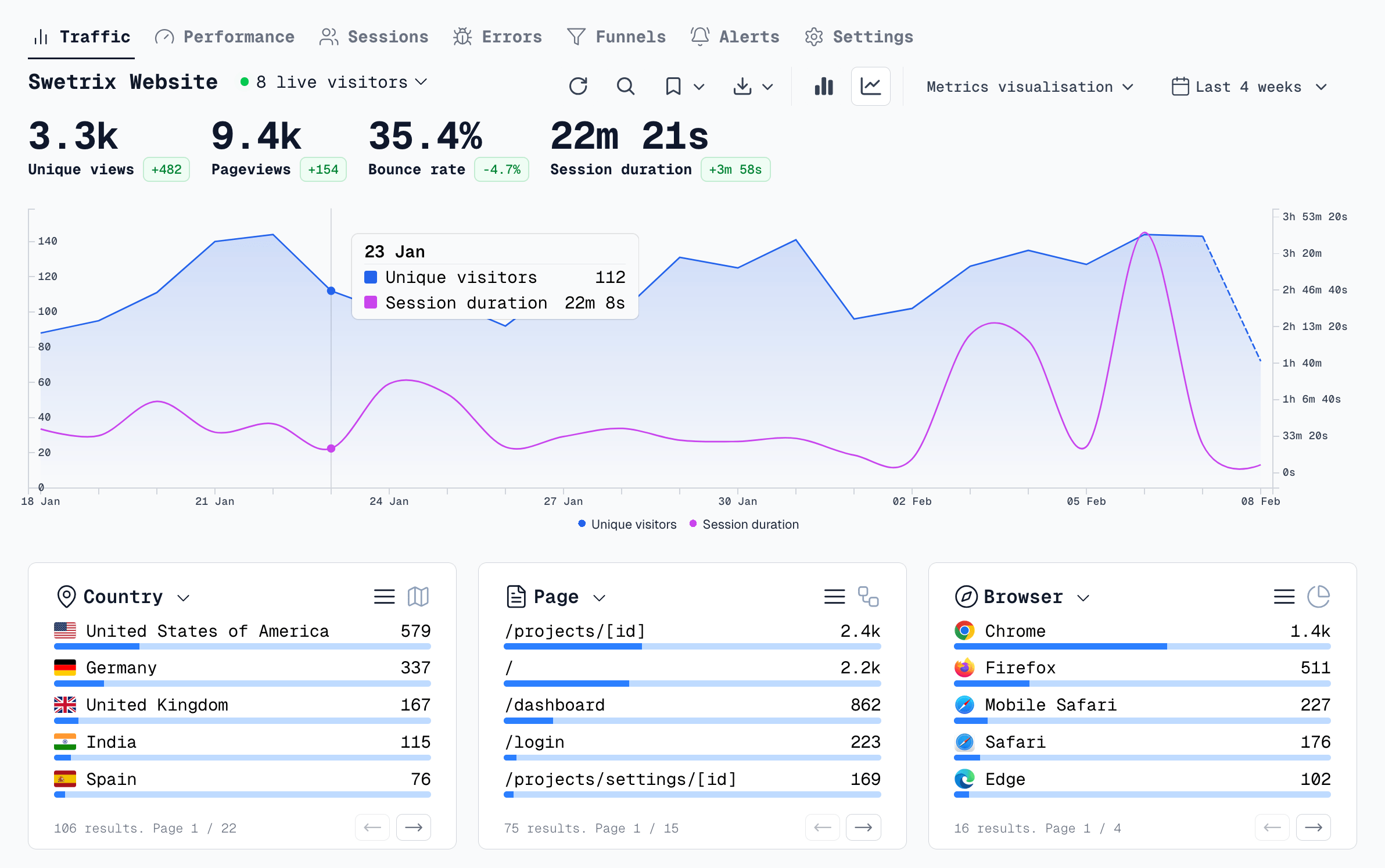
Here is why Swetrix outperforms the competition:
- Complete Observability: Swetrix includes built-in Performance Monitoring (Core Web Vitals) and Error Tracking. You don't just see who visited; you see if they had a good, bug-free experience.
- Advanced Insights: With visual User Flow diagrams, custom funnels, and interactive geolocation maps, you can understand your audience much better than looking at a flat table of URLs.
- Growth Tools Built-In: Why pay for a separate tool for A/B testing? Swetrix includes privacy-friendly Experiments, Feature Flags, and even an AI Chat to query your data natively.
- Truly Open Source: Like Umami, Swetrix is fully open-source and self-hostable. However, Swetrix offers significantly more features out of the box.
If you are serious about growing your website, fixing bugs, and improving conversion rates, all while respecting user privacy - Swetrix delivers a complete package that simple traffic counters just can't match.
The web analytics your site deserves.
Tired of bloated dashboards, privacy concerns, and data you can't trust? Switch to Swetrix and get simple, powerful analytics that respects your users.