- Date
Matomo vs Umami: A Comprehensive Comparison for 2026
If you are committed to open-source software and want absolute control over your web analytics data, your search will likely lead you to two prominent options: Matomo and Umami.
Both platforms allow you to self-host your analytics, entirely avoiding third-party data collection and ensuring strict compliance with global privacy laws. However, they are built for entirely different users. Matomo is a massive, complex analytics suite designed to replace Google Analytics. Umami is a lightweight, minimalist tool built for developers who want simple traffic stats without the clutter.
In this post, we will compare Matomo and Umami side-by-side. We will also introduce Swetrix, a modern open-source platform that offers the lightweight performance of Umami but the deep analytical power of Matomo.
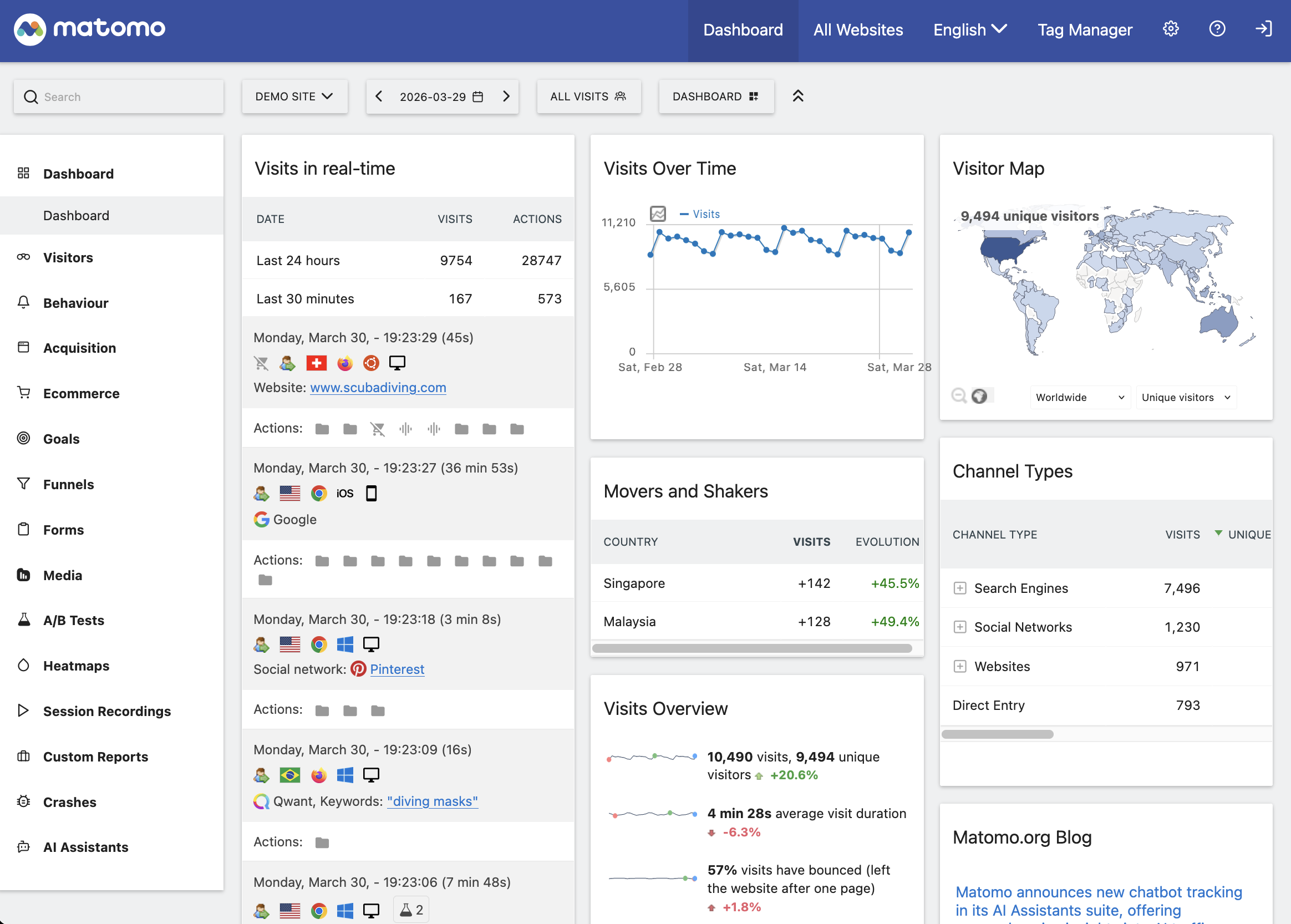
Matomo Overview
Matomo is the veteran of the open-source analytics space. It was originally built over a decade ago to provide a self-hostable, privacy-friendly alternative to the classic Google Analytics interface. It is a highly comprehensive tool favored by large organizations that need deep customization.
Strengths:
- Incredible Depth: Matomo tracks almost everything imaginable, from detailed user sessions and custom e-commerce metrics to granular segmentation.
- Plugin Ecosystem: It features a massive marketplace of plugins, allowing you to add advanced capabilities like session recordings and search engine analytics.
- Enterprise Proven: It has been battle-tested at scale by government entities and large corporations worldwide.
Cons:
- Heavy Architecture: Matomo is built on an older PHP/MySQL stack, which can become incredibly resource-heavy and expensive to host as your traffic scales.
- Hidden Subscription Costs: While the core open-source software is free, crucial modern features like Funnels, User Flows, and Performance Monitoring require expensive premium plugin licenses.
- Cluttered Dashboard: The UI is notoriously dense, mimicking older software design with hundreds of nested menus that confuse casual users.
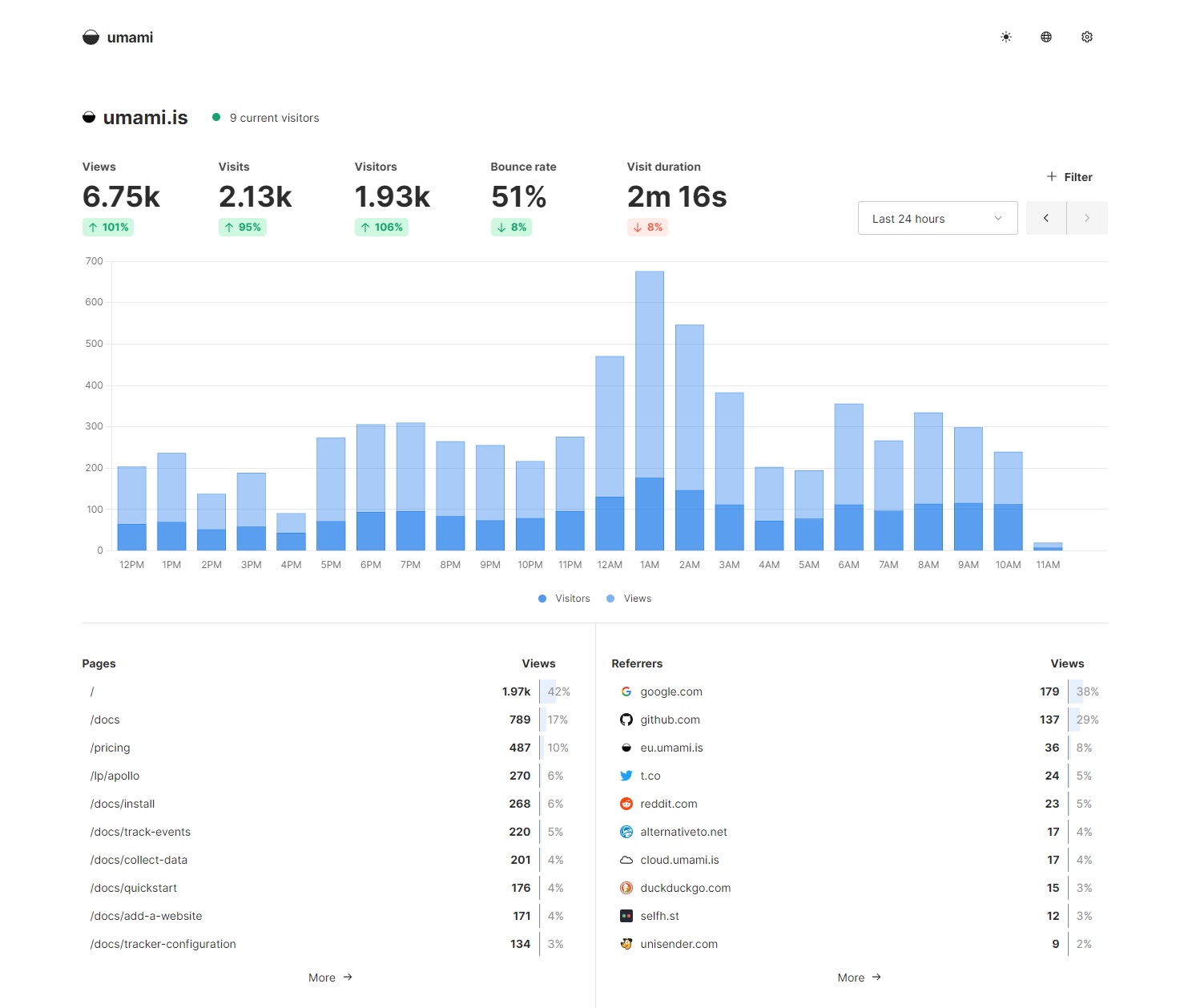
Umami Overview
Umami was built as a direct reaction to tools like Matomo and Google Analytics. It is an extremely lightweight, beautifully designed analytics tool. It strips away all the complex menus and focuses solely on delivering a clean, fast dashboard of your basic traffic statistics.
Strengths:
- Beautiful Minimalism: The dashboard is arguably one of the cleanest and easiest to read in the industry.
- Easy Self-Hosting: Umami is very lightweight and easy to deploy on modern infrastructure with a great developer community.
- Multi-Site Tracking: It handles tracking multiple distinct websites from a single self-hosted instance very elegantly.
Cons:
- Strictly Basic Analytics: The simplicity comes at a cost. Umami primarily acts as a visitor counter; it lacks deep behavioral tools and advanced visualizations.
- No Technical Observability: It cannot monitor your website's performance (Core Web Vitals) or capture JavaScript errors.
- Missing Proactive Alerts: It does not support automated email reports or real-time alerts for traffic spikes or errors.
Feature Comparison: Matomo vs Umami (vs Swetrix)
Let's break down the technical capabilities of these open-source tools and see how they compare to Swetrix.
| Feature | Matomo | Umami |  Swetrix Swetrix |
|---|---|---|---|
| Core Features | |||
| Real-time Analytics | |||
| Custom Events | |||
| Page views | |||
| Live visitors count | |||
| UTM Tracking | |||
| Device stats (browser, OS) | |||
| Email Reports | |||
| Advanced Features | |||
| Performance Monitoring | Paid Plugin / $$$$ | ||
| User Flow Analysis | Paid Plugin / $$$$ | ||
| Error Tracking | Paid Plugin / $$$$ | ||
| Alerts / Notifications | |||
| Geolocation map | |||
| Funnels | Paid Plugin / $$$$ | ||
| Segments | |||
| Multiple Domains per Site | |||
| Growth & Product | |||
| AI Chat | |||
| Goals | |||
| Experiments (A/B tests) | Paid Plugin / $$$$ | ||
| Feature flags | |||
| Revenue analytics | (Ecommerce) | ||
| Security & Access | |||
| Bot filtering | |||
| Two-Factor Authentication | |||
| Role-based Access Control | |||
| Organisations (Teams) | |||
| Privacy & Compliance | |||
| Cookie-less Tracking | |||
| Open Source | |||
| Self-hostable | |||
| Technical & Pricing | |||
| Script size | > 60 KB | < 3 KB | ~6 KB |
| API access | |||
| Cloud Entry price | €22.00 ( ~$25) | $20.00 | $19.00 |

Where Both Tools Fall Short
While both platforms champion open-source software, they force you into a frustrating dilemma between overwhelming complexity and severe limitation.
The Missing Middle Ground
Umami is a fantastic tool if you only want to know how many people visited your blog today. However, if you are running a business, you quickly outgrow it. Umami lacks User Flow Analysis, Error Tracking, and proactive alerts. Without these tools, you cannot optimize your user journey or fix technical bugs.
Matomo has these advanced features, but they come with a massive burden. You have to navigate a complex UI, manage heavy server infrastructure, and—crucially—pay high annual fees for premium plugins just to access features like Funnels and Performance Monitoring on your "free" self-hosted setup.
The Ultimate Winner: Swetrix
You shouldn't have to choose between a basic traffic counter and an expensive, bloated enterprise system. Swetrix provides a comprehensive, lightweight open-source alternative.
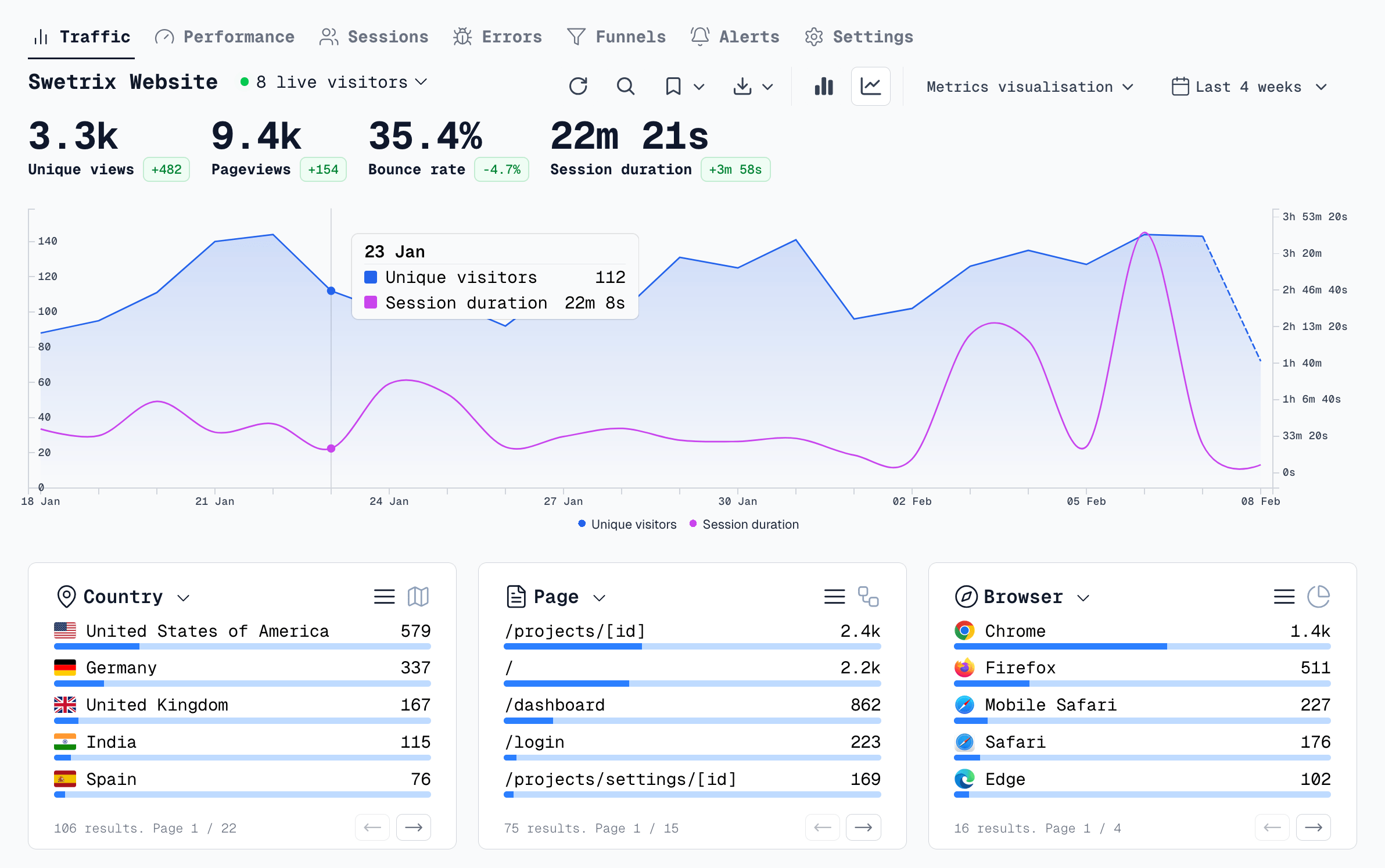
Here is why Swetrix is the superior choice for open-source analytics:
- Complete Technical Observability: Swetrix goes far beyond simple page views. It natively tracks Core Web Vitals and automatically captures JavaScript errors. You can monitor your website's performance and fix broken scripts before they impact your business.
- Deep Visual Insights: Stop looking at flat data tables. Swetrix provides detailed User Flow diagrams and interactive Geolocation maps to help you truly understand your audience's behavior.
- All-Inclusive Features: Unlike Matomo, Swetrix does not hide essential tools behind expensive paywalls. Funnels, A/B Testing, Feature Flags, and real-time alerts are built directly into the core platform.
- Modern and Fast: Built on ClickHouse, Swetrix is incredibly fast and efficient to self-host. You get the lightweight feel and clean UI of Umami, combined with the analytical depth of an enterprise tool.
If you are a fan of open-source software but demand a platform that actively helps you grow and monitor your business, Swetrix is the ultimate upgrade.
The web analytics your site deserves.
Tired of bloated dashboards, privacy concerns, and data you can't trust? Switch to Swetrix and get simple, powerful analytics that respects your users.