- Date
Fathom Analytics vs Rybbit: A Detailed Comparison for 2026
The market for privacy-first analytics has exploded over the past few years, leaving website owners with an abundance of choices. Two tools that frequently come up in discussions about simple, privacy-respecting website tracking are Fathom Analytics and Rybbit.
Both of these platforms operate on a similar fundamental premise: they want to give you access to your website's traffic data without relying on invasive cookies, cross-site tracking, or compromising user privacy. They both offer a clean break from the complexity of legacy tools.
However, while they might look similar at first glance, they have different levels of maturity and differing philosophies on open-source software.
In this article, we will compare Fathom Analytics and Rybbit side-by-side. Then, we will introduce Swetrix - a robust, feature-rich alternative that provides a comprehensive suite of growth and observability tools missing in both.
Fathom Analytics Overview
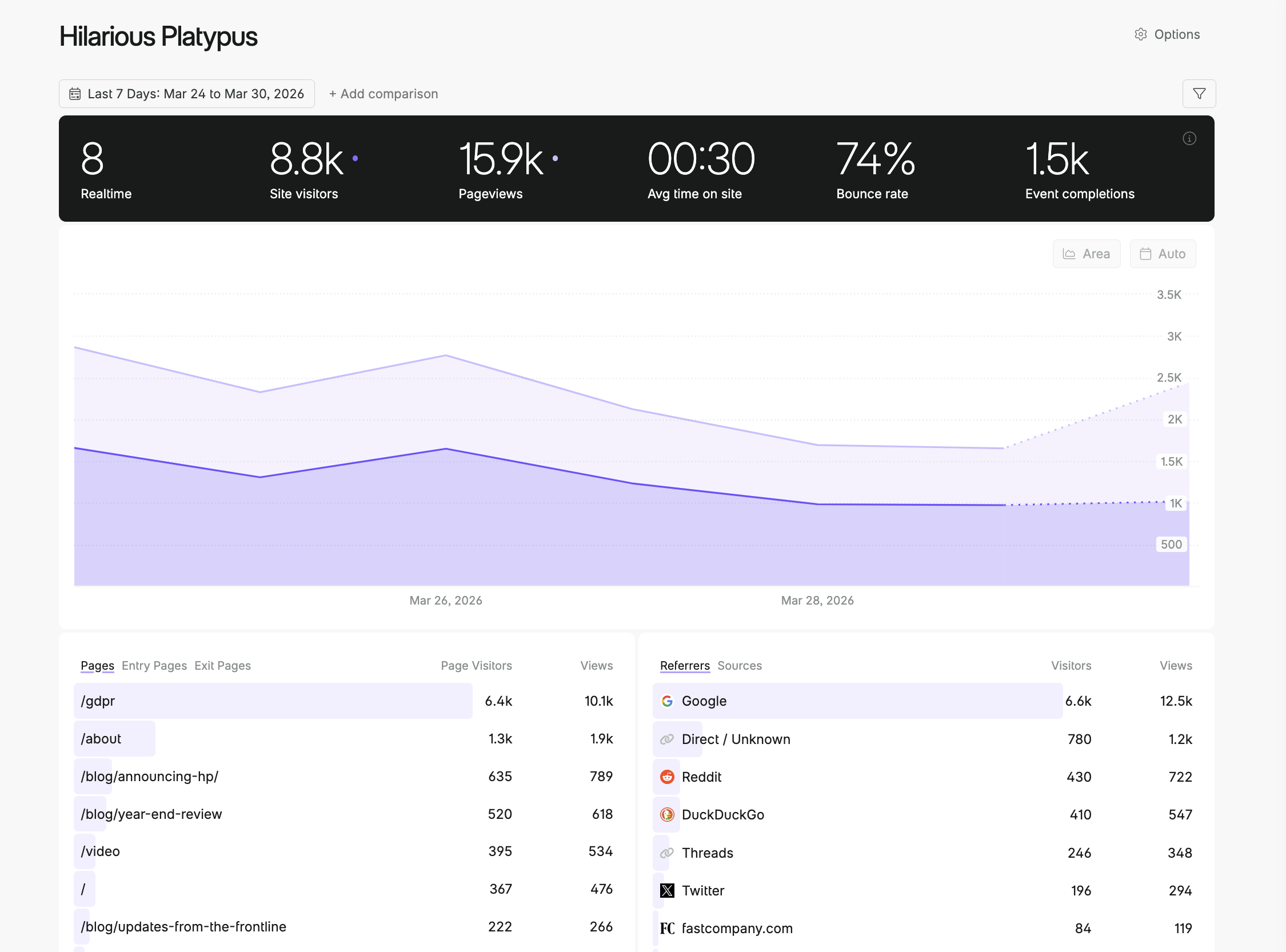
Fathom Analytics is a veteran in the privacy-first analytics space. It has built a strong reputation as a highly reliable, straightforward alternative to traditional trackers. Designed with minimalism in mind, Fathom condenses all your essential traffic metrics—visitors, views, referrers, and device types—into a single, highly optimized dashboard.
Fathom is particularly well-known for its focus on data accuracy through adblocker bypassing techniques, ensuring that website owners get a true count of their visitors.
Strengths:
- Adblock Bypass: Utilizes custom domain setups to route around standard adblockers, recovering traffic data that is normally lost.
- Blazing Fast: The dashboard is highly optimized and loads incredibly quickly, even when handling millions of pageviews.
- Agency Friendly: The base tier allows tracking across up to 50 domains, making it highly cost-effective for users with multiple projects.
Cons:
- Closed-Source Ecosystem: Fathom's code is strictly proprietary. You cannot self-host it or independently audit their software to verify privacy claims.
- Very Basic Metrics: Fathom intentionally limits its feature set. It lacks multi-step funnels, user flow visualizations, and advanced audience segmentation.
Rybbit Overview
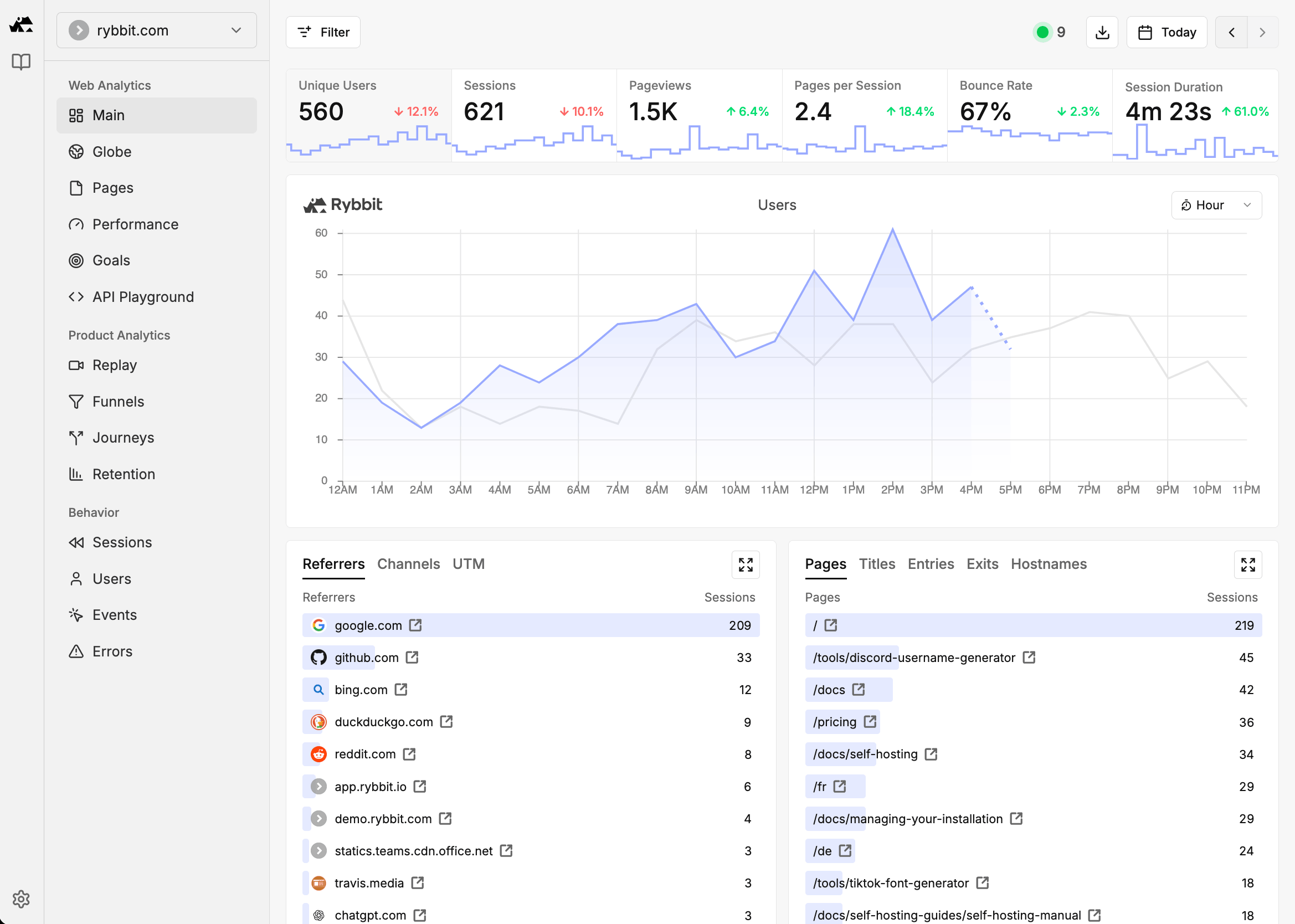
Rybbit is a much newer entrant into the web analytics arena, having launched in 2025. It aims to combine the simplicity of basic privacy trackers with a modern, fresh aesthetic. Crucially, Rybbit embraces the open-source movement, allowing users more transparency than proprietary options.
While it is still a relatively young project, Rybbit provides the essential analytics features most bloggers and small businesses need, alongside a few modern additions.
Strengths:
- Open-Source: The codebase is fully open-source, giving you the freedom to inspect it or deploy it on your own server infrastructure.
- Modern Interface: The dashboard is clean, modern, and designed for quick, at-a-glance consumption of data.
- Basic Technical Tools: Unlike Fathom, Rybbit includes basic performance monitoring and error tracking within its platform.
Cons:
- Security Gaps: Being a newer platform, Rybbit currently lacks enterprise-grade security features, notably missing Two-Factor Authentication (2FA).
- No Proactive Alerts: If your website experiences a massive traffic spike or encounters a critical error, Rybbit will not notify you; you have to log in manually to check.
Feature Comparison: Fathom Analytics vs Rybbit (vs Swetrix)
Let's take a detailed look at how Fathom Analytics and Rybbit compare across core features, and see how Swetrix outshines them both.
| Feature | Fathom Analytics | Rybbit |  Swetrix Swetrix |
|---|---|---|---|
| Core Features | |||
| Real-time Analytics | |||
| Custom Events | |||
| Page views | |||
| Live visitors count | |||
| UTM Tracking | |||
| Device stats (browser, OS, type) | |||
| Email Reports | |||
| Advanced Features | |||
| Performance Monitoring (Web Vitals) | |||
| User Flow Analysis | |||
| Error Tracking | |||
| Alerts / Notifications | |||
| Geolocation map visualisation | |||
| Funnels | |||
| Segments | |||
| Multiple Domains per Site | |||
| Growth & Product | |||
| AI Chat | |||
| Goals | |||
| Experiments (A/B tests) | |||
| Feature flags | |||
| User Profiles | |||
| Revenue analytics | |||
| CAPTCHA | |||
| Security & Access | |||
| Bot filtering | |||
| Two-Factor Authentication (2FA) | |||
| Role-based Access Control | |||
| Shared Dashboards | |||
| Organisations (Teams) | |||
| Privacy & Compliance | |||
| Cookie-less Tracking | |||
| Open Source | |||
| Self-hostable | |||
| EU data residency | |||
| Technical specifications | |||
| Script size | 6 KB | ~18 KB | 6 KB |
| API access | |||
| Bypass adblockers | |||
| Pricing & Support | |||
| Entry price | $15.00 | $19.00 | $19.00 |
| Customer support | |||

Where Both Tools Miss the Mark
While both Fathom Analytics and Rybbit provide excellent privacy-friendly visitor counting, they struggle when it comes to acting as comprehensive platforms for business growth.
1. Lack of Actionable Growth Tools
Knowing how many people visited your website is only the first step. If you want to actively improve your conversion rates, neither tool is equipped to help you. Both Fathom and Rybbit lack the ability to run A/B tests, manage feature rollouts via Feature Flags, or directly track revenue data alongside traffic sources. They are passive observers rather than active growth engines.
2. Missing Real-Time Observability
Modern website management requires proactive monitoring. While Rybbit offers basic error tracking (and Fathom offers none), neither platform provides real-time alerts. If a recent code deployment breaks your website and causes traffic to plummet, or if an influencer links to you and traffic spikes, neither Fathom nor Rybbit will send you a notification. You are entirely reliant on manually checking your dashboard.
3. The Security and Transparency Trade-off
If you choose Fathom, you get a mature platform with good security (2FA), but you have to accept closed-source software where you cannot verify data practices. If you choose Rybbit, you get open-source transparency, but you sacrifice essential account security since it currently lacks basic protections like Two-Factor Authentication.
The Ultimate Winner: Swetrix
You shouldn't have to compromise on security, transparency, or functionality. If you want a platform that is mature, deeply insightful, and completely open-source, Swetrix is the definitive choice.
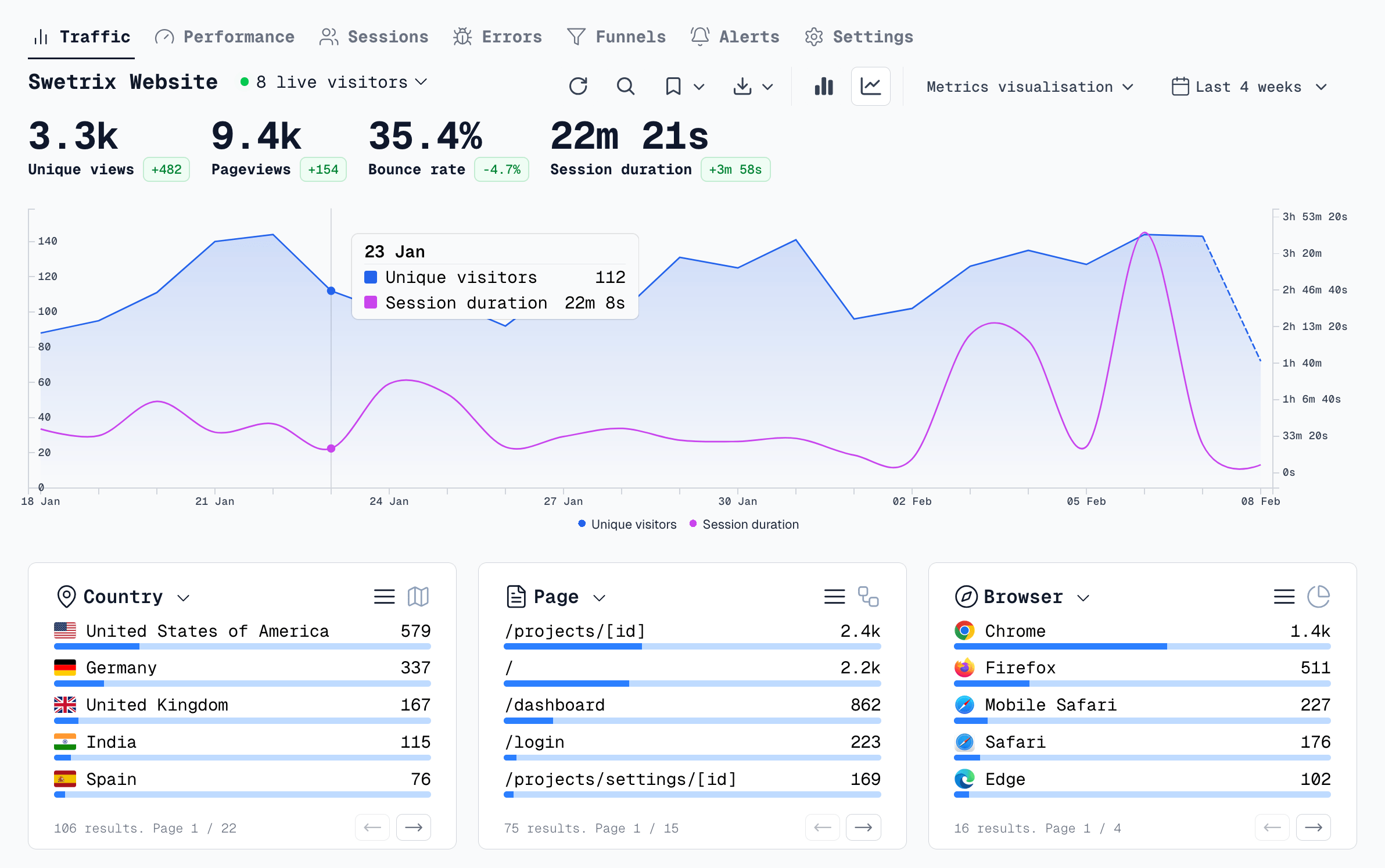
Here is why Swetrix outperforms both Fathom Analytics and Rybbit:
- A Complete Growth Platform: Swetrix is not just a counter. We provide built-in A/B Testing and Feature Flags, allowing you to actively experiment with your website's layout and content to drive higher conversions—all while preserving user privacy.
- Proactive Real-Time Alerts: Stop relying on manual dashboard checks. Swetrix monitors your site 24/7 and sends instant notifications for traffic surges, drops, or JavaScript error spikes directly to your email, Slack, Discord, or Telegram.
- Enterprise-Grade Security: Your analytics data is highly sensitive business intelligence. Swetrix has been maturing since 2021 and fully supports Two-Factor Authentication (2FA) and comprehensive Role-Based Access Control, ensuring your account remains secure.
- AI Chat Assistant: Forget digging through filters and date ranges. With Swetrix's built-in AI, you can query your data using natural language, getting immediate answers to complex questions.
- Uncompromising Transparency: Like Rybbit, Swetrix is 100% open-source and self-hostable, guaranteeing you total ownership over your data. Unlike Fathom's closed-source model, you can verify exactly how Swetrix works.
If you are ready for a tool that moves beyond basic counting and actively helps you monitor, secure, and grow your website, Swetrix is the professional upgrade you need.
The web analytics your site deserves.
Tired of bloated dashboards, privacy concerns, and data you can't trust? Switch to Swetrix and get simple, powerful analytics that respects your users.